

Public safety policy examples that protect communities
Public safety leaders face a defining tension at the heart of their work: the pressure to adopt policies that are operationally sound, legally defensible, and genuinely effective for the communities they serve. With competing priorities, limited budgets, and public scrutiny at an all-time high, selecting the right policy framework is far more complex than pulling a model document off a national database. This article examines field-tested public safety policy examples across law enforcement, EMS, fire, and all-hazards management, offering concrete frameworks, comparison tools, and practical guidance to help agency leaders make better, more defensible decisions.
Table of Contents
- How to evaluate public safety policy effectiveness
- Field-proven law enforcement policy examples
- Coordinated EMS and fire policy frameworks in action
- Violence prevention and responder safety policies
- Integrated, all-hazards policies and non-traditional models
- Why context and adaptation matter more than any ‘model policy’
- Support agency excellence with smart policy and screening solutions
- Frequently asked questions
Key Takeaways
| Point | Details |
|---|---|
| Tailor policies to context | Effective public safety policies must adapt to local community needs and agency realities. |
| Standardize for clarity | Clear, documented procedures and shared frameworks enable safer, coordinated responses. |
| Prioritize responder safety | Successful policies integrate violence prevention, operational safety, and thorough documentation. |
| Combine empirical and field-tested models | The best policies blend evidence-based strategies with practical, in-field adjustments and feedback. |
How to evaluate public safety policy effectiveness
Before adopting any policy example, public safety leaders must establish a clear set of evaluation criteria. A policy that performs well in one jurisdiction can produce flat or even counterproductive results in another. The first step is recognizing that no framework is universally transferable.
The core criteria for evaluating any public safety policy should include:
- Context fit: Does the policy align with the agency’s size, demographics, crime patterns, and operational capacity?
- Clarity and specificity: Are the procedures clearly defined, with unambiguous language and documented decision thresholds?
- Legal defensibility: Does the policy comply with federal, state, and local regulations, and has it survived legal scrutiny?
- Empirical support: Is there documented evidence that the policy produced measurable outcomes in similar environments?
- Built-in accountability: Does the policy include reporting mechanisms, performance indicators, and review cycles?
Research supports the argument that strategy effectiveness is deeply contextual. Evidence-based policing research consistently shows that results depend on strategies being place-based, micro-targeted, and proactive in nature, and that outcomes can diminish or vary significantly when a policy is transplanted to a different local context without adaptation.
This matters enormously for decision-makers. Agencies that adopt policies wholesale, without stress-testing them against local realities, often discover that the operational mechanics break down in the field. A policy built for a large metropolitan department, for instance, may not translate cleanly to a mid-sized department with fewer sworn officers and a different dispatch infrastructure.
Key questions to pressure-test any policy before adoption:
- Has this policy been piloted in a jurisdiction with comparable demographics and agency size?
- Are there documented outcome metrics from prior implementations?
- Does the policy include a sunset or review clause to prompt evaluation?
- What are the training requirements, and does the agency have capacity to fulfill them?
- Does it integrate with existing protocols, or will it require broad operational restructuring?
Pro Tip: Before committing to a new policy framework, assign a small team to map it against your agency’s current SOPs (standard operating procedures). Gaps identified in that mapping exercise are your real implementation risks.
For agencies building their frameworks from the ground up, pairing policy selection with evidence-based recruitment steps ensures that the personnel executing those policies are vetted to the same rigorous standard.
Field-proven law enforcement policy examples
With evaluation criteria established, the next step is examining concrete law enforcement policy examples that have demonstrated real-world utility. Two of the most widely studied frameworks are the community policing model advanced by the COPS Office and the operational restraint policies governing foot and vehicle pursuits.
The COPS community policing framework
The DOJ COPS program defines community policing through three foundational components: community partnerships, problem-solving, and organizational transformation. This is not simply a philosophy. It is a structured policy methodology that requires agencies to formalize their engagement strategies, document problem-solving initiatives, and restructure internal operations to support proactive, community-oriented work.
Agencies implementing this framework must develop written partnership agreements with community organizations, establish problem-solving teams with assigned accountability, and embed community policing principles into performance evaluation systems. The policy mechanics are highly specific, and agencies that treat community policing as a cultural statement rather than a documented operational structure consistently underperform compared to those that institutionalize it.
Milwaukee’s tactical restraint and pursuit policy
A practical and instructive example of operational policy mechanics comes from Milwaukee’s updated foot pursuit policy, General Order 2026-16. This policy explicitly prioritizes officer and public safety as the primary consideration in all pursuit decisions. It establishes decision thresholds for initiating, continuing, or terminating pursuits based on offense severity, environmental conditions, and available supervision. Alternatives to pursuit, such as containment, coordination with aerial support, and area saturation, are written directly into the decision tree.
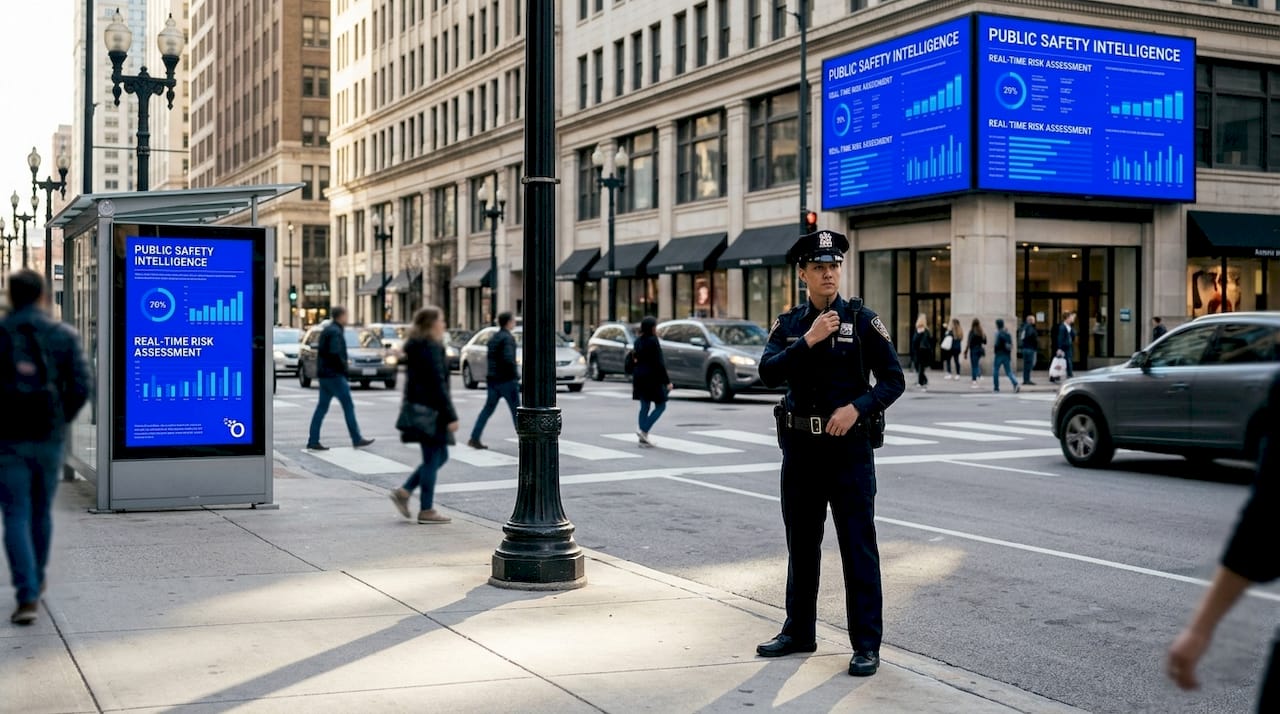
What makes this policy defensible is its emphasis on documented decision-making at every stage of an incident. Officers are not left to apply vague judgment. The policy assigns clear risk thresholds and requires supervisory authorization for continuation in high-risk scenarios.
Comparison table: Law enforcement policy features
| Policy Feature | COPS Community Model | Pursuit Restraint Policy | Evidence-Based Targeting |
|---|---|---|---|
| Primary focus | Partnership and prevention | Operational safety | Crime concentration |
| Documentation required | Partnership agreements, incident logs | Real-time pursuit log, supervisor sign-off | Crime mapping data, deployment records |
| Legal grounding | Federal program standards | State pursuit statutes | Fourth Amendment case law |
| Adaptability | High | Moderate | High |
| Training intensity | Medium | High | Medium |
Best practice features for defensible law enforcement policies:
- Clear, written decision thresholds with no room for interpretive latitude in high-stakes moments
- Mandatory supervisory involvement in escalation decisions
- Required documentation at every stage of an incident
- Regular review cycles tied to outcome data and community feedback
- Explicit integration with legal standards and constitutional requirements
For agencies navigating regulatory complexity, reviewing compliance tips for agencies can help identify where existing policies may carry legal exposure.
Coordinated EMS and fire policy frameworks in action
Law enforcement is not the only domain where policy mechanics require careful engineering. EMS and fire agencies operate under a distinct set of policy artifacts that carry their own documentation requirements, scope-of-practice boundaries, and operational safety mechanics.
What makes EMS and fire policy artifacts different
Unlike law enforcement general orders, EMS and fire policies often take the form of standing orders and standardized patient care protocols. These documents carry formal modification restrictions: a field provider cannot deviate from a standing order without physician authorization in most state systems. This structure exists because the consequences of protocol deviation in a medical emergency are immediate and potentially fatal.
Rhode Island’s statewide EMS Protocols (version 2024.01) illustrate this model well. The protocols define explicit scope-of-practice boundaries for each provider level, mandate documentation standards that must be completed on every call, and provide limited flexibility for local medical director modifications within defined parameters. Every protocol section specifies not only what to do clinically but also what to document and when.
Roadway incident management as an operational SOP
Operational safety policies in EMS and fire extend well beyond clinical care. Scene safety is itself a policy domain, and roadway incident management is one of the highest-risk environments responders face. Ann Arbor’s traffic incident management document provides a concrete SOP example, establishing the protected environment operating principle, vehicle positioning mechanics, taper placement standards, and traffic control device requirements.
This SOP works because it translates abstract safety principles into specific responder actions. Officers and medics are not told to “be safe near traffic.” They are given step-by-step decisions about vehicle placement angles, cone spacing, and when to request law enforcement or transportation department support.
Documentation and reporting standards for EMS and fire policy compliance
| Standard Element | EMS Standing Orders | Fire Scene Safety SOP |
|---|---|---|
| Scope definition | Provider level specific | Unit type and rank specific |
| Documentation trigger | Every patient contact | Every scene entry |
| Modification authority | Medical director only | Incident commander |
| Review cycle | Annual minimum | After every critical incident |
| Legal review required | Yes, state board oversight | Yes, OSHA and local counsel |
Best practices for operational safety policy mechanics:
- Define vehicle positioning and scene perimeter geometry explicitly, not conceptually
- Assign documentation responsibility to a named role, not a generic “responder”
- Include traffic control taper specifications and timing standards
- Require post-incident review for all roadway exposures above a defined risk threshold
- Integrate with state EMS and fire marshal reporting systems
Pro Tip: When reviewing or drafting scene safety SOPs, conduct a tabletop exercise using the most recent near-miss incident from your region. Real scenarios expose gaps in procedural language that theoretical drafting misses entirely.
To understand how personnel standards align with these frameworks, fire and EMS protocol best practices provide additional operational context for agency administrators.
Violence prevention and responder safety policies
Operational policies that address external hazards are essential, but agencies must also invest in policies that protect responders from workplace violence. The incidence of violence against EMS and fire personnel is persistently underreported and underaddressed in formal policy frameworks.
The IAFF SAVER model
The IAFF’s EMS workplace violence toolkit provides a systems-level policy and training model built around the SAVER framework: Scene assessment, Assessment of threats, Violence prevention strategies, Escape and evacuation, and Reporting and health support. This is not a single-page policy. It is a structured program that links dispatch communication protocols, scene safety assessment criteria, physical de-escalation training, and post-incident mental health support into a unified framework.
The SAVER model is notable because it begins before the responder arrives on scene. Dispatch protocols are written to gather threat-relevant information and relay it to responding units using standardized language. This pre-arrival intelligence is one of the most effective violence prevention tools available, yet most agencies lack a formalized policy for collecting and communicating it.
“Effective violence prevention policy starts with actionable, shared protocols and accessible reporting for frontline responders.”
Actionable violence prevention features for any public safety policy:
- Dispatch screening criteria for prior violence history at known addresses
- Scene size-up protocols requiring explicit threat assessment before entry
- De-escalation training requirements with documented completion tracking
- Anonymous near-miss reporting systems with centralized data analysis
- Mandatory post-incident debriefs with mental health access built into the protocol
- Return-to-service criteria that account for psychological readiness, not just physical recovery
The policy mechanics here must extend beyond training checkboxes. Data tracking is essential. Agencies that collect and analyze workplace violence incidents at the system level can identify patterns, high-risk locations, and time-based risk factors that individual incident reports will never surface.
Pro Tip: Tailor your violence prevention policy to your agency type. EMS providers face different threat profiles than fire suppression crews, and dispatch centers face entirely different risks. Monitor system-level data across a minimum 24-month window before drawing conclusions about trend direction.
Integrating violence prevention policy with personnel vetting is a powerful combination. Reviewing how EMS background checks reduce negligent hiring can help agencies close the personnel risk gap that policy alone cannot address. Agencies looking for a broader view of ongoing personnel risks should also consider risk management frameworks for public safety HR.
Integrated, all-hazards policies and non-traditional models
The most complex policy challenges in public safety occur when incidents cross agency boundaries. Natural disasters, mass casualty events, and public health emergencies do not respect the jurisdictional lines that shape individual agency protocols. Integrated, all-hazards frameworks exist precisely to address this reality.
NIMS and emergency operations plans
FEMA’s NIMS provides the foundational cross-discipline policy framework for public safety in the United States. It standardizes terminology, organizational structures, and operational systems so that agencies from different disciplines and jurisdictions can work together without confusion. NIMS applies across the full incident lifecycle, from prevention and preparedness through response and recovery.
The companion framework, CPG 101, guides agencies in developing Emergency Operations Plans (EOPs) that are integrated, coordinated, and synchronized across levels of government. CPG 101 promotes community-based, risk-informed planning that accounts for local hazard profiles, existing resources, and inter-agency relationships. Agencies that build their EOPs according to CPG 101 standards produce plans that are not only operationally coherent but also defensible under federal grant and compliance review.
Community-based and holistic models
Not all policy frameworks center on traditional law enforcement or emergency response. The NAACP Legal Defense Fund’s framework for public safety represents a contrasting approach, arguing that community safety is better served through social welfare investments, community-based responders, and violence intervention and prevention programming, rather than relying primarily on law enforcement mechanisms.
This perspective is worth taking seriously. Agencies that dismiss it outright miss the opportunity to identify where traditional policing models leave gaps that community-based approaches can fill. The most effective all-hazards strategies often incorporate elements of both.
Comparison table: NIMS/ICS vs. community-based models
| Dimension | NIMS/ICS Framework | Community-Based Model |
|---|---|---|
| Primary mechanism | Standardized incident command | Social services and community responders |
| Legal grounding | Federal mandate (DHS/FEMA) | Local ordinance and grant-funded programs |
| Scalability | High, tested in mass events | Moderate, dependent on local investment |
| Cross-agency integration | Built-in via unified command | Requires deliberate coordination structures |
| Long-term prevention focus | Lower | Higher |
| Response speed | Immediate | Slower, more preventive |
Key features of effective integrated frameworks:
- Shared terminology and organizational vocabulary across all partner agencies
- Pre-established mutual aid agreements with defined activation triggers
- Community stakeholder engagement written into the planning process, not added after
- Regular joint exercises that test cross-agency coordination under realistic conditions
- Outcome measurement tied to both incident response metrics and longer-term community health indicators
Agencies managing personnel across multiple disciplines and jurisdictions should also consider how employee monitoring workflows support cross-agency policy implementation and accountability.
Why context and adaptation matter more than any ‘model policy’
There is a persistent belief in public safety leadership circles that finding the right model policy, the nationally recognized framework, the award-winning program, is the hardest part of the work. It is not. The hardest part is adaptation.
Agencies that adopt model policies without rigorous local adaptation consistently underperform compared to agencies that build their own frameworks using model policies as a starting point rather than a finish line. A policy document is not a strategy. It is a structure within which strategy operates. When the structure is borrowed without modification, the strategy it supports is often misaligned with local realities from day one.
Evidence-based evaluation methodology supports a “test-as-you-go” approach, where agencies use empirical benchmarks from policing research to set performance expectations but rigorously evaluate outcomes against their own local context. This means accepting that a null result, a policy that shows no measurable effect, is data. It is not failure. It is instruction.
“No single policy fits every agency. The most effective ones are scrutinized and adapted for the community they serve.”
The agencies that build strong policy cultures share a few common practices. They collect outcome data before implementing a new policy, establishing a genuine baseline rather than inferring one. They assign ownership of policy performance to a specific role, not a committee. They set a review date at the time of adoption, not after something goes wrong. And they treat frontline responder feedback as a legitimate data source, not an afterthought.
For agencies investing in tailored screening for safety, the same logic applies. Personnel screening that is adapted to the specific demands of a role, rather than applied generically, produces better outcomes and reduces downstream liability. Policy adaptation and personnel adaptation operate on the same principle.
Pro Tip: Always collect outcome data and gather structured feedback from field personnel both before and after implementing any new policy. The gap between those two data points is where your actual policy performance lives.
Support agency excellence with smart policy and screening solutions
Strong policy frameworks require equally strong personnel. The work of building defensible, effective public safety policies is only as durable as the people implementing them.

OMNI Intel supports public safety agencies in making that connection concrete. Just as the policies outlined in this article provide the operational structure for safe and accountable response, pre-employment screening for agencies ensures that the individuals filling those roles meet the integrity and reliability standards that public safety demands. OMNI Intel’s investigator-driven background checks for public safety are built on law enforcement investigation principles, giving agencies the confidence that their personnel vetting process is as rigorous as their operational protocols. Explore how OMNI Intel’s background investigations and recruiting platform can help your agency operationalize both stronger policies and stronger teams.
Frequently asked questions
What makes a public safety policy effective?
An effective public safety policy is clear, evidence-based, tailored to local context, and includes mechanisms for accountability and evaluation. Research confirms that strategy effectiveness depends heavily on place-based, proactive design and sensitivity to local conditions.
How do agencies implement new public safety policies?
Agencies implement new policies through stakeholder training, protocol updates, cross-agency coordination, and ongoing performance monitoring. NIMS provides a standardized system for multi-agency coordination that supports consistent implementation across disciplines and jurisdictions.
Why are documentation requirements strict in EMS and fire policies?
Strict documentation in EMS and fire ensures response accuracy, legal compliance, quality improvement, and defensible outcomes under review. Rhode Island’s EMS protocols illustrate how documentation requirements are built into every protocol section, not added as an afterthought.
Can policies focused on social programs improve public safety?
Yes, investing in community-based programs and social welfare initiatives can enhance safety outcomes and reduce strain on traditional emergency response systems. The NAACP Legal Defense Fund’s framework provides a detailed policy model built around this premise.
What is the role of NIMS in public safety policy?
NIMS guides all agencies in standardized incident management so they can work together seamlessly before, during, and after emergencies. FEMA’s NIMS framework applies across the full incident lifecycle and provides the common vocabulary and organizational systems that make cross-agency coordination possible.