
Pre-Employment Investigations: Ensuring Safe Hires
Selecting public safety personnel goes far beyond scanning a resume or running a basic background check. For American HR managers, the stakes are high—comprehensive pre-employment investigations serve as both a safeguard and a strategic tool in building a workforce you can trust. Understanding these processes will help you uncover crucial details about candidates, reduce organizational risk, and align hiring practices with regulatory standards that protect your agency and the community.
Table of Contents
- Defining Pre-Employment Investigations In Public Safety
- Major Types And Methods Of Background Screening
- Step-By-Step Process In Public Safety Hiring
- Legal Standards And Compliance Requirements
- Risks, Costs, And Common Mistakes To Avoid
- Post-Hire Monitoring And Continuous Vetting
Key Takeaways
| Point | Details |
|---|---|
| Importance of Pre-Employment Investigations | Comprehensive screenings are crucial for assessing candidates in public safety roles, helping to mitigate potential risks to community safety. |
| Legal Compliance Necessities | Agencies must adhere to federal and state regulations to ensure ethical hiring practices while protecting candidate rights. |
| Risks of Inadequate Screening | Failing to conduct thorough investigations can result in significant legal, financial, and reputational consequences for public safety organizations. |
| Continuous Vetting Strategy | Ongoing monitoring of employees is essential for maintaining professional standards and managing risks effectively throughout their careers. |
Defining pre-employment investigations in public safety
Pre-employment investigations in public safety represent a comprehensive screening process designed to thoroughly evaluate potential candidates before they enter critical roles that impact community security. These investigations go far beyond traditional background checks, serving as a critical risk mitigation strategy for agencies responsible for protecting public welfare.
The core purpose of these investigations is multifaceted, focusing on uncovering crucial information about an applicant’s background, character, and potential risks. Comprehensive background screening typically involves multiple layers of assessment, including:
- Criminal history verification
- Financial status evaluation
- Personal integrity checks
- Psychological screening
- Professional credential validation
- Drug use history assessment
Public safety agencies utilize these investigations to establish a rigorous selection process that filters out candidates who might compromise organizational integrity or community safety. The goal is not just to eliminate obvious risks but to proactively identify subtle indicators that could potentially manifest as problematic behavior in high-stakes professional environments.
Pre-employment investigations are the first line of defense in maintaining the ethical standards and reliability of public safety personnel.
These screenings often incorporate advanced techniques like polygraph examinations, which help reveal information that standard background checks might miss. Such detailed investigative processes ensure that only the most qualified, trustworthy individuals are entrusted with responsibilities that directly impact public security.
Pro tip: Develop a standardized, multi-stage investigation protocol that combines different screening methods to create a comprehensive candidate evaluation process.
Major types and methods of background screening
Background screening for public safety agencies involves a comprehensive suite of investigative methods designed to thoroughly assess a candidate’s suitability and potential risks. Pre-employment screening techniques encompass multiple layers of investigation that go beyond traditional background checks, ensuring agencies select the most qualified and trustworthy personnel.
The primary types of background screening methods include:
- Criminal History Checks
- County-level criminal record searches
- State criminal database investigations
- Federal criminal record reviews
- Professional Credential Verification
- Educational degree authentication
- Professional license validation
- Employment history confirmation
- Financial Background Assessments
- Credit report analysis
- Bankruptcy record investigations
- Financial stability evaluations
- Personal Integrity Screenings
- Reference checks
- Character assessments
- Behavioral background investigations
Public safety agencies must navigate complex legal landscapes when conducting these screenings. Comprehensive background investigations require strict adherence to federal and state regulations, including obtaining explicit candidate consent and maintaining strict confidentiality protocols.
Background screening is not just about identifying disqualifying factors, but about building a workforce of integrity and reliability.
Moreover, advanced screening techniques like polygraph examinations and psychological assessments provide additional layers of insight into a candidate’s character and potential risks. These methods help agencies make informed decisions that protect both organizational integrity and public safety.
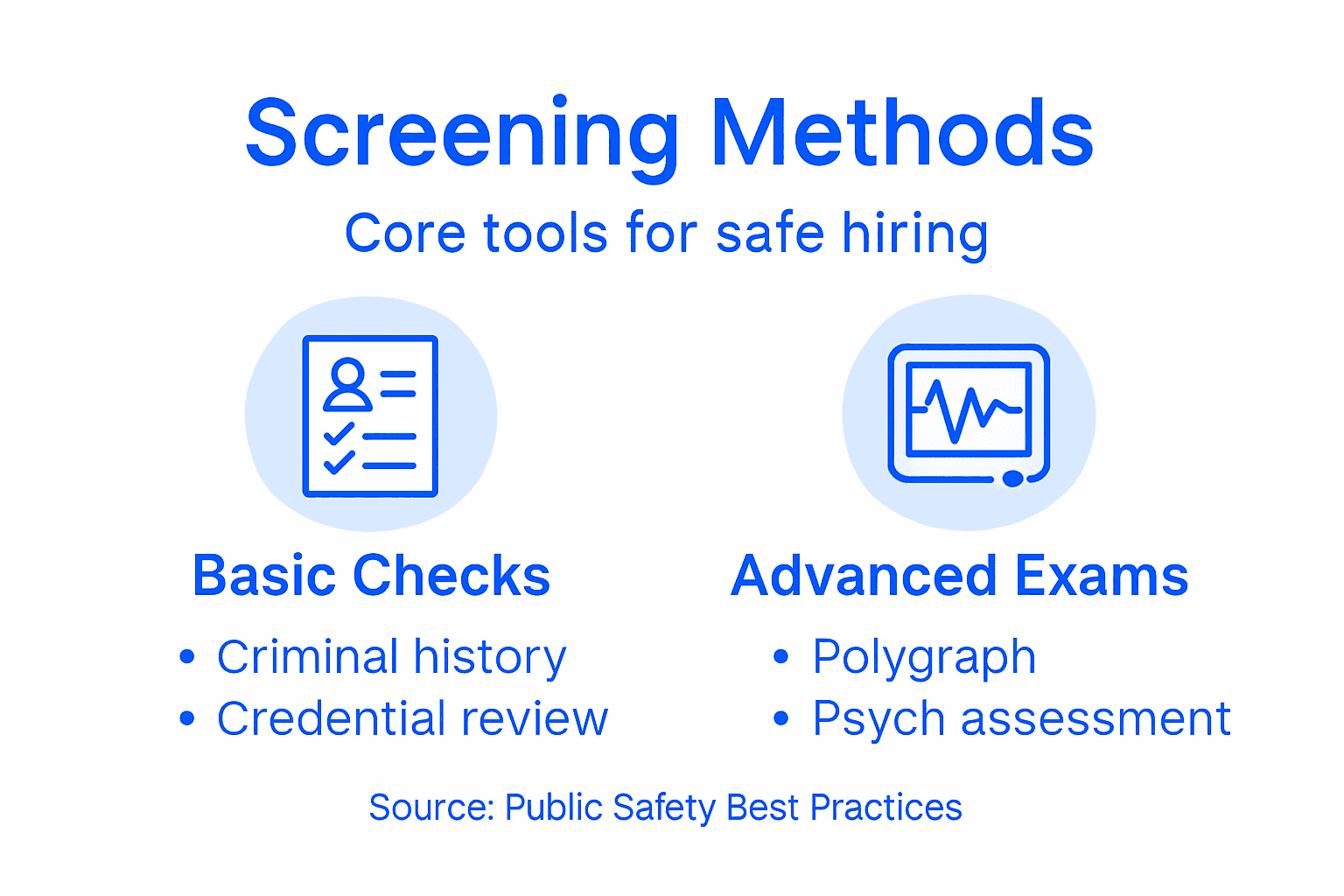
Here’s a comparison of advanced screening techniques commonly used in public safety hiring:
| Technique | Unique Benefit | Potential Limitation |
|---|---|---|
| Polygraph Examination | Reveals unreported conduct | May yield false positives |
| Psychological Assessment | Assesses mental fitness | Can be costly and time-consuming |
| Integrity Interview | Detects subtle red flags | Relies heavily on interview skill |
| Character Assessment | Evaluates ethical consistency | Subject to subjective judgment |
Pro tip: Develop a standardized, legally compliant screening process that balances comprehensive investigation with respect for candidate privacy and individual rights.
Step-by-step process in public safety hiring
The public safety hiring process is a meticulously structured journey that transforms potential candidates into qualified professionals capable of serving their communities. Pre-employment screening stages represent a comprehensive evaluation designed to identify candidates with the highest potential for success in high-stakes public safety roles.
The typical hiring process involves multiple critical stages:
- Initial Application and Screening
- Job announcement and candidate outreach
- Initial application review
- Basic qualification verification
- Physical and Psychological Assessment
- Physical fitness testing
- Medical examination
- Psychological evaluation
- Background Investigation
- Comprehensive criminal history check
- Reference verification
- Personal and professional background review
- Advanced Screening Techniques
- Polygraph examination
- Integrity interviews
- Detailed character assessment
- Final Selection and Training
- Candidate ranking
- Final interview
- Conditional job offer
- Academy or specialized training program
Comprehensive hiring protocols require agencies to maintain rigorous standards throughout the recruitment process. Each stage serves as a critical filter, ensuring only the most qualified candidates progress toward potential employment in public safety roles.
Effective public safety hiring is not about finding perfect candidates, but identifying individuals with the potential to develop into exceptional professionals.
The multifaceted approach goes beyond traditional hiring methods, incorporating sophisticated assessment techniques that evaluate physical capabilities, psychological resilience, ethical standards, and professional potential. This comprehensive strategy helps agencies build a workforce capable of meeting the complex challenges of public safety service.

Pro tip: Develop a standardized scorecard that objectively measures candidate performance across all screening stages to ensure consistent and fair evaluation.
Legal standards and compliance requirements
Pre-employment investigations in public safety must navigate a complex landscape of federal and state legal requirements designed to protect both organizational interests and individual rights. Legal screening boundaries establish critical guidelines that agencies must follow to ensure fair, ethical, and legally compliant hiring practices.
Key legal compliance requirements include:
- Federal Anti-Discrimination Laws
- Title VII of Civil Rights Act
- Equal Employment Opportunity regulations
- Americans with Disabilities Act protections
- Background Check Legal Restrictions
- Fair Credit Reporting Act guidelines
- Limitations on criminal history inquiries
- Consent and disclosure requirements
- Privacy Protection Standards
- Data handling and confidentiality rules
- Candidate information protection protocols
- Consent for information access and use
- Polygraph and Screening Regulations
- Employee Polygraph Protection Act exemptions
- Public safety agency testing permissions
- Restrictions on testing methodology
Public safety agencies must implement comprehensive compliance strategies that balance thorough investigation with respect for legal and ethical boundaries. This requires developing robust screening protocols that align with federal and state regulations, ensuring fair treatment of all candidates while maintaining high professional standards.
The following table summarizes critical legal requirements for public safety hiring:
| Legal Requirement | Purpose | Example Regulation |
|---|---|---|
| Anti-Discrimination Laws | Ensure equal opportunity | Title VII, ADA |
| Background Check Limitations | Protect candidate rights | Fair Credit Reporting Act |
| Privacy Protection Standards | Safeguard personal information | Data confidentiality protocols |
| Polygraph Testing Regulations | Define permissible screening methods | Employee Polygraph Act exemptions |
Legal compliance is not a constraint, but a framework that ensures integrity and fairness in the hiring process.
The most successful agencies view legal standards not as obstacles, but as essential guidelines that protect both the organization and potential employees. By understanding and proactively implementing these requirements, public safety organizations can create more transparent, equitable, and effective hiring processes.
Pro tip: Consult with legal counsel specializing in employment law to develop screening processes that are both comprehensive and legally defensible.
Risks, costs, and common mistakes to avoid
Pre-employment investigations in public safety carry significant potential risks that can dramatically impact organizational effectiveness and community safety. Screening process vulnerabilities represent complex challenges that demand meticulous attention and strategic management to prevent costly legal and operational consequences.
Common risks and potential costly mistakes include:
- Legal and Compliance Risks
- Discriminatory screening practices
- Failure to obtain proper candidate consent
- Inconsistent application of background check protocols
- Financial Implications
- Potential litigation expenses
- Recruitment and retraining costs
- Liability for negligent hiring
- Operational Vulnerabilities
- Hiring unsuitable candidates
- Compromising organizational integrity
- Increased workplace safety risks
- Reputational Damage
- Loss of public trust
- Negative media exposure
- Decreased community confidence
Comprehensive screening guidelines reveal that organizations frequently underestimate the complex interconnections between investigation processes, legal requirements, and potential organizational risks. Agencies must develop robust, standardized procedures that minimize vulnerabilities while maintaining thorough candidate evaluation.
Effective risk management in pre-employment investigations is not about elimination, but about strategic mitigation and continuous improvement.
The financial consequences of inadequate screening can be substantial, potentially exceeding hundreds of thousands of dollars in legal fees, settlement costs, and organizational disruption. Proactive risk management requires a holistic approach that integrates legal compliance, rigorous investigation techniques, and ongoing performance monitoring.
Pro tip: Implement a comprehensive risk assessment framework that regularly reviews and updates screening protocols to address emerging legal and operational challenges.
Post-hire monitoring and continuous vetting
Continuous vetting represents a critical strategy for maintaining organizational integrity and public safety beyond the initial hiring process. Ongoing employee screening provides agencies with a dynamic approach to risk management, ensuring that personnel continue to meet the highest professional standards throughout their career.
Key components of post-hire monitoring include:
- Criminal Record Tracking
- Regular criminal background checks
- State and federal database monitoring
- Real-time criminal record updates
- Professional Conduct Assessment
- Performance evaluation tracking
- Disciplinary record monitoring
- Professional certification status verification
- Behavioral Risk Indicators
- Social media conduct screening
- Financial stability checks
- Substance abuse screening
- Compliance and Credential Verification
- License renewal tracking
- Ongoing training compliance
- Required certification maintenance
Comprehensive monitoring strategies enable public safety agencies to proactively identify potential risks, addressing performance issues before they escalate into significant organizational challenges.
Continuous vetting is not about surveillance, but about maintaining the highest standards of professional excellence and public trust.
The most effective continuous vetting programs integrate multiple data sources and leverage advanced technologies to create a holistic view of employee performance and potential risks. This approach allows agencies to protect their reputation, ensure public safety, and support employee development simultaneously.
Pro tip: Develop a standardized continuous monitoring protocol that balances comprehensive risk assessment with respect for employee privacy and professional dignity.
Strengthen Your Hiring with Precision and Confidence
Pre-employment investigations in public safety demand a thorough and legally compliant approach to uncover potential risks and ensure integrity. If you face challenges like balancing comprehensive background screening with strict legal standards or need to enhance continuous vetting beyond the initial hire, you are not alone. Agencies strive to build trustworthy teams while managing costs and protecting their reputations. This is where tailored solutions can make a critical difference.

Discover how OMNI Intel’s background screening platform transforms complex hiring hurdles into seamless, evidence-based decisions. With AI-driven tools designed specifically for public safety agencies, you can streamline candidate evaluation, automate compliance with federal and state regulations, and maintain ongoing employee monitoring that safeguards your community and organizational standards. Explore our proven Hiring Best Practices | OMNI Intel to learn how to reduce recruitment time and costs while enhancing reliability through advanced screening techniques. Take control of your hiring process today. Visit OMNI Intel now and build a workforce committed to safety, responsibility, and integrity.
Frequently Asked Questions
What is the purpose of pre-employment investigations in public safety?
Pre-employment investigations aim to thoroughly evaluate candidates for public safety roles by uncovering critical information about their background, character, and potential risks to ensure community safety and organizational integrity.
What types of screening methods are commonly used in pre-employment investigations?
Common screening methods include criminal history checks, professional credential verification, financial background assessments, personal integrity screenings, and psychological evaluations.
How do public safety agencies ensure compliance with legal standards during background checks?
Public safety agencies ensure compliance by following federal anti-discrimination laws, obtaining candidate consent, adhering to privacy protection standards, and following regulations related to polygraph testing.
Why is continuous monitoring important after hiring personnel in public safety roles?
Continuous monitoring is essential as it helps agencies maintain organizational integrity by regularly assessing employee conduct, tracking criminal records, and ensuring ongoing compliance with professional standards.