

Data Security in Background Investigations: Why It Matters
Every American public safety agency faces the challenge of protecting sensitive information during pre-employment background investigations. With digital threats evolving daily, data security is no longer just a technical concern—it is a legal and ethical responsibility affecting every hiring decision. Following the National Institute of Standards and Technology’s frameworks helps safeguard confidential data, maintain integrity, and provide secure access. This article supports human resources leaders with actionable steps to strengthen compliance and protect information throughout the screening process.
Table of Contents
- Defining Data Security in Public Safety Screening
- Types of Data and Security Risks in Investigations
- CJIS Compliance and Legal Data Safeguards
- Best Practices for Securing Candidate Information
- Consequences of Lapses in Data Security
Key Takeaways
| Point | Details |
|---|---|
| Data Security Fundamentals | Public safety screening requires adherence to confidentiality, integrity, and availability principles to protect sensitive information. |
| CJIS Compliance Importance | Compliance with CJIS standards is essential for safeguarding legal data and maintaining trust in public safety operations. |
| Best Practices for Data Protection | Implementing minimal data collection, secure storage, and regular audits enhances candidate information security. |
| Consequences of Breaches | Lapses in data security can result in financial penalties, operational disruptions, and significant reputational damage. |
Defining Data Security in Public Safety Screening
Data security in public safety screening represents a comprehensive approach to protecting sensitive information collected during background investigations. At its core, this practice involves safeguarding personal, professional, and legal data associated with potential public safety employees through strategic technological and procedural controls.
The fundamental principles of data security in this context are grounded in three critical dimensions:
- Confidentiality: Ensuring only authorized personnel access specific investigative records
- Integrity: Maintaining accurate and unaltered information throughout the screening process
- Availability: Providing secure, timely access to necessary data for legitimate investigative purposes
Public safety screening demands rigorous protection mechanisms due to the sensitive nature of information involved. Cybersecurity standards for digital information developed by the National Institute of Standards and Technology provide critical guidance for managing privacy risks and maintaining data protection protocols.
Understanding these security principles requires recognizing the complex balance between comprehensive investigation and individual privacy rights. Public safety agencies must navigate intricate legal and ethical landscapes while collecting and managing personal information. Privacy and security challenges in digital monitoring highlight the nuanced approach required to protect both institutional needs and individual rights.
Pro tip: Implement multi-factor authentication and encryption protocols to enhance data protection during background investigation processes.
Types of Data and Security Risks in Investigations
Background investigations involve collecting and managing multiple categories of sensitive information, each presenting unique security challenges. Public safety agencies must carefully navigate complex data landscapes while protecting individual privacy and organizational integrity.
The primary types of data encountered in background screening include:
- Personal Identifiable Information (PII): Names, social security numbers, addresses
- Professional Records: Employment history, professional certifications, performance evaluations
- Legal Documentation: Criminal records, court documents, disciplinary actions
- Digital Footprint: Social media profiles, online activity logs, digital communications
Cybersecurity risks associated with investigative data represent a critical concern for public safety organizations. These risks encompass unauthorized access, potential data breaches, and systemic vulnerabilities that could compromise entire investigative processes.
The evolving cyber threat landscape demands sophisticated protective strategies. Digital privacy challenges in monitoring personal data highlight the delicate balance between comprehensive investigations and individual privacy rights. Sophisticated threat actors continuously develop new methods to exploit system vulnerabilities, making proactive security measures essential.
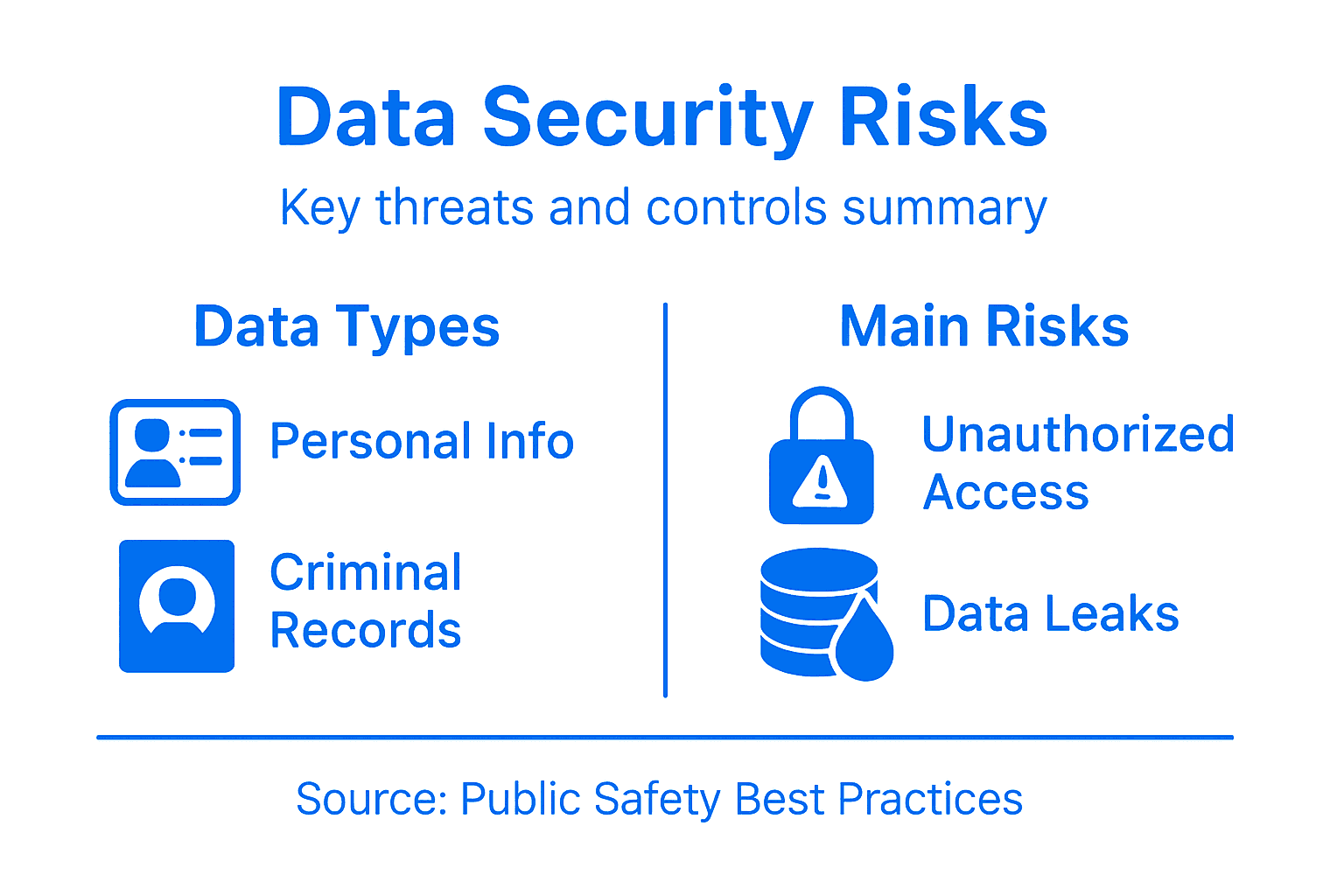
Here is a summary of how different types of data correlate with specific security risks and recommended controls:
| Data Type | Primary Security Risk | Recommended Control |
|---|---|---|
| Personal Identifiable Info | Identity theft, misuse | Strong encryption methods |
| Professional Records | Resume fraud, manipulation | Access restrictions |
| Legal Documentation | Legal liability exposure | Detailed audit logging |
| Digital Footprint | Social engineering attacks | Threat detection systems |
Pro tip: Implement continuous monitoring and regular security audits to identify and mitigate potential data vulnerability points in your investigative systems.
CJIS Compliance and Legal Data Safeguards
Criminal Justice Information Services (CJIS) compliance represents the cornerstone of legal data protection for public safety agencies. This comprehensive framework establishes rigorous standards that govern how sensitive information is collected, stored, transmitted, and ultimately protected throughout background investigation processes.
The key elements of CJIS compliance include:
- Access Control: Strict authentication and authorization protocols
- Data Encryption: Mandatory encryption for data at rest and in transit
- Audit Logging: Comprehensive tracking of all system access and data interactions
- Security Training: Mandatory cybersecurity awareness programs for personnel
- Incident Response: Predefined protocols for addressing potential data breaches
CJIS Security Policy requirements establish a comprehensive framework that mandates specific technological and procedural safeguards. These policies ensure that Criminal Justice Information remains confidential, maintains its integrity, and is accessible only to authorized personnel.
Public safety agencies must implement multi-layered security strategies that go beyond basic compliance. FBI data protection standards underscore the critical importance of continuous monitoring, regular security assessments, and adaptive protective measures that evolve with emerging technological threats.
Pro tip: Conduct quarterly comprehensive security audits and maintain detailed documentation of all compliance measures to demonstrate ongoing commitment to data protection standards.
Best Practices for Securing Candidate Information
Background screening demands meticulous attention to protecting sensitive candidate data throughout the investigative process. Public safety agencies must implement comprehensive strategies that safeguard personal information while maintaining the integrity of their vetting procedures.
Key best practices for securing candidate information include:
- Minimal Data Collection: Gather only essential information required for background investigations
- Secure Storage: Utilize encrypted databases with restricted access
- Limited Access: Implement role-based permissions for data viewing
- Regular Audits: Conduct systematic reviews of data handling procedures
- Secure Transmission: Use encrypted communication channels for sensitive information
Comprehensive candidate data protection strategies require agencies to develop robust frameworks that address potential vulnerabilities. These approaches involve careful management of personal identifiable information through targeted technological and procedural safeguards.
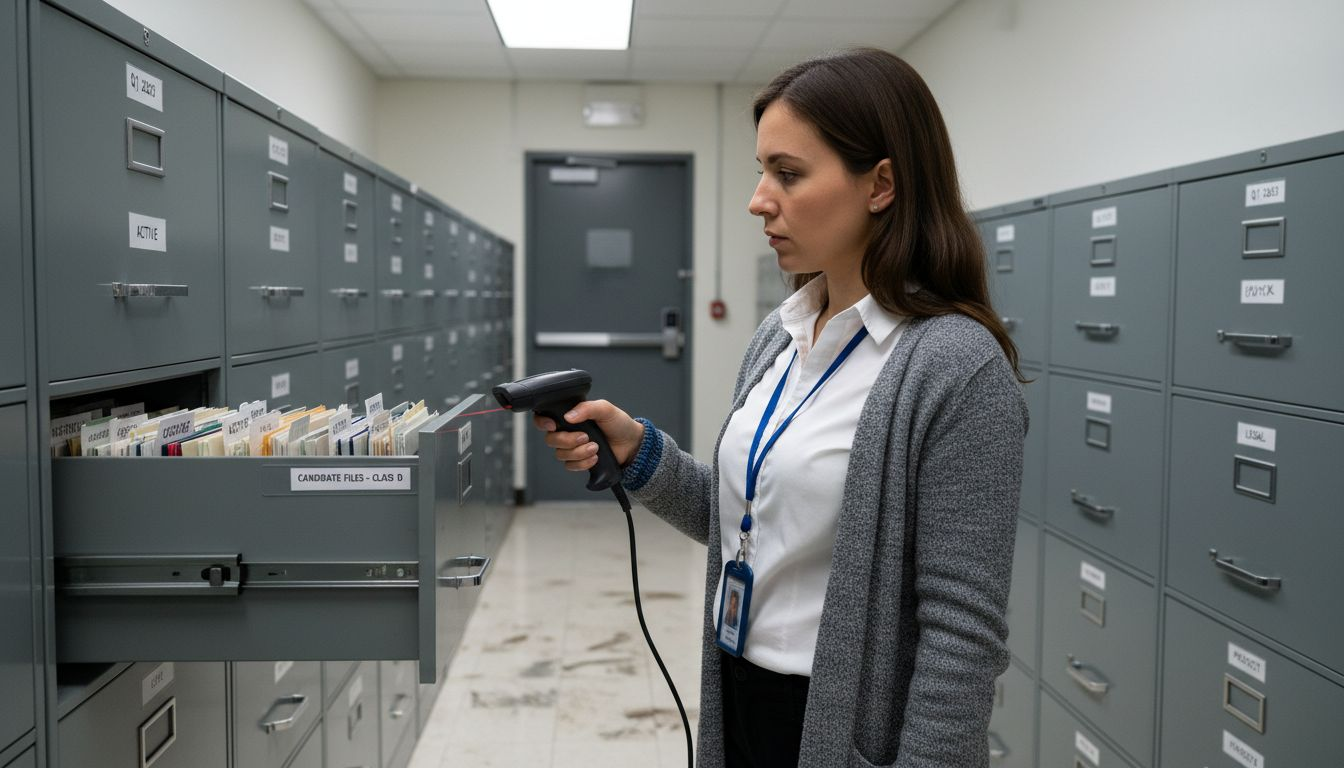
Personnel vetting security protocols emphasize the critical importance of maintaining confidentiality throughout background investigations. Public safety agencies must create multi-layered defense mechanisms that protect candidate information from potential unauthorized access or data breaches.
Pro tip: Develop a comprehensive data retention policy that specifies exact timelines for maintaining and securely destroying candidate information to minimize potential security risks.
Consequences of Lapses in Data Security
Data security breaches in public safety background investigations can trigger catastrophic organizational and legal repercussions that extend far beyond immediate financial impacts. These lapses represent critical vulnerabilities that can permanently damage an agency’s reputation and operational effectiveness.
The primary consequences of data security failures include:
- Financial Penalties: Substantial regulatory fines and potential lawsuit costs
- Operational Disruption: Significant time and resource allocation to investigate and remediate breaches
- Reputational Damage: Loss of public trust and professional credibility
- Legal Liability: Potential criminal and civil legal actions
- Career Implications: Professional decertification or disciplinary actions
Sensitive data mishandling consequences demonstrate the profound risks associated with inadequate information protection. Organizations can face devastating financial and operational challenges that may take years to fully recover from, with potential losses extending into millions of dollars.
Comprehensive data breach response strategies highlight the critical importance of immediate and systematic intervention when security vulnerabilities are discovered. Public safety agencies must develop robust forensic investigation protocols and communication strategies to mitigate potential damages and maintain organizational integrity.
This table outlines typical impacts of data security lapses and corresponding agency response actions:
| Consequence | Impact Example | Agency Response |
|---|---|---|
| Financial Penalties | Fines or lawsuit expenses | Legal counsel involvement |
| Operational Disruption | System downtime | Emergency remediation |
| Reputational Damage | Loss of public trust | Public communication plan |
| Legal Liability | Potential litigation | Internal investigations |
Pro tip: Develop a comprehensive incident response plan that includes immediate notification protocols, forensic investigation procedures, and strategic communication strategies to minimize potential damage from data security breaches.
Strengthen Data Security in Your Background Investigations Today
The challenges outlined in this article highlight the critical need for confidentiality, integrity, and compliance when handling sensitive candidate information within public safety screening. Protecting personal identifiable information, legal records, and digital footprints from unauthorized access requires not just awareness but a robust, technology-driven solution tailored to these complex demands. Whether it is meeting CJIS standards or implementing rigorous audit logging and encryption, your agency cannot afford gaps in security that risk costly breaches or reputational damage.
OMNI Intel specializes in background screening designed explicitly for public safety agencies like law enforcement, fire, EMS, and private security firms. Our platform helps you reduce hiring risks, accelerate recruitment, and maintain continuous data protection throughout every stage of your investigative process. By aligning with Hiring Best Practices | OMNI Intel, you can confidently implement proven strategies backed by AI-driven tools and strict compliance protocols.

Take action now to safeguard your candidate data with OMNI Intel’s comprehensive screening solutions. Visit https://omniintel.co/get-started to explore how our secure platform can enhance your investigation workflow and protect your agency’s integrity every step of the way.
Frequently Asked Questions
What is data security in background investigations?
Data security in background investigations involves protecting sensitive information collected during the screening process for public safety employees. This includes ensuring confidentiality, integrity, and availability of personal and professional data.
Why is data security important in public safety agencies?
Data security is crucial in public safety agencies because they handle sensitive information, including personal identifiable information (PII) and legal documentation. Protecting this data helps maintain public trust and ensures compliance with legal standards.
What are the best practices for securing candidate information during background checks?
Best practices for securing candidate information include minimal data collection, secure storage with encryption, role-based access controls, regular audits, and secure transmission of data using encrypted channels.
What are the consequences of data security breaches in background investigations?
Consequences of data security breaches can include financial penalties, operational disruption, reputational damage, potential legal liability, and career implications for involved personnel.