

Recruiting Police Officers: A Strategic HR Guide
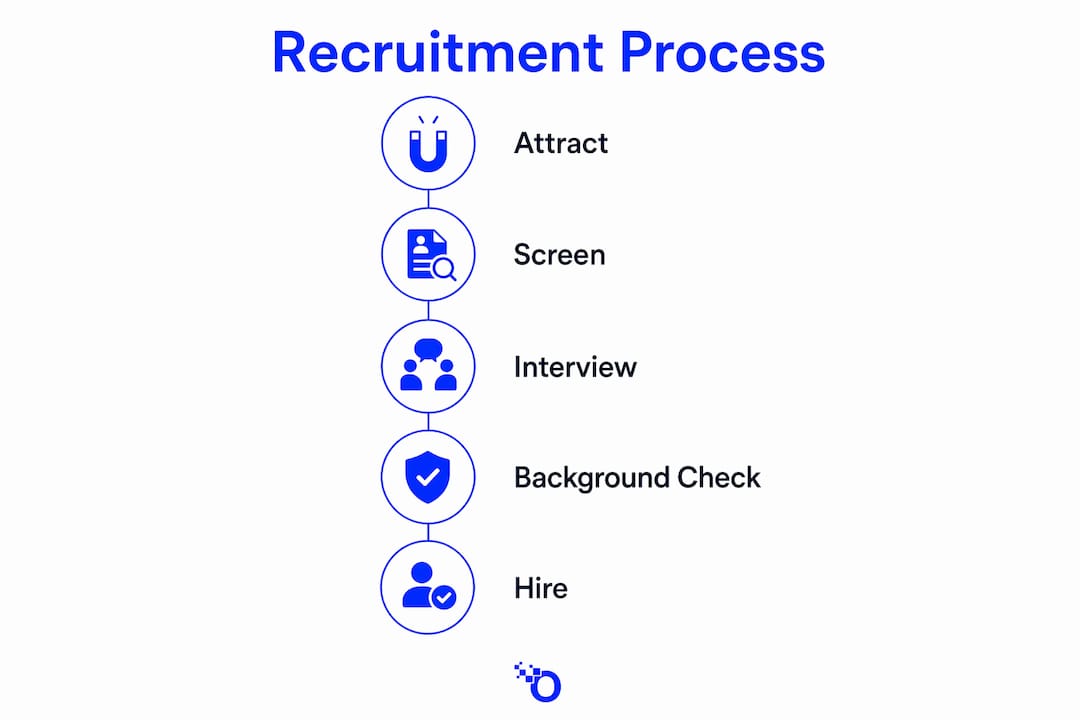
Recruiting police officers is defined as the coordinated process of attracting, screening, and hiring qualified candidates to fill sworn law enforcement positions within a public safety agency. The staffing crisis in law enforcement is real and worsening. U.S. agencies face declining applicant pools, smaller academy classes, and rising attrition rates that have not recovered since the pandemic. That reality demands more than posting a job listing. Effective police recruitment requires a systemic, three-level framework addressing organizational leadership, unit-level execution, and individual recruiter development. Agencies that treat hiring as a continuous, metrics-driven program consistently outperform those that react to vacancies.
What organizational factors set the foundation for recruiting police officers?
Organizational factors are the structural conditions that either enable or undermine every recruitment effort your agency makes. Leadership engagement, agency culture, budget allocation, and clearly defined hiring goals form the foundation of any successful program. Without these elements aligned, even the best recruiters operate at a disadvantage.
Leadership commitment is the single most influential factor in recruitment outcomes. Research from Michigan State University’s Police Staffing Observatory confirms that agencies with leadership support for recruitment programs consistently maintain stronger candidate pipelines than those treating hiring as an administrative function. When a chief or sheriff publicly champions recruitment, it signals organizational health to prospective candidates.
Agency culture is equally decisive. Younger candidates now prioritize work-life balance, flexible scheduling, and mental health support over traditional compensation packages. Agencies that fail to adapt their messaging to these cultural shifts lose qualified candidates to departments that do. This is not a soft concern. It directly affects whether a candidate accepts an offer and whether they stay past year one.
Budget allocation must reflect recruitment as a core operational priority. Dedicated recruitment budgets allow agencies to fund digital advertising, attend career fairs, develop community outreach programs, and train full-time recruiters. Agencies that underfund recruitment treat it as optional. It is not.
| Organizational factor | Influence on recruitment effectiveness |
|---|---|
| Leadership engagement | Drives program priority, resource allocation, and agency-wide buy-in |
| Agency culture | Determines candidate attraction, offer acceptance rates, and first-year retention |
| Recruitment budget | Funds outreach channels, technology, and dedicated recruiter positions |
| Clear hiring goals | Provides measurable targets and accountability for recruitment teams |
| Mental health and wellness support | Signals modern values and reduces early attrition among new hires |
Pro Tip: Conduct an annual culture audit by surveying officers hired within the last three years. Their candid feedback reveals gaps between what your agency promises candidates and what new hires actually experience.
Which unit-level strategies and metrics improve recruitment efficiency?
Unit-level recruitment strategy is where organizational intent becomes operational reality. The tactics your recruitment unit uses, the technology it deploys, and the metrics it tracks determine whether your hiring pipeline produces qualified officers at the pace your agency needs.
The most effective agencies treat the application process as a candidate experience problem. Long, paper-based applications and unclear timelines drive qualified candidates to faster-moving departments. Lowering application barriers, such as offering online submissions and providing clear status updates, reduces drop-off at the top of the funnel. Applicant tracking systems built specifically for law enforcement help manage this process without losing compliance requirements.
Tracking recruitment metrics is the discipline that separates high-performing units from reactive ones. The Topeka Police Department, for example, monitors cost per hire and reallocates budget toward channels that produce results. That kind of data-driven refinement is what turns a recruitment unit into a reliable hiring engine.
The following unit-level tactics and metrics form the operational core of a high-performing law enforcement recruitment program:
- Reduce application friction. Offer mobile-friendly, online applications with clear instructions and realistic timelines. Every unnecessary step costs you candidates.
- Set and publish hiring timelines. Candidates who know what to expect stay engaged. Agencies that leave candidates in silence lose them to competitors.
- Deploy law enforcement-specific applicant tracking systems. Generic HR platforms miss the compliance and background check integration that public safety hiring requires.
- Track first-year attrition. High first-year turnover signals a mismatch between candidate expectations and agency reality. Identify the cause before it repeats.
- Measure quality of hire. Assess new officers at 6 and 12 months using performance reviews, supervisor ratings, and disciplinary records. This tells you whether your sourcing channels attract the right candidates.
- Calculate cost per hire by channel. Know which job boards, community events, and referral programs produce hires at the lowest cost. Reallocate budget accordingly.
- Audit background check timelines. Slow background investigations are a leading cause of candidate dropout. Streamlined, investigator-driven background checks reduce delays without sacrificing thoroughness.
- Use referral programs. Current officers are your most credible recruiters. Structured referral incentives consistently produce high-quality candidates with strong cultural fit.
Pro Tip: Set a 90-day hiring timeline as your benchmark from application to conditional offer. Agencies that exceed this window lose candidates to private sector employers who move faster.
Constant refinement of these metrics is not optional. Data-driven recruitment strategy requires monthly review cycles, not annual ones. Agencies that wait for an annual report to adjust tactics fall behind in real time.
How to train and empower individual recruiters to attract quality candidates
Individual recruiters are the human face of your agency’s hiring program. Their skills, communication style, and community presence directly influence whether a qualified candidate moves forward or walks away. Treating recruitment as a part-time collateral duty is one of the most common and costly mistakes in law enforcement hiring.

Dedicated, full-time recruiters consistently outperform officers assigned to recruiting on a rotating basis. Departments with dedicated recruiting budgets and professionally trained staff produce more hires and retain them longer. A recruiter who knows the role deeply, communicates authentically, and builds relationships over time is a strategic asset, not an administrative position.
Effective law enforcement recruiters share a specific set of attributes and skills. These are not innate personality traits. They are trainable competencies that agencies can develop through structured programs:
- Emotional intelligence. Recruiters who read candidate concerns accurately and respond with empathy build trust faster. This is especially important when recruiting from communities with historically strained relationships with law enforcement.
- Authentic communication. Candidates detect scripted, overly polished messaging immediately. Recruiters who speak honestly about the demands and rewards of the job attract candidates who stay.
- Community presence. Effective recruiters attend neighborhood events, speak at schools, and build relationships before a vacancy exists. Presence creates pipeline.
- Knowledge of candidate values. Younger recruits weigh work-life balance and flexible scheduling heavily. Recruiters who cannot speak to these concerns lose candidates in the first conversation.
- Interview and assessment skills. Recruiters must identify integrity, resilience, and judgment in candidates, not just enthusiasm. Structured behavioral interview training builds this capability.
- Digital fluency. Social media outreach, video content, and online engagement are now primary recruitment channels. Recruiters who are not active on these platforms miss a significant portion of the candidate pool.
Recruiter selection matters as much as recruiter training. The best candidates for recruiting roles are officers with strong community ties, genuine enthusiasm for the agency’s mission, and the interpersonal skills to represent the department credibly. Assigning recruiters based on availability rather than aptitude produces predictably poor results.
Agencies that follow public safety recruitment best practices invest in annual recruiter training, peer coaching programs, and performance reviews tied to hiring outcomes. This creates accountability and continuous improvement within the recruitment unit.
What are the common mistakes in police recruitment and how do agencies build better pipelines?
The most damaging mistake in law enforcement recruitment is waiting for a vacancy before recruiting. Reactive hiring puts agencies in a permanent deficit position. By the time a position opens, the pipeline is empty, timelines compress, and quality suffers.
Proactive pipeline development is the structural solution. Agencies that build relationships with high schools, community colleges, and universities before they need officers create a steady flow of pre-qualified candidates. Explorer programs, cadet academies, and internships serve as extended auditions. They give candidates a realistic preview of the job and give agencies time to assess character, work ethic, and cultural fit before a formal application is filed.
Employer branding is the other side of pipeline development. Authentic social media engagement and transparent job messaging reduce recruiting costs and attract candidates who are genuinely aligned with the agency’s values. Misleading job descriptions, on the other hand, produce early departures. Officer turnover costs exceed $50,000 per officer. That figure makes honest recruitment messaging a financial imperative, not just an ethical one.
The contrast between reactive and proactive recruitment methods is significant:
| Recruitment approach | Method | Typical outcome |
|---|---|---|
| Reactive | Post vacancies when positions open | Compressed timelines, lower candidate quality, higher cost per hire |
| Reactive | Rely on walk-in applicants | Inconsistent volume, limited diversity, weak pipeline |
| Proactive | School and university outreach programs | Steady candidate flow, stronger cultural alignment, lower attrition |
| Proactive | Explorer and cadet programs | Pre-screened candidates with realistic job expectations |
| Proactive | Employer branding and social media | Broader reach, reduced cost per hire, improved candidate retention |
| Proactive | Warm candidate pool maintenance | Faster time-to-hire when vacancies occur, reduced dropout rates |
Police departments that build relationships with educational institutions and community groups establish sustainable recruitment pipelines that function regardless of market conditions. This approach also supports diversity goals by reaching candidates who might not self-select into a traditional application process.
Understanding duty to intervene policies and other professional conduct standards is part of what candidates need to understand before joining. Agencies that communicate these standards early in the recruitment process attract candidates who are prepared for the ethical demands of the role.
Agencies should also review their law enforcement hiring best practices annually to confirm their processes reflect current legal standards, candidate expectations, and staffing realities.
Key Takeaways
Effective police officer recruitment requires a sustained, three-level program integrating organizational leadership, unit-level metrics, and professionally trained recruiters to build a reliable candidate pipeline.
| Point | Details |
|---|---|
| Organizational foundation | Leadership commitment, culture, and dedicated budget determine whether recruitment programs succeed or stall. |
| Unit-level metrics | Tracking first-year attrition, cost per hire, and quality of hire enables data-driven budget reallocation. |
| Recruiter development | Full-time, professionally trained recruiters produce more hires and better retention than rotating part-time staff. |
| Proactive pipeline building | School outreach, Explorer programs, and warm candidate pools prevent the vacancy-driven hiring crisis. |
| Honest employer branding | Transparent job messaging reduces early turnover and lowers the $50,000-plus cost of officer attrition. |
What I’ve learned about police recruitment that most guides won’t tell you
The frameworks in this article are sound. But after working closely with public safety agencies on hiring and screening, the pattern I see most often is not a lack of knowledge. It is a lack of organizational will to treat recruitment as a permanent infrastructure investment rather than a temporary response to a staffing gap.
Agencies that struggle most with hiring share a common trait: they activate recruitment programs when the pain is acute and scale them back when the pressure eases. That cycle guarantees the next crisis. The departments that consistently hire well have made recruitment a standing operational function with a dedicated budget line, accountable leadership, and performance metrics reviewed monthly.
The cultural piece is harder to fix than the tactical piece. You can adopt an applicant tracking system in 30 days. Changing how an agency presents itself to the community, and whether that presentation is honest, takes years of deliberate effort. The agencies doing this well are not necessarily the largest or best-funded. They are the ones where leadership has decided that the agency’s reputation as an employer is as important as its reputation in the field.
One more thing: background investigations are not a bottleneck to manage around. They are a quality filter. Agencies that rush or shortcut this step to hit a hiring timeline pay for it later in misconduct, liability, and turnover. The goal is not to hire faster. The goal is to hire right, consistently, at a pace that keeps the agency staffed.
— Matt
How OMNI Intel supports your police officer hiring program
Recruiting qualified officers is only half the equation. Verifying that candidates meet the integrity and conduct standards required for public safety roles is where many agencies lose time, compliance confidence, and ultimately, good hires.

OMNI Intel provides pre-employment screening services built specifically for public safety agencies, including law enforcement, fire, EMS, and dispatch. Its investigator-driven background investigations go beyond database checks to deliver the depth of vetting that sworn officer positions require. OMNI Intel’s OMNIHire™ platform integrates directly with agency hiring workflows, reducing background check timelines without sacrificing thoroughness. For HR professionals managing high-volume or time-sensitive recruitment cycles, that integration is a direct operational advantage. Learn more about OMNI Intel’s law enforcement screening solutions and how they support compliant, evidence-based hiring decisions.
FAQ
What is the biggest challenge in recruiting police officers today?
The most significant challenge is a sustained decline in applicant pools combined with rising attrition. U.S. law enforcement agencies have not recovered staffing levels lost since the pandemic, creating persistent competition for a shrinking pool of qualified candidates.
How do agencies measure the success of their police recruitment programs?
The three most reliable metrics are first-year attrition, quality of hire, and cost per hire. Agencies like the Topeka Police Department use these figures to reallocate recruitment budgets toward channels that produce results.
Why do proactive recruitment strategies outperform reactive ones?
Waiting for a vacancy before recruiting compresses timelines and reduces candidate quality. Proactive programs, including school outreach and Explorer cadet programs, build warm candidate pools that agencies can draw from immediately when positions open.
How does employer branding affect police officer retention?
Authentic employer branding that accurately represents agency culture reduces early departures. Misleading job messaging is a direct driver of first-year turnover, and officer attrition costs exceed $50,000 per officer when replacement and training expenses are included.
What qualifications should a law enforcement recruiter have?
Effective law enforcement recruiters need strong community ties, emotional intelligence, digital communication skills, and genuine knowledge of candidate values such as work-life balance and mental health support. Full-time, trained recruiters consistently outperform officers assigned to recruiting as a collateral duty.