
Why Monitor Post-Hire: Safeguarding Public Safety Agencies
Public safety leaders face increasing pressure to spot evolving risks long after the hiring process ends. Trust in agency integrity depends on more than one-time background checks; ongoing screening processes have become vital to catch new legal issues, revoked certifications, or troubling behavior before they result in serious consequences. This overview highlights practical post-hire monitoring strategies, proven methods, and legal insights to help HR managers and compliance officers protect both their workforce and community reputation.
Table of Contents
- Defining Post-Hire Monitoring for Public Safety
- Types of Post-Hire Employee Screening Methods
- How Continuous Monitoring Works in Practice
- Key Legal and Regulatory Considerations
- Risk Mitigation and Agency Reputation Protection
- Common Pitfalls and Best Practice Solutions
Key Takeaways
| Point | Details |
|---|---|
| Ongoing Monitoring is Essential | Continuous post-hire monitoring enhances public safety by providing real-time insights, ensuring employee compliance, and detecting potential risks. |
| Legal Compliance is Crucial | Agencies must navigate complex legal landscapes, including privacy rights, to implement effective monitoring programs. |
| Balancing Oversight and Privacy | Developing standardized protocols is key to maintaining employee trust while ensuring accountability and organizational integrity. |
| Proactive Risk Management | Implementing a comprehensive risk management strategy mitigates potential threats before they escalate, preserving agency reputation and public safety. |
Defining Post-Hire Monitoring for Public Safety
Post-hire monitoring represents a critical ongoing screening process designed to protect public safety agencies by continuously assessing employee performance, conduct, and legal compliance. Unlike traditional one-time background checks, comprehensive employee monitoring provides agencies with real-time insights into potential risks that could compromise organizational integrity.
At its core, post-hire monitoring involves several key components that help agencies maintain workplace safety and professional standards:
- Periodic Background Verification: Regular re-checks of criminal records, professional licenses, and certification status
- Social Media and Public Behavior Screening: Monitoring online presence for potential misconduct or behavior inconsistent with professional standards
- Compliance Tracking: Ensuring ongoing adherence to agency regulations and professional conduct requirements
- Performance and Behavioral Analysis: Identifying patterns that might indicate potential risks or performance issues
The fundamental goal of post-hire monitoring extends beyond simple surveillance. It serves as a proactive mechanism to detect potential problems before they escalate, protecting both the agency’s reputation and public safety. By implementing continuous monitoring, agencies can quickly address changes in an employee’s circumstances that might compromise their ability to perform critical public safety functions.
Here’s a quick comparison of one-time background checks and continuous post-hire monitoring:
| Aspect | One-Time Background Check | Continuous Post-Hire Monitoring |
|---|---|---|
| Timing | Pre-employment only | Ongoing throughout employment |
| Risk Detection | Static, single snapshot | Real-time, dynamic updates |
| Scope | Limited to initial records | Expands as new information arises |
| Intervention Speed | Delayed response | Enables rapid corrective action |
| Impact on Agency | May miss evolving risks | Mitigates emerging threats |
Pro tip: Develop a standardized post-hire monitoring protocol that balances comprehensive oversight with employee privacy and legal compliance.
Types of Post-Hire Employee Screening Methods
Public safety agencies employ multiple sophisticated screening methods to maintain comprehensive employee oversight and mitigate potential organizational risks. Post-employment background verification represents a critical strategy for continuously assessing employee performance and legal compliance.
These screening approaches can be categorized into several comprehensive methods:
- Criminal Record Monitoring: Continuous tracking of criminal databases for new arrests, charges, or legal issues
- Professional License Verification: Regular checks to confirm active professional credentials and potential revocations
- Social Media and Online Presence Assessment: Monitoring public digital platforms for behavior inconsistent with professional standards
- Financial Background Checks: Reviewing credit reports and financial records for potential integrity risks
- Drug Screening: Periodic and random substance abuse testing to ensure workplace safety
Effective post-hire screening goes beyond traditional background checks by creating a dynamic, real-time monitoring ecosystem. These methods allow agencies to proactively identify potential risks before they escalate, protecting both organizational reputation and public safety. By implementing comprehensive screening protocols, agencies can quickly respond to changes in an employee’s personal or professional circumstances.
Continuous monitoring is not about surveillance, but about maintaining the highest standards of professional integrity and public trust.
Additional screening techniques include psychological assessments, performance evaluations, and cross-referencing multiple data sources to create a holistic view of employee reliability and fitness for public safety roles.
Pro tip: Develop a standardized, multi-dimensional screening framework that balances thorough oversight with employee privacy and legal compliance.
How Continuous Monitoring Works in Practice
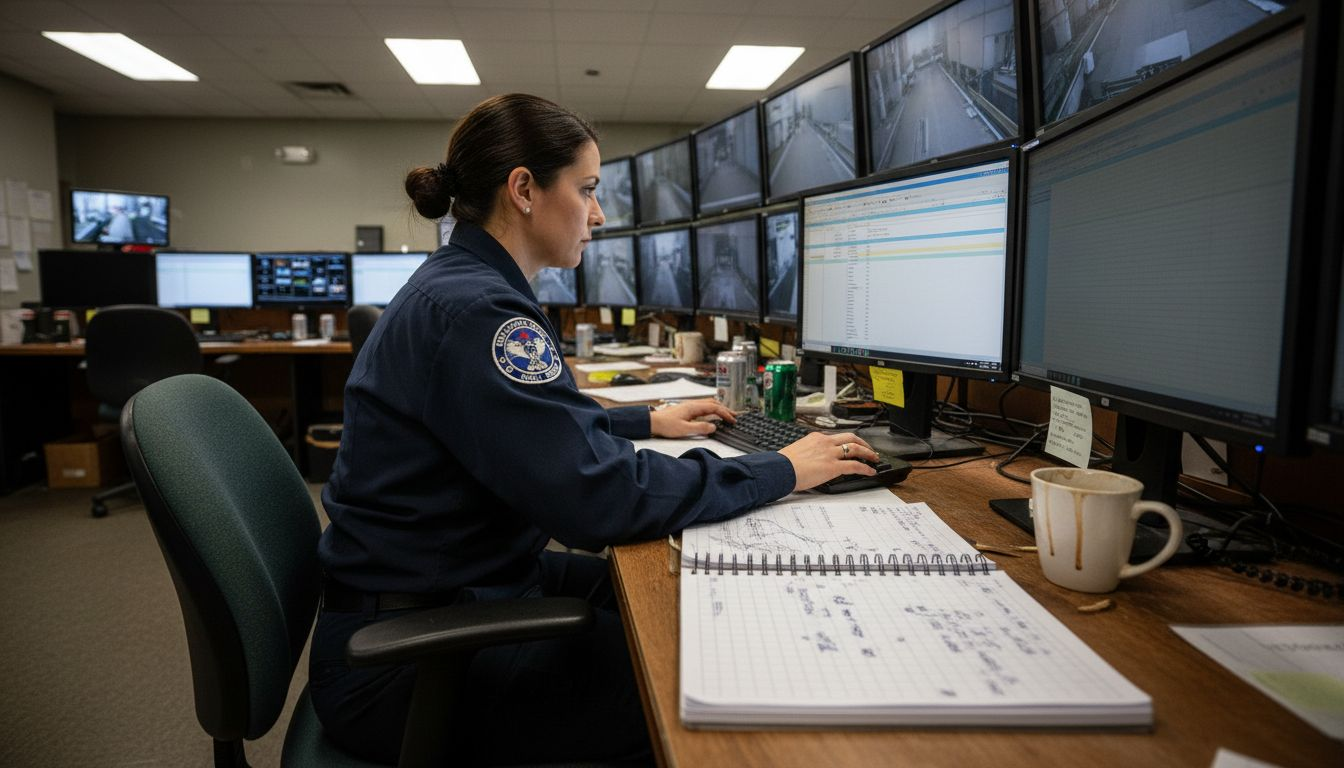
Continuous monitoring for public safety agencies represents a sophisticated risk management strategy that transforms traditional background checking into a dynamic, real-time surveillance system. Continuous monitoring operationalizes risk detection by creating a comprehensive framework for tracking potential employee risks across multiple dimensions.
The core operational workflow of continuous monitoring involves several critical stages:
- Data Ingestion: Collecting risk signals from diverse sources including criminal databases, professional licensing boards, social media platforms, and financial reporting systems
- Alert Normalization: Standardizing and categorizing incoming risk signals to ensure consistent evaluation
- Risk Triage: Systematically assessing and prioritizing detected signals based on predefined organizational risk parameters
- Policy-Driven Response: Implementing automated or manual interventions aligned with agency-specific protocols
- Comprehensive Reporting: Generating detailed, audit-ready documentation of all monitoring activities and decisions
The fundamental objective of this approach is to create a closed-loop system that provides real-time insights into potential employee risks while maintaining a structured, defensible process. By encoding policies into automated workflows, agencies can minimize operational disruptions and maintain a proactive stance toward potential misconduct or performance issues.
Continuous monitoring transforms reactive oversight into a strategic, preventative risk management approach.
Successful implementation requires agencies to balance technological capabilities with robust policy frameworks, ensuring that monitoring practices respect employee privacy while protecting organizational integrity and public safety.
Pro tip: Develop clear, transparent policies that outline the scope, methods, and employee notification processes for your continuous monitoring program.
Key Legal and Regulatory Considerations
Public safety agencies must navigate a complex landscape of legal requirements when implementing post-hire monitoring programs. Responsible post-hire monitoring requires strict legal compliance that balances organizational protection with employee privacy and individual rights.
Critical legal considerations include:
- Fair Credit Reporting Act (FCRA) Compliance: Ensuring proper consent, disclosure, and adverse action procedures
- Equal Employment Opportunity (EEO) Regulations: Preventing discriminatory monitoring practices
- State-Specific Privacy Laws: Adhering to varying regional regulations on employee monitoring
- Data Protection Standards: Maintaining confidentiality and secure handling of sensitive employee information
- First Amendment and Privacy Rights: Respecting constitutional protections against unwarranted surveillance
The legal framework surrounding post-hire monitoring demands a nuanced approach that goes beyond simple background checking. Public safety agencies must develop comprehensive monitoring protocols that explicitly define the scope, methods, and limitations of employee oversight. This requires creating transparent policies that clearly communicate monitoring practices to employees while maintaining legal defensibility.
Legal compliance is not just about avoiding penalties, but about establishing trust and maintaining ethical standards in public safety organizations.
Successful implementation requires ongoing legal consultation and regular policy updates to keep pace with evolving regulatory landscapes. Agencies must balance their need for comprehensive risk management with fundamental employee rights, creating a monitoring approach that is both thorough and legally sound.
The table below summarizes notable legal risks and how agencies can proactively address them:
| Legal Risk | Proactive Agency Response |
|---|---|
| Inadequate consent documentation | Maintain written employee authorizations |
| Risk of discriminatory practices | Standardize criteria, train decision-makers |
| Insufficient data security | Use encrypted systems and regular audits |
| Overbroad monitoring scope | Define limits and review policy regularly |
| Non-compliance with state laws | Consult local counsel before policy rollout |
Pro tip: Consult with legal experts specializing in employment law to develop monitoring policies that are both comprehensive and legally compliant.
Risk Mitigation and Agency Reputation Protection
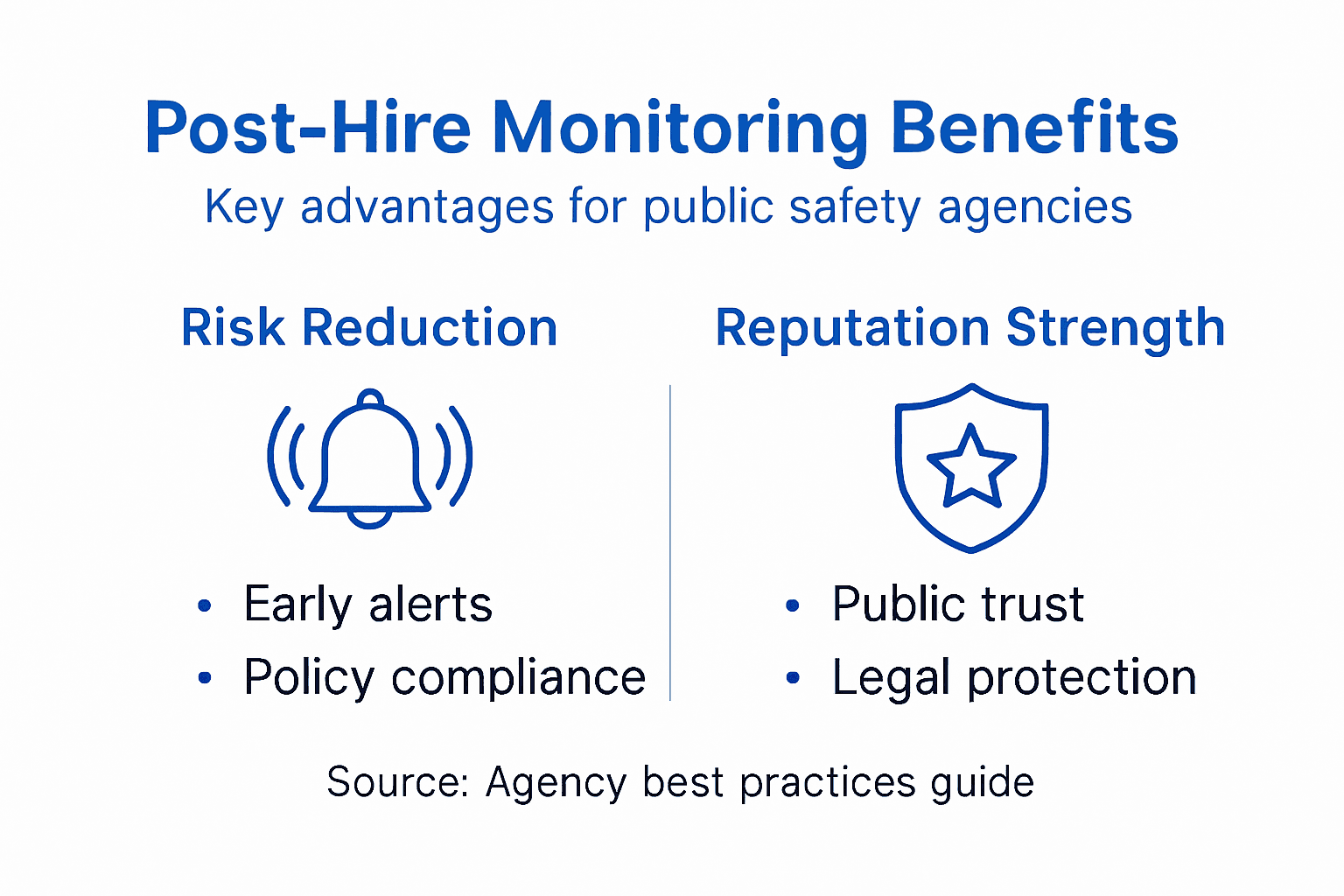
Public safety agencies face unprecedented challenges in maintaining organizational integrity and protecting community trust. Proactive risk mitigation through continuous monitoring enables agencies to detect and address potential employee risks before they escalate into significant operational threats.
Key strategies for effective risk mitigation include:
- Early Warning Detection: Identifying potential behavioral or performance issues before they become critical incidents
- Personnel Risk Assessment: Systematically evaluating employee backgrounds and ongoing professional conduct
- Swift Intervention Protocols: Developing clear procedures for addressing detected risks
- Reputation Management: Maintaining transparency and demonstrating commitment to public safety
- Ongoing Performance Monitoring: Tracking employee conduct across multiple professional dimensions
The fundamental objective of risk mitigation extends far beyond simple compliance. Public safety agencies must create a comprehensive risk management ecosystem that proactively identifies, assesses, and addresses potential vulnerabilities. This approach requires a holistic strategy that integrates technological monitoring tools with robust organizational policies and swift intervention mechanisms.
Reputation protection is not about avoiding negative incidents, but about building a culture of accountability and continuous improvement.
Successful risk mitigation demands a multifaceted approach that balances technological capabilities with human judgment. Agencies must develop sophisticated monitoring systems that provide actionable insights while maintaining respect for employee privacy and professional dignity.
Pro tip: Implement a tiered risk assessment framework that allows for proportional responses to different levels of detected employee risks.
Common Pitfalls and Best Practice Solutions
Post-hire monitoring programs in public safety agencies frequently encounter significant challenges that can compromise their effectiveness and credibility. Continuous monitoring requires strategic operational approaches to mitigate common implementation risks and ensure robust employee oversight.
Common pitfalls in post-hire monitoring include:
- Alert Fatigue: Overwhelming systems with excessive false-positive notifications
- Inconsistent Policy Enforcement: Uneven application of monitoring standards
- Documentation Fragmentation: Scattered record-keeping that complicates auditing
- Over-Surveillance: Creating an environment of distrust among employees
- Regulatory Non-Compliance: Failing to meet legal requirements for employee monitoring
Addressing these challenges requires developing a comprehensive monitoring framework that balances technological capabilities with human judgment. Successful agencies implement closed-loop systems that separate detection from decision-making, utilizing sophisticated case management workflows that reduce operational noise and improve response consistency.
Effective monitoring is about creating a culture of accountability, not generating fear or undermining employee morale.
Public safety organizations must prioritize transparent policies, obtain proper employee consent, and regularly review monitoring protocols. This approach ensures that continuous monitoring becomes a collaborative process focused on maintaining high professional standards while respecting individual privacy rights.
Pro tip: Develop a tiered alert system that categorizes risk signals and provides clear, proportional response guidelines.
Strengthen Your Post-Hire Monitoring to Safeguard Public Safety Agencies
The challenge of protecting public safety agencies goes far beyond initial hiring. As highlighted in the article, continuous post-hire monitoring is essential for early risk detection, maintaining professional integrity, and ensuring compliance with complex legal standards. Agencies often struggle with alert fatigue, inconsistent policy enforcement, and balancing thorough oversight with employee privacy. These pain points can put both agency reputation and community safety at risk.
OMNI Intel provides tailored background screening solutions specifically designed for public safety organizations. Our platform supports dynamic, ongoing employee monitoring with AI-driven tools that align with the article’s call for responsible, real-time risk management. Whether you need to verify professional licenses, track social media activity, or ensure continuous compliance, OMNI Intel offers an integrated approach that reduces hiring costs and accelerates recruitment cycles.
Elevate your agency’s hiring and monitoring practices with proven methods. Discover actionable strategies in Hiring Best Practices | OMNI Intel and get started on implementing a comprehensive system today.

Don’t leave public safety to chance. Protect your agency’s reputation with continuous post-hire monitoring solutions crafted for your unique needs. Visit https://omniintel.co/get-started now and take the next step toward safer, smarter employee oversight.
Frequently Asked Questions
What is post-hire monitoring?
Post-hire monitoring is an ongoing screening process that evaluates an employee’s performance, conduct, and legal compliance after they have been hired. It aims to protect public safety agencies by identifying potential risks in real-time.
How does continuous monitoring differ from one-time background checks?
Continuous monitoring provides ongoing, dynamic assessment of an employee’s background and conduct, allowing agencies to detect risks as they arise, while one-time background checks offer a static snapshot of an individual’s records at the time of hiring.
What are the benefits of implementing post-hire monitoring in public safety agencies?
Post-hire monitoring helps ensure workplace safety, maintains professional standards, provides early warning of potential problems, and protects the agency’s reputation and public trust by proactively addressing risks before they escalate.
What legal considerations should agencies take into account when implementing post-hire monitoring?
Agencies must comply with laws such as the Fair Credit Reporting Act (FCRA), Equal Employment Opportunity (EEO) regulations, and various state privacy laws while maintaining employee privacy and ensuring that monitoring practices do not discriminate against individuals.