
Best Practices for Law Enforcement Hiring in 2026
Law enforcement agencies face unprecedented staffing shortages and fierce competition for qualified candidates in 2026. With turnover rates climbing and recruitment pools shrinking, HR professionals and hiring managers must adopt strategic, evidence-based hiring practices to build resilient teams. This article outlines actionable best practices covering recruitment strategy, screening rigor, diversity initiatives, and lateral hiring to help you select officers who will serve your community with integrity and excel in demanding public safety roles.
Table of Contents
- Establish Clear Hiring Criteria Based On Core Competencies And Ethical Standards
- Implement A Comprehensive, Diversity-Focused Recruitment Strategy
- Use Rigorous Screening And Selection Processes To Enhance Candidate Quality And Retention
- Leverage Lateral Hiring To Address Staffing Shortages Efficiently
- Compare Hiring Strategies And Decide What Fits Your Agency’s Needs
Key takeaways
| Point | Details |
|---|---|
| Define core competencies | Establish clear criteria for interpersonal skills, stress tolerance, adaptability, and ethical standards to guide candidate evaluation. |
| Recruit diverse talent pools | Use targeted outreach, social media, community partnerships, and employee referrals to attract qualified candidates from varied backgrounds. |
| Screen rigorously | Implement multi-step background checks, cognitive and physical assessments, and credential verification to improve hiring quality. |
| Leverage lateral hiring | Transfer experienced officers from other agencies to fill vacancies faster with higher success rates than academy recruits. |
| Compare hiring methods | Evaluate academy recruitment versus lateral transfers based on timeline, cost, success rate, and agency staffing needs. |
1. Establish clear hiring criteria based on core competencies and ethical standards
Your hiring criteria set the foundation for every recruitment and selection decision. Without measurable competencies aligned to your agency mission and community needs, you risk inconsistent evaluations and poor hiring outcomes. The selection process emphasizes core competencies such as interpersonal skills, stress tolerance, adaptability, and the ability to make quick judgments. These attributes directly predict officer performance in high-pressure situations and community interactions.
Start by identifying the specific skills and traits your officers need to succeed. Interpersonal skills enable effective communication with diverse populations. Stress tolerance helps officers maintain composure during emergencies. Adaptability ensures they can navigate evolving threats and policy changes. Integrity and ethical judgment protect your agency reputation and public trust. Document these competencies in a written framework that guides job descriptions, interview questions, and evaluation rubrics.
Next, translate competencies into standardized, measurable criteria. For example, assess stress tolerance through scenario-based interviews or psychological evaluations. Evaluate interpersonal skills by reviewing past performance reviews and conducting structured behavioral interviews. This approach reduces subjective bias and creates fair, defensible hiring decisions. Embedding ethical standards into every stage of recruitment and screening reinforces the values you expect from candidates and signals your commitment to integrity.
Pro Tip: Involve senior officers, HR specialists, and legal advisors when defining competencies to balance operational needs with compliance requirements. Their input ensures criteria reflect real-world demands and withstand scrutiny. Review and update your competency framework annually to keep pace with emerging challenges and community expectations. For a comprehensive approach, explore hiring process best practices tailored to public safety agencies.
2. Implement a comprehensive, diversity-focused recruitment strategy
Attracting a diverse and qualified candidate pool requires intentional outreach and inclusive practices. A written recruitment plan formalizes your commitment to equal opportunity and provides a roadmap for targeting underrepresented communities. Use of marketing strategies targeting diverse applicant pools, employee referral programs, and partnerships to recruit a qualified and diverse pool of candidates ensures you reach talent beyond traditional channels.
Identify racially and culturally diverse markets where your agency can build relationships. Partner with local colleges, military transition programs, community organizations, and faith-based groups to expand your reach. These partnerships provide access to candidates who may not actively search for law enforcement careers but possess the skills and character you need. Attend career fairs, host ride-along programs, and sponsor community events to raise your agency profile and demonstrate your commitment to service.
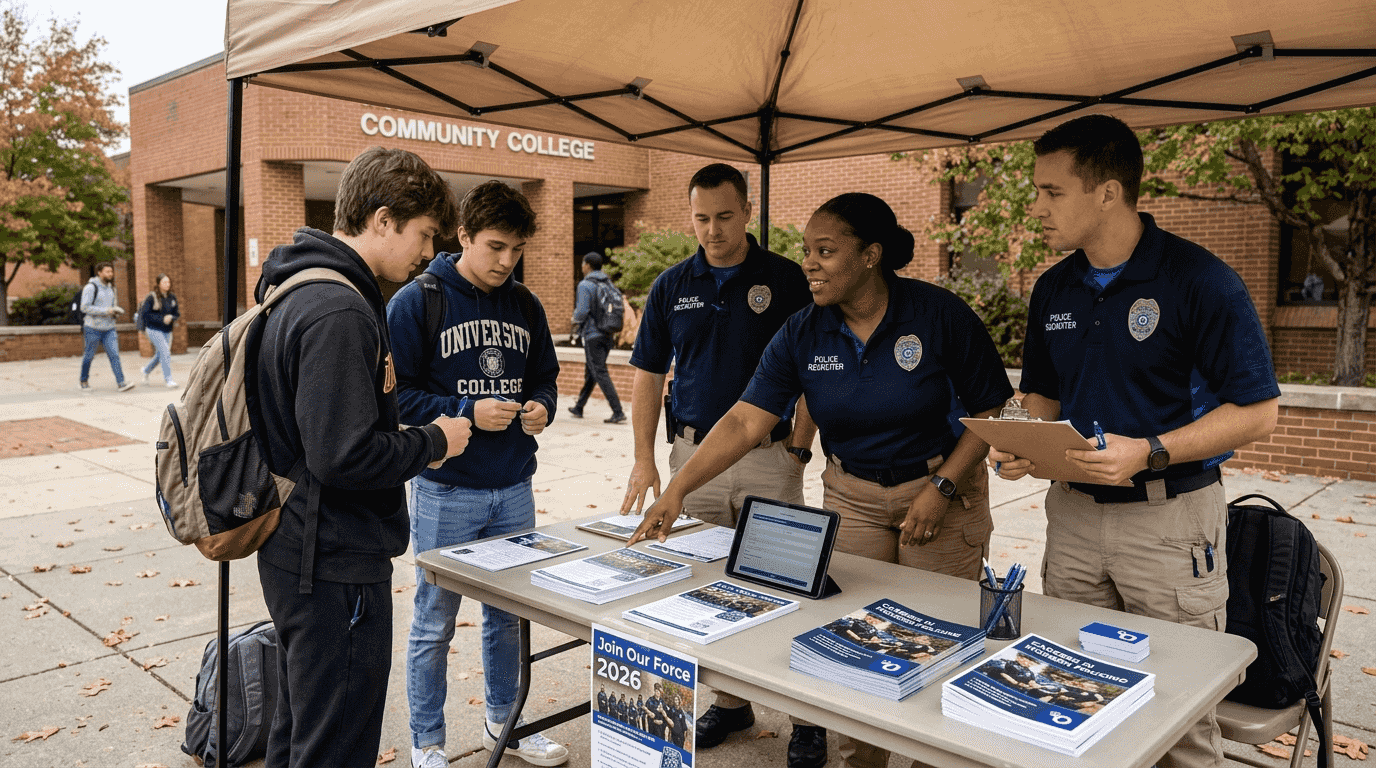
Leverage digital platforms to amplify your recruitment message. Social media channels like LinkedIn, Instagram, and Facebook allow targeted advertising to specific demographics and geographic areas. Create compelling content that showcases your agency culture, career development opportunities, and community impact. Highlight stories of current officers from diverse backgrounds to inspire potential applicants. Employee referral programs incentivize your team to recommend qualified candidates from their networks, often yielding higher-quality hires who align with your values.
Avoid discriminatory practices by ensuring all recruitment materials, job postings, and outreach efforts comply with equal employment opportunity laws. Use inclusive language that welcomes candidates of all backgrounds. Train recruiters and hiring managers to recognize and mitigate unconscious bias. Transparency in your recruitment process builds trust and attracts candidates who value fairness and integrity. For additional strategies, review public safety recruitment best practices and learn how to recruit qualified candidates effectively.
3. Use rigorous screening and selection processes to enhance candidate quality and retention
Screening separates qualified candidates from those who lack the credentials, character, or capability to succeed. A multi-step process that includes application review, background checks, cognitive and physical assessments, and candidacy verification improves hiring outcomes and reduces costly attrition. Comprehensive screening includes verifying employment, references, driving records, USCIS eligibility, and cognitive/physical assessments to ensure candidates meet job requirements.
Begin with thorough application reviews to verify credentials, work history, and educational qualifications. Flag inconsistencies or gaps that require clarification during interviews. Conduct detailed background investigations to assess character, integrity, and suitability for public safety roles. These investigations should cover criminal history, credit reports, social media activity, and personal references. The FBI Police Officer Selection System involves eligibility assessment, core competencies evaluation, and testing to maintain high hiring standards.
Cognitive and physical assessments measure whether candidates can handle the mental and physical demands of law enforcement. Cognitive tests evaluate problem-solving, decision-making, and situational judgment. Physical fitness tests ensure candidates meet strength, endurance, and agility standards required for patrol and emergency response. Tailor these assessments to reflect actual job tasks rather than generic benchmarks. Include USCIS form I-9 verification to confirm employment eligibility and maintain compliance with federal regulations.
The table below compares key screening steps, their purpose, and impact on hiring success:
| Screening Step | Purpose | Impact on Hiring Success |
|---|---|---|
| Application Review | Verify credentials and work history | Filters unqualified candidates early |
| Background Investigation | Assess character, integrity, criminal history | Reduces risk of hiring unsuitable officers |
| Cognitive Assessment | Evaluate problem-solving and judgment | Predicts performance in complex situations |
| Physical Fitness Test | Confirm physical capability for job demands | Ensures readiness for patrol and emergencies |
| USCIS Form I-9 | Verify employment eligibility | Maintains legal compliance |
Pro Tip: Employ background check partners to streamline investigations and reduce time-to-hire. Specialized providers offer faster turnaround, deeper insights, and compliance expertise that internal teams may lack. This investment accelerates your hiring cycle without sacrificing thoroughness. Explore public safety recruitment process guide and law enforcement background investigations for expert support.
4. Leverage lateral hiring to address staffing shortages efficiently
Lateral hiring offers a strategic solution to fill vacancies faster and with greater success than recruiting academy rookies. Experienced officers from other agencies bring proven skills, reduce training time, and integrate into your team more quickly. Lateral hires have a 90% success rate from application to patrol officer status and can start answering calls in as little as 6 weeks, compared to 1.5 years for academy recruits.
The benefits extend beyond speed. Lateral officers already understand law enforcement culture, protocols, and community policing principles. They require minimal academy training, focusing instead on agency-specific policies and local geography. This accelerated onboarding reduces costs and allows you to deploy officers to critical assignments sooner. Higher retention rates among lateral hires mean fewer resources spent on recruiting and training replacements.
To attract lateral candidates, offer competitive signing bonuses, relocation assistance, and streamlined credentialing processes. Highlight career advancement opportunities, specialized units, and quality of life benefits in your recruitment materials. Simplify the application and background check process to minimize friction for experienced officers considering a move. Agencies that invest in lateral transfer programs often see immediate staffing relief and long-term improvements in team stability.
“Lateral hiring is not just a stopgap measure. It is a strategic investment in experienced talent that delivers faster results, higher success rates, and stronger team cohesion. Agencies facing critical shortages should prioritize lateral recruitment alongside traditional academy pipelines.”
For insights into evolving recruitment strategies, review public safety recruitment trends 2026 to stay ahead of industry shifts.

5. Compare hiring strategies and decide what fits your agency’s needs
Choosing between academy recruitment and lateral hiring depends on your agency’s staffing urgency, budget, and long-term workforce goals. Many departments face recruitment and staffing challenges, with shortages between 5% and 30%, making strategic hiring method selection critical. The table below compares key factors to help you evaluate options:
| Factor | Academy Recruitment | Lateral Hiring |
|---|---|---|
| Timeline to Patrol | 1.5 years | 6 weeks |
| Success Rate | 60% to 70% | 90% |
| Training Costs | High (full academy) | Low (agency orientation only) |
| Candidate Experience | Entry-level, moldable | Experienced, proven skills |
| Availability | Larger pool, competitive | Smaller pool, higher demand |
| Retention Risk | Higher attrition in first 2 years | Lower attrition, stable tenure |
Academy recruitment builds your pipeline with entry-level candidates you can shape to fit your agency culture. However, the extended timeline and lower success rates strain resources during staffing crises. Lateral hiring delivers immediate relief with experienced officers but requires competitive incentives to attract candidates from other agencies. A hybrid approach balances both methods, using academy recruits for long-term growth and lateral hires for urgent vacancies.
Regional collaboration can amplify your hiring success. Partner with neighboring agencies to share recruitment events, training resources, and candidate referrals. Joint academies reduce per-agency costs while maintaining quality standards. Collaborative hiring initiatives also strengthen relationships across jurisdictions, improving mutual aid and regional public safety coordination. For a detailed roadmap, consult the step by step hiring process public safety guide.
Why OMNI Intel solutions support your law enforcement hiring success
Implementing these best practices requires reliable tools and expert support. OMNI Intel offers specialized pre employment screening and background investigations public safety tailored for law enforcement agencies. Our platform streamlines applicant screening integration, reducing time-to-hire while maintaining the rigor your hiring decisions demand. By leveraging AI-driven tools and law enforcement investigation principles, we help you identify qualified candidates faster and mitigate hiring risks.

Our public safety recruiting solutions integrate seamlessly with your existing workflows, providing continuous monitoring and compliance support. Trusted by agencies nationwide, OMNI Intel empowers you to make transparent, evidence-based hiring decisions that protect your reputation and community safety.
“Effective screening is the cornerstone of public safety hiring. Partnering with experts who understand law enforcement standards ensures you hire officers who uphold integrity, serve with excellence, and strengthen community trust.”
FAQ
What core competencies should law enforcement hiring prioritize?
Core competencies include interpersonal skills, stress tolerance, adaptability, and quick judgment. These traits predict officer performance in high-pressure situations and community interactions. Agencies should define these competencies clearly and use them to guide job descriptions, interview questions, and evaluation criteria.
How can agencies improve diversity in hiring?
Use targeted outreach to diverse communities through partnerships with colleges, military programs, and community organizations. Implement unbiased recruitment practices, inclusive language in job postings, and equal opportunity policies. Social media and employee referral programs expand your reach to underrepresented talent pools.
What are the benefits of lateral hiring in law enforcement?
Lateral hires have higher success rates and can start patrol duties in as little as six weeks compared to 1.5 years for academy recruits. They bring proven skills, reduce training costs, and help address staffing shortages more efficiently. Competitive bonuses and streamlined onboarding attract experienced officers from other agencies.
What screening steps ensure high-quality law enforcement hires?
Comprehensive background checks, cognitive and physical testing, and credential verification are critical. USCIS form I-9 compliance confirms employment eligibility. Multi-step screening processes filter unqualified candidates early, assess character and integrity, and predict performance in complex law enforcement scenarios.