

Cut Litigation Risk: MVR Monitoring for U.S. Fleets, 49 CFR Defense
Continuous MVR monitoring for fleets is the right call for any carrier running more than a handful of drivers. Annual pulls under 49 CFR §391.25 leave a blind spot of up to nearly a year between checks, and a suspended license or fresh DUI can sit undetected that entire time. Continuous or monthly enrollment closes that gap, strengthens your audit file, and gives you a documented due-diligence record if a driver’s history ever ends up in litigation. Start by enrolling a pilot group and requiring signed driver consent before your next MVR renewal cycle.
TL;DR:
- Continuous monitoring detects license suspensions and violations within days to weeks, significantly reducing the risk of undetected driver issues between annual checks.
- Monitoring providers rely on state reporting cycles, which can be automatically pushed or batched weekly or monthly, affecting alert speed.
- Fleet operators must obtain signed driver consent and comply with privacy laws, such as the Driver’s Privacy Protection Act, to legally access and use MVR data.
- Costs per driver typically range from $30 to $100 annually, which should be weighed against potential insurance claims and liability from missed violations.
- A well-designed program includes clear severity tiers, documented escalation protocols, and maintains audit-ready records linking alerts to driver files and corrective actions.
Table of Contents
- How Continuous MVR Monitoring Works
- Why Fleets Move Beyond the Annual MVR Requirement
- Legal and Privacy Rules You Cannot Skip
- Alert Types and How to Triage Them
- Building the Program: Checklist and Cost Bands
- Making Monitoring Records Audit-Ready
- OMNI Intel’s View on Investigator-Grade Monitoring Design
- A Realistic Take on Speed, Load, and Defensibility
- A Different Angle: Investigator-Grade Monitoring for Safety-Sensitive Teams
- Primary Sources to Cite in Your Policy
- Sources
- FAQ
How Continuous MVR Monitoring Works
Continuous monitoring is not a single technology. It is an enrollment relationship between your fleet, a monitoring provider, and each state’s Department of Motor Vehicles. Once a driver signs a consent form, the provider registers that driver’s license number with the relevant state system and waits for a reportable change: a new suspension, a conviction, a medical certification lapse.
What “continuous” actually means depends on the state. Some, like California through its Employer Pull Notice program, push updates to employers automatically as records change. Others still operate on batch cycles, meaning your provider pulls updated records on a fixed schedule, often weekly or monthly, rather than in true real time. Detection speed always depends on how fast the state itself reports the change, not just how good your vendor is.
The operational pieces that make monitoring usable:
- Enrollment: driver’s license number and signed consent language filed against the state system
- Reporting cadence: varies by state, from near-instant push notices to scheduled batch pulls
- Verification: providers confirm a hit against the enrolled driver before flagging it, cutting down false positives
- Alert delivery: dashboard entry, email notice, or both, usually tagged by severity
Why Fleets Move Beyond the Annual MVR Requirement
Federal regulation requires motor carriers to obtain and review each driver’s MVR at hire and at least once every 12 months, under 49 CFR §391.25. That rule sets a floor, not a safety strategy. A driver who loses a license in month two of the annual cycle can keep driving your trucks for ten more months before anyone at your company knows.
Continuous monitoring supplements the federal minimum instead of replacing it. You still run the required annual pull. You add ongoing checks on top of it to catch what happens in between.
A documented continuous monitoring program can support a due-diligence defense in negligent entrustment cases, because it shows the fleet acted on information as soon as it became available, rather than waiting for the next scheduled review.
Continuous platforms typically surface a state record change within days to a couple of weeks of it occurring, according to LegalClarity’s analysis of driver license monitoring. Compare that to an annual-only fleet: a suspension found in ten days is a coaching conversation and a vehicle reassignment. The same suspension found in month eleven, after a crash and a lawsuit, is a very different conversation with your insurance carrier and potentially a jury.
Legal and Privacy Rules You Cannot Skip
Motor vehicle records are not public data you can pull at will. The Driver’s Privacy Protection Act restricts release and use of state MVR data to permissible purposes, and unauthorized access carries civil penalties. Employer monitoring of commercial drivers for safety purposes generally qualifies, but your program needs to document that purpose and, in most setups, a signed driver consent on file.
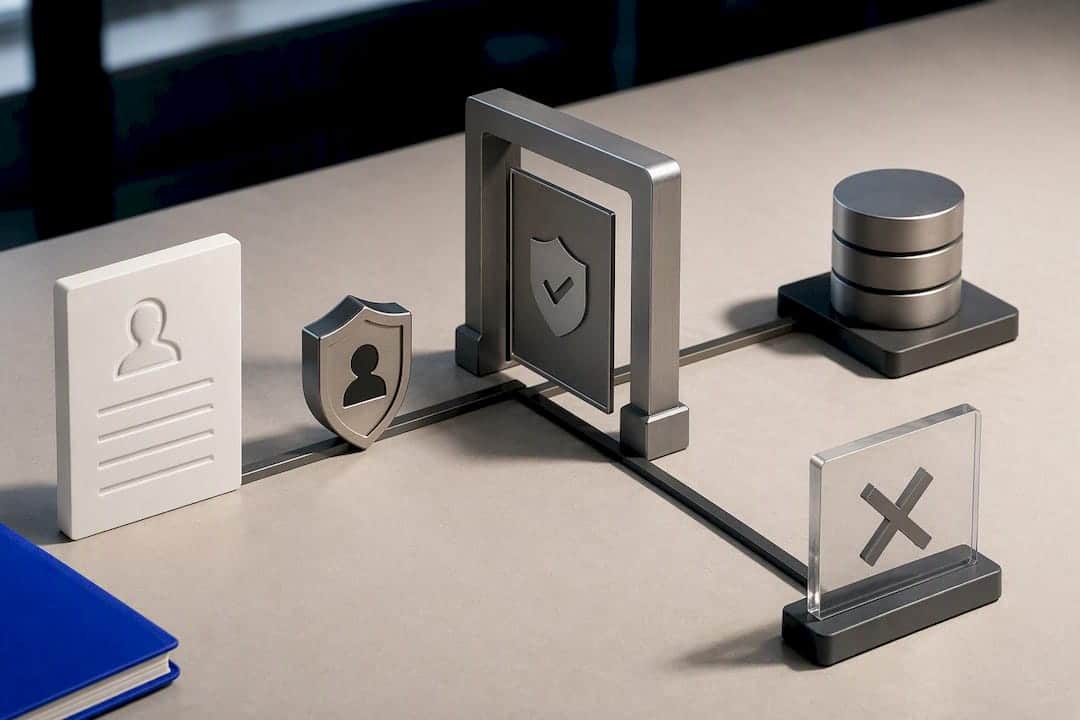
If your MVR monitoring feeds into a broader background screening or adverse-action process, FCRA obligations layer on top of DPPA. That means proper disclosure, driver authorization, and a defined adverse-action procedure if a record change leads to discipline or termination.
For CDL holders, monitoring MVR records is not a substitute for the separate Drug and Alcohol Clearinghouse. The two systems track different things and both need active management. Keep these on file at all times:
- Signed consent forms for every enrolled driver
- Enrollment logs showing when each driver went active in the monitoring system
- Action records documenting what happened after every alert
Alert Types and How to Triage Them
Not every alert deserves the same urgency. A minor moving violation and a DUI arrest should never land in the same inbox with the same response clock. Build your triage around severity tiers:
- High severity: license suspension, DUI or DWI, medical certification downgrade or expiration. Requires same-day review and immediate consideration of restricting vehicle access.
- Medium severity: at-fault accidents, multiple moving violations within a short window, expired endorsements. Requires review within 24 to 48 hours.
- Low severity: single minor moving violation, address change on record. Requires logging and inclusion in the driver’s next scheduled coaching conversation.
Every alert needs the same basic workflow: verify the hit against the enrolled driver’s identifiers, document what was found, notify the driver, and decide on vehicle access before closing the loop. Assign a named person, not a title, to authorize any restriction on driving privileges.
Pro Tip: Write your severity tiers and response windows into a one-page policy before your first alert ever arrives. Deciding escalation rules in the moment, under pressure, is how fleets end up with inconsistent enforcement that plaintiffs’ attorneys love to point out later.
Building the Program: Checklist and Cost Bands
Rolling out monitoring is a sequence, not a single purchase decision. Work through it in this order:
- Define your monitoring policy, including which roles get enrolled and at what frequency
- Draft consent language and get legal review before collecting a single signature
- Evaluate providers on state coverage, alert accuracy, and dashboard usability
- Design a pilot with a defined driver group and a 60 to 90 day review window
- Train dispatch and safety staff on the escalation protocol before go live
- Scale to the full fleet once the pilot metrics hold up
Integration matters as much as enrollment. Alerts need a home in your HRIS, a path into each driver’s DQ file, and a reporting line to your insurer if your policy requires it.
On cost, continuous monitoring runs higher per driver than a single annual pull. LegalClarity puts typical per-driver annual costs at roughly $30 to $100, depending on state coverage and reporting frequency. Weigh that against a single at-fault accident claim tied to a driver whose suspension went undetected for months. For your pilot, track three numbers: alert rate per driver, administrative hours spent per alert, and any incident that monitoring would have flagged earlier than your last annual pull did.
Making Monitoring Records Audit-Ready
An alert that never gets filed anywhere useful is not a compliance asset, it is a liability waiting to surface during discovery. Every verified MVR alert should land in the driver’s DQ file, get logged in your HRIS, and appear on a centralized safety dashboard your compliance officer can pull up without digging.
Keep the trail specific enough that an auditor or an insurance underwriter can follow it without asking you to reconstruct it from memory:
- Timestamp of the alert and the verification date
- Notes on how the hit was confirmed against the correct driver
- The action taken, including who authorized it
- A record of the driver notification and any response
Link each alert to your corrective-action system so a pattern of violations across multiple alerts is visible in one place, not scattered across separate files.
OMNI Intel’s View on Investigator-Grade Monitoring Design
Fleet MVR monitoring and post-hire employee monitoring in public safety agencies share the same underlying discipline: verify before you act, document every step, and route escalation to a named authority. OMNI Intel builds its post-hire monitoring tools around that investigator-grade standard, treating every flagged record as something to confirm, timestamp, and log before any action gets taken.
That same chain-of-custody thinking applies directly to fleet programs. Consent handling, enrollment tracking, and escalation templates built for monitoring post-hire activity in public safety hiring translate cleanly to fleet safety, because the underlying question is identical: who gets notified, who decides, and what gets kept on file.
A Realistic Take on Speed, Load, and Defensibility
State reporting limits mean no monitoring system is instant. Detection is faster than annual pulls, never immediate. Build your program around written policy and named decision authority first, then start with a pilot group and an early conversation with your insurer before you scale.
— Matt
A Different Angle: Investigator-Grade Monitoring for Safety-Sensitive Teams
Fleet MVR monitoring solves driver record risk. If your organization also handles pre-employment vetting and post-hire behavior monitoring for safety-sensitive roles, the workflow gap is usually the same one: nobody wrote down who verifies a flag, who decides on action, and where the record gets filed.

A screening and monitoring platform built specifically for public safety agencies, law enforcement, fire and EMS, dispatch centers, municipalities, and private security firms addresses the high cost of missed records in community trust and insurance premiums. Such platforms apply verification and documentation discipline needed for fleet monitoring programs, including consent handling, enrollment tracking, and audit-ready escalation records. If your agency needs help structuring pre-employment screening or post-hire monitoring with the same rigor described here, get started with OMNI Intel and walk through your current gaps with a real workflow review.
Primary Sources to Cite in Your Policy
Build your written monitoring policy around these primary sources rather than secondhand summaries:
- 49 CFR §391.25, the federal annual MVR requirement every motor carrier must meet
- FMCSA’s employer notification services page, listing which states offer employer notification programs
- American Trucking Associations, for industry positioning on monitoring as an emerging safety practice
Sources
- 49 CFR §391.25 — Inquiry and investigation — Motor carrier obligations
- FMCSA — Employee notification services by state
- Driver license monitoring: How it works and what it tracks — LegalClarity
- The case for continuous license monitoring — FreightWaves
FAQ
Is Continuous MVR Monitoring Required by Law?
No. Federal law under 49 CFR §391.25 requires an annual MVR pull, but continuous monitoring is a voluntary practice that fleets adopt to close the gap between annual checks.
How Fast Do Continuous Monitoring Alerts Arrive?
Detection speed depends on the state’s own reporting cadence, but continuous platforms typically surface a change within days to a few weeks, far faster than waiting for the next annual review.
Do Drivers Need to Sign Consent for MVR Monitoring?
Yes. Under the Driver’s Privacy Protection Act, employer access to motor vehicle records generally requires a documented permissible purpose and, in most monitoring setups, a signed driver consent form on file.
How Much Does MVR Monitoring Cost Per Driver?
Typical per-driver annual costs range roughly $30 to $100, depending on the provider and how frequently records are checked.
Can Monitoring Data Help With Driver Coaching, Not Just Compliance?
Yes. A documented alert history lets safety teams start coaching conversations or reassign vehicles as soon as a record changes, instead of waiting for the next scheduled review to discover a problem.