
AI in Background Checks for Public Safety Hiring 2026
Many believe AI will replace human recruiters in public safety, but the reality is different. AI-driven background checks reduce hiring cycle times by up to 40% while supporting recruiters, not replacing them. This guide explores how AI transforms background screening in law enforcement and emergency services, covering technologies, benefits, ethical considerations, and implementation strategies to help you make informed decisions about AI adoption in your agency.
Table of Contents
- Introduction To AI In Background Checks For Public Safety
- AI Technologies Transforming Background Checks
- Impact Of AI On Recruitment Accuracy And Efficiency
- Ethical And Compliance Considerations
- Continuous Monitoring And Post-Hire Surveillance
- Best Practices For Implementing AI-Driven Background Checks In Public Safety
- Common Misconceptions About AI In Background Checks
- Conclusion And Future Outlook
- Discover AI-Driven Background Check Solutions For Public Safety Agencies
- Frequently Asked Questions
Key takeaways
| Point | Details |
|---|---|
| AI automates screening | Machine learning and natural language processing accelerate background checks by analyzing massive datasets in minutes. |
| Faster hiring cycles | AI-driven platforms reduce background check processing times by 25-40% while improving risk detection accuracy. |
| Ethical oversight required | Clear policies, transparency, human review, and regular audits prevent bias and ensure compliance with privacy laws. |
| Continuous monitoring | Post-hire AI surveillance identifies emerging risks in real time, protecting agency integrity beyond initial screening. |
| Practical implementation | Successful adoption requires workflow integration, staff training, pilot testing, and balancing automation with human judgment. |
Introduction to AI in background checks for public safety
Artificial intelligence encompasses technologies like machine learning, natural language processing, and computer vision that enable computers to perform tasks requiring human intelligence. In recruitment, AI systems use machine learning, natural language processing, and computer vision specifically tailored for background checks in public safety recruitment.
Public safety agencies face unique hiring challenges. Officers, firefighters, and dispatchers hold positions of public trust requiring integrity, sound judgment, and clean records. Traditional background checks involve manual document review, phone calls to references, and database searches across multiple systems. This process takes weeks or months, creating bottlenecks in recruiting.
AI-enhanced workflows transform this landscape. Automated systems scan criminal records, employment history, social media profiles, and biometric data simultaneously. They flag inconsistencies, verify credentials, and identify risk patterns humans might miss. This speed matters when agencies compete for qualified candidates in tight labor markets.
The role of background checks in 2026 extends beyond pre-employment screening. AI tools now support continuous monitoring, tracking behavioral changes and legal issues after hiring. For background checks in public safety, this dual approach creates comprehensive risk management throughout an employee’s career.
Key data sources AI analyzes include:
- Criminal records and court documents across federal, state, and local jurisdictions
- Employment verification and professional licensing databases
- Social media activity and public online presence
- Biometric identifiers like fingerprints and facial recognition data
- Credit reports and financial history when relevant to the role
Understanding how AI processes these sources helps you evaluate platforms for public safety background investigations and make strategic technology investments that align with your agency’s specific needs.
AI technologies transforming background checks
Machine learning algorithms excel at pattern recognition. They analyze thousands of background check records to identify correlations between candidate characteristics and future job performance or misconduct risk. These systems learn from outcomes, continuously improving accuracy without explicit programming for every scenario.
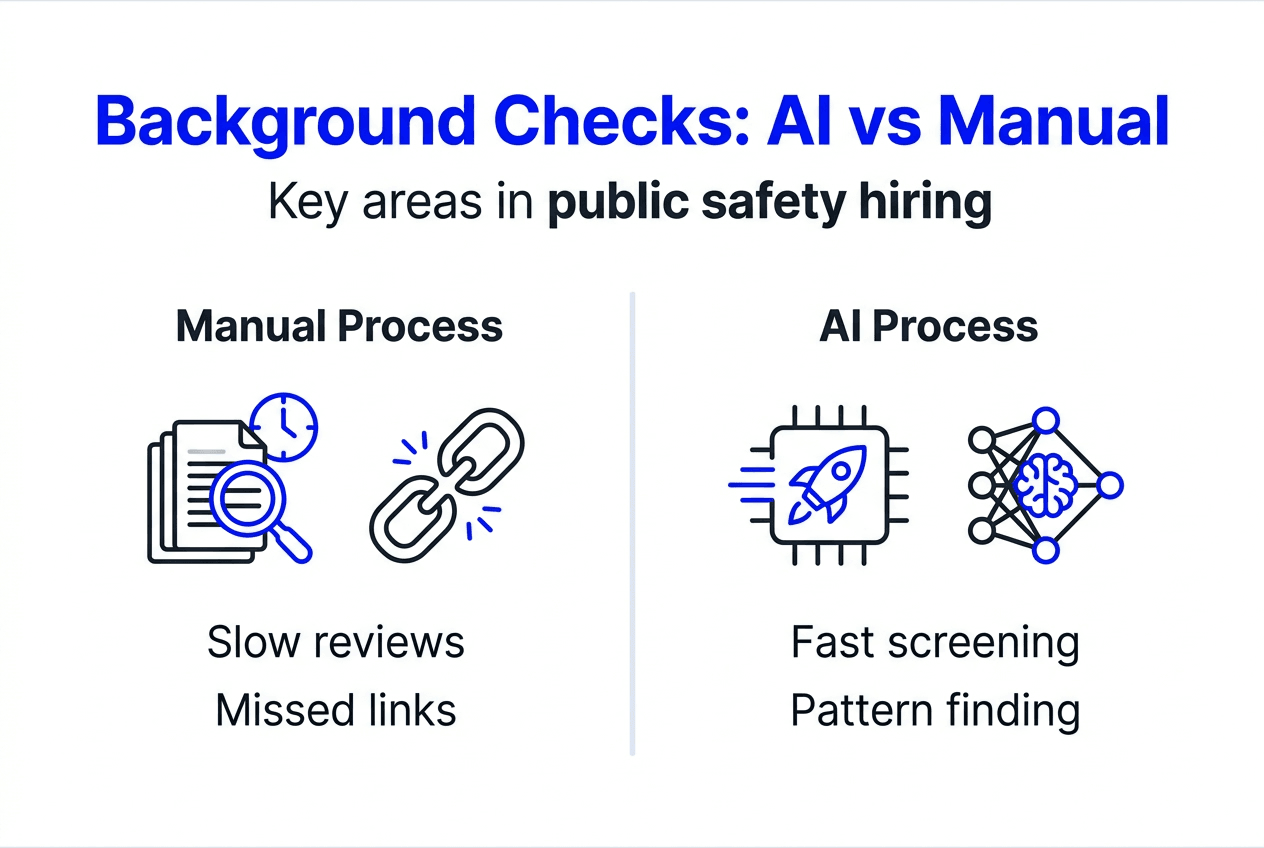
Natural language processing extracts meaning from unstructured text. When reviewing social media posts, court documents, or reference letters, NLP identifies sentiment, detects concerning language patterns, and summarizes key information. This capability turns thousands of pages into actionable insights within minutes.
Computer vision automates document verification. Systems scan driver’s licenses, diplomas, and certifications, comparing them against known templates to detect forgeries. Facial recognition matches photo IDs to applicant selfies, while fingerprint analysis cross-references prints against criminal databases. NLP and computer vision improve verification accuracy by over 15% compared to manual checks.
| Feature | Traditional Manual Process | AI-Driven Process |
|---|---|---|
| Processing time | 3-6 weeks average | 3-7 days typical |
| Document verification | Manual visual inspection | Automated computer vision scanning |
| Criminal record search | Sequential database queries | Simultaneous multi-source analysis |
| Risk assessment | Subjective human judgment | Data-driven pattern recognition |
| Ongoing monitoring | Periodic manual reviews | Real-time continuous surveillance |
| Error rate | 5-8% on average | 2-3% with AI assistance |
Pro Tip: Combine multiple AI techniques for comprehensive screening. Using machine learning for risk analysis, NLP for document review, and computer vision for identity verification creates layered protection that minimizes false negatives and catches sophisticated deception attempts.
For practical guidance on applying these technologies, explore background checks explained to understand how each component fits into your screening workflow and which tools deliver the highest return on investment for different agency sizes and hiring volumes.
Impact of AI on recruitment accuracy and efficiency
Speed transforms competitive positioning in talent markets. Agencies using AI platforms complete background checks 25-40% faster than those relying on traditional methods. This acceleration matters when multiple departments compete for the same qualified candidate. Faster processing means you extend offers before competitors finish their reviews.
Accuracy improvements stem from comprehensive data analysis. AI systems cross-reference information across dozens of databases simultaneously, flagging discrepancies humans miss when switching between systems. They identify gaps in employment history, inconsistencies in stated qualifications, and patterns suggesting credential fraud or undisclosed legal issues.

AI use reduced crime rates by up to 35% where integrated with human oversight in background checks. This statistic reflects better candidate selection preventing insider threats and misconduct. When agencies hire individuals with hidden risk factors, those employees create liability through excessive force incidents, theft, or policy violations.
Key benefits driving adoption include:
- Faster candidate vetting allowing competitive advantage in recruiting
- Thorough analysis of multiple data sources human reviewers lack time to examine
- Significant error reduction through automated cross-referencing and validation
- Scalability enabling small agencies to conduct enterprise-quality screening
- Cost savings from reduced manual labor and faster time to productivity
“Agencies implementing AI-enhanced background checks report 40% reductions in hiring cycle times while simultaneously improving risk detection accuracy by 15-20% compared to manual processes.”
These improvements directly impact agency operations. Faster hiring fills critical vacancies reducing overtime costs and burnout. Better accuracy prevents costly bad hires requiring termination and replacement. For insights on maximizing these benefits, review AI in recruitment for public safety to understand implementation strategies delivering measurable returns.
Ethical and compliance considerations
Bias risks represent the primary ethical concern with AI screening. Algorithms trained on historical data may perpetuate existing disparities if that data reflects biased human decisions. For example, if past hiring favored certain demographics, AI might learn to replicate those patterns rather than identify truly qualified candidates.
Mitigation requires deliberate intervention. Use diverse training datasets representing varied demographics and backgrounds. Conduct regular audits comparing AI recommendations against protected class membership to identify unintended discrimination. Implement human review of all final decisions, ensuring AI serves as a tool supporting rather than replacing human judgment.
About 74% of U.S. public safety agencies lack formal AI policies, increasing risks of bias and legal liability. This policy gap creates exposure to discrimination claims and regulatory penalties. Agencies need clear governance frameworks before deploying AI tools in hiring decisions.
Transparency builds trust and ensures accountability. Document how AI systems make recommendations, what data they analyze, and how humans review results. Candidates deserve to know AI participates in evaluating their applications. The DOJ 2024 report stresses transparency, human oversight, and clear policy for AI in criminal justice, applying to recruitment background checks.
Key compliance elements include:
- Documented AI governance policies defining appropriate uses and limitations
- Regular staff training on ethical AI application and bias recognition
- Periodic algorithm audits by independent third parties assessing fairness
- Robust data privacy protections exceeding minimum legal requirements
- Clear candidate notification procedures explaining AI’s role in screening
- Established appeals processes for candidates to challenge AI-flagged concerns
Pro Tip: Implement clear AI governance and comprehensive staff training before deployment. Rushing implementation without proper preparation creates legal exposure and undermines the technology’s benefits through misuse or misunderstanding of results.
For detailed guidance on protecting candidate information, explore data privacy in background checks to understand regulatory requirements and best practices ensuring compliant data handling throughout the screening lifecycle.
Continuous monitoring and post-hire surveillance
Traditional background checks create a snapshot at hiring time. An employee’s circumstances change after joining your agency. Financial problems develop, legal issues arise, or behavioral patterns shift. Annual or periodic manual reviews miss events occurring between scheduled checks.
AI enables real-time monitoring addressing this gap. Automated systems continuously scan public records, social media, and other data sources for flags suggesting emerging risks. When an employee faces arrest, bankruptcy filing, or concerning online behavior, the system alerts supervisors immediately rather than waiting for the next scheduled review.
Technologies supporting continuous surveillance include:
- Automated public record monitoring tracking criminal charges and civil litigation
- Social media analysis identifying concerning posts or affiliations
- License verification confirming credentials remain current and valid
- Financial monitoring detecting bankruptcies or liens suggesting vulnerability
- Integration with internal systems flagging policy violations or performance issues
Benefits extend beyond risk management. Early identification of employee struggles allows intervention before problems escalate. An officer developing financial stress might benefit from employee assistance resources preventing desperation-driven misconduct. A dispatcher showing signs of burnout needs support before errors occur.
Continuous monitoring protects agency reputation and community trust. Public safety scandals often involve warning signs supervisors missed or ignored. Documented monitoring processes demonstrate due diligence when incidents occur, supporting defense against negligent retention claims.
For implementation guidance, review the employee monitoring process guide covering system selection, policy development, and integration strategies. Also explore how to implement employee monitoring workflow for step-by-step deployment instructions ensuring effective ongoing surveillance.
Best practices for implementing AI-driven background checks in public safety
Successful implementation follows a structured approach balancing technology adoption with organizational readiness. These steps guide agencies through deployment while minimizing disruption and maximizing value:
- Assess your agency’s specific needs and current screening gaps through stakeholder interviews and process mapping
- Research and select AI platforms designed specifically for public safety with proven track records in similar agencies
- Develop comprehensive policies governing AI use, data handling, human oversight, and candidate rights before system activation
- Integrate AI tools with existing HR systems and workflows through phased rollout starting with non-critical positions
- Train all staff involved in hiring on proper AI tool usage, result interpretation, and ethical considerations
- Launch continuous monitoring programs with clear escalation procedures for identified risks requiring human review
- Establish feedback loops collecting user input and outcome data to refine processes and address emerging issues
Human review remains essential despite automation. AI flags potential concerns, but people make final hiring decisions. This balance mitigates algorithmic bias while leveraging AI’s speed and thoroughness. Train reviewers to question AI recommendations rather than accepting them blindly.
Governance structures ensure sustained success. Form cross-functional committees including HR, legal, IT, and operations representatives. These groups develop policies, review outcomes, and adjust practices as technology and regulations evolve. Regular meetings maintain momentum and accountability.
Pro Tip: Start with pilot programs testing AI tools on a subset of positions before full deployment. This approach identifies technical issues, training gaps, and process improvements in lower-stakes situations. Collect feedback from pilot participants to refine implementation before organization-wide rollout.
Learn how AI reduces recruitment time and review public safety recruitment best practices for comprehensive guidance on building effective hiring programs. The public safety recruitment process guide offers additional frameworks for optimizing your entire talent acquisition strategy.

Common misconceptions about AI in background checks
Myth: AI will completely replace human recruiters in the hiring process. Correction: AI augments human decision-making by handling time-consuming data analysis, but people make final hiring judgments considering context, culture fit, and intangible qualities AI cannot assess.
Myth: AI systems are inherently biased and unusable for fair hiring. Correction: Properly managed AI with diverse training data, regular audits, and human oversight reduces bias compared to purely subjective human decisions. The key lies in responsible implementation, not avoiding the technology entirely.
Myth: AI background checks invade candidate privacy universally. Correction: Compliant AI systems use only legally accessible public records and information candidates authorize. Transparent policies and proper consent processes govern data collection and use, protecting privacy while enabling thorough screening.
Key clarifications include:
- AI serves as a powerful tool supporting human judgment, not replacing it entirely
- Bias exists in both human and AI decisions, but AI bias is more measurable and correctable through audits
- Privacy concerns apply to implementation choices, not the technology itself, with proper safeguards enabling ethical use
- Cost savings come from efficiency gains, not eliminating human roles in the hiring process
- Accuracy improvements require combining AI capabilities with human contextual understanding
These misconceptions often stem from sensationalized media coverage or limited understanding of how modern AI systems function. Educating stakeholders about realistic capabilities and limitations builds support for adoption while setting appropriate expectations about outcomes and resource requirements.
Conclusion and future outlook
AI fundamentally transforms background screening in public safety recruitment. Faster processing times, improved accuracy, and continuous post-hire monitoring address critical challenges agencies face in competitive talent markets. These tools enable small departments to conduct enterprise-quality screening while helping large agencies scale operations efficiently.
Ethical considerations and compliance requirements demand thoughtful implementation. Clear policies, transparency, human oversight, and regular audits prevent bias while ensuring legal defensibility. The technology’s power creates responsibility to use it fairly and accountably.
Advancing AI governance frameworks and improving algorithms will further enhance public safety recruitment. As more agencies adopt these tools and share best practices, industry standards will emerge guiding responsible use. Integration with other HR technologies will create seamless hiring workflows maximizing efficiency.
Embracing AI thoughtfully positions your agency for success. Better hiring decisions protect community safety, reduce liability, and build public trust. The technology exists today to transform your background screening process. The question is not whether to adopt AI, but how to implement it effectively for your specific needs and organizational culture.
Discover AI-driven background check solutions for public safety agencies
OMNI Intel specializes in AI-powered background screening designed specifically for public safety agencies. Our platforms integrate seamlessly with your existing hiring workflows while delivering the speed, accuracy, and compliance modern recruitment demands. You get enterprise capabilities without enterprise complexity.

Our solutions combine machine learning, natural language processing, and computer vision for comprehensive candidate evaluation. Features include automated document verification, multi-source database searches, risk pattern analysis, and continuous post-hire monitoring. Everything works together in a single platform built for law enforcement, fire, EMS, and dispatch hiring.
Key benefits include:
- Reduced hiring cycle times by 25-40% through automated screening workflows
- Improved risk detection accuracy minimizing bad hires and liability exposure
- Full regulatory compliance with built-in privacy protections and audit trails
- Dedicated support and training ensuring your team maximizes platform value
Explore our pre-employment screening services for detailed capability information. Learn more about background checks for public safety agencies and review our employee monitoring process guide for ongoing risk management strategies.
Frequently asked questions
What is the role of AI in public safety background checks?
AI automates data processing, improves risk detection, and accelerates background checks in public safety recruitment. It analyzes multiple data sources simultaneously, identifying patterns and inconsistencies humans might miss. AI enhances accuracy while supporting continuous monitoring for ongoing employee integrity throughout careers.
How does AI help reduce bias in background checks?
Properly managed AI uses diverse data sets and ongoing audits to identify and reduce bias in screening decisions. Regular algorithm reviews compare recommendations against protected class membership to detect unintended discrimination. Human oversight and transparent policies are essential to ethical AI use, ensuring technology supports rather than replaces fair judgment.
Is AI in background checks compliant with privacy laws?
AI background checks comply with privacy laws when agencies follow clear policies and transparency standards in implementation. Privacy impact depends on how you handle data, what sources you access, and whether you obtain proper consent. Robust safeguards, documented procedures, and legal review ensure compliant screening protecting both agencies and candidates.
Can AI completely replace human recruiters in background checks?
No, AI is a tool designed to augment human decision-making, ensuring more accurate and ethical hiring outcomes. Technology handles time-consuming data analysis and pattern recognition, but people make final judgments considering context, culture fit, and intangible qualities. Human oversight remains critical for effective recruitment and preventing algorithmic errors or bias.