

Risk Mitigation for Fire Departments: A Manager’s Guide
Risk mitigation for fire departments is the structured process of identifying, evaluating, and reducing operational hazards to protect firefighters, civilians, and community assets during emergency response. The industry term for this discipline is fire risk management, and it operates through a hierarchy of controls that spans pre-incident planning, real-time scene assessment, and post-incident review. Fire service managers who treat risk management as a continuous operational process, rather than a compliance checkbox, consistently achieve better safety outcomes. This guide covers the frameworks, tools, and leadership practices that translate policy into measurable protection.
What essential tools and frameworks support risk mitigation in fire departments?
Effective fire risk management strategies begin with a documented framework that assigns ownership, defines escalation thresholds, and specifies the controls applied at each risk level. Without that structure, safety decisions default to individual judgment under pressure, which is precisely when errors occur.
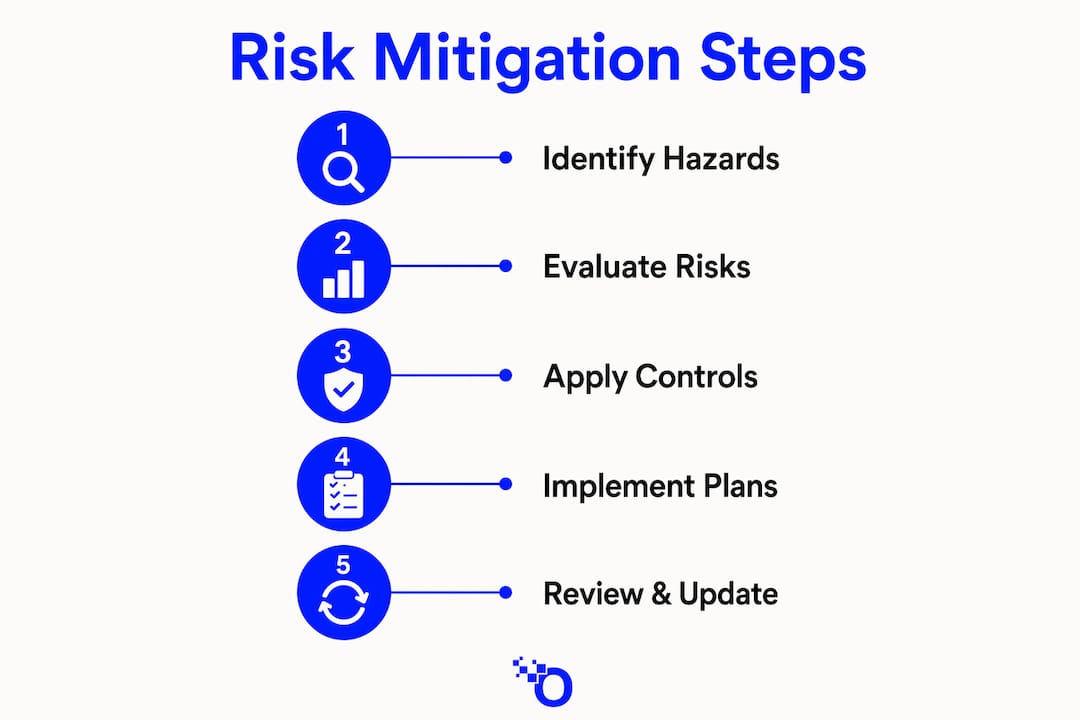
The five-tier hierarchy of hazard controls provides the foundational architecture for any fire department safety plan. The tiers move from most to least effective: elimination, substitution, engineered controls, administrative controls, and personal protective equipment (PPE). Critically, this framework also mandates risk ownership at the lowest competent level, with escalation to strategic governance required when a risk is assessed as highly probable. That escalation requirement is what separates a functioning risk management system from a document that sits in a binder.
Core frameworks fire departments rely on
| Framework | Primary Function | Key Requirement |
|---|---|---|
| DIN 14095 Pre-Fire Planning | Standardized building documentation | Mandatory 2-year review cycle |
| Five-Tier Hazard Control Hierarchy | Risk reduction sequencing | Escalation for high-probability risks |
| Emergency Services Information Packages (ESIPs) | On-scene hazard data access | Regular updates, accessible format |
| Incident Command System (ICS) | Operational structure during response | Defined Safety Officer role |
Pre-fire planning under DIN 14095 requires detailed building plans, access routes, hazard points, and fire protection equipment locations, with a mandatory two-year review cycle. That review cycle is not administrative formality. Buildings change, occupancies shift, and a plan that was accurate in 2023 may direct crews to a door that no longer exists.
Emergency Services Information Packages give responding units immediate access to critical site data, including hazardous chemical inventories, utility shut-off locations, and structural hazard notes. ESIPs must be readily accessible, regularly updated, and formatted for rapid consumption under operational stress. Departments that integrate ESIPs into their dispatch workflow reduce the time crews spend gathering information on scene, which directly reduces exposure time.
Risk ownership is the element most departments underinvest in. Assigning a risk to a safety officer without defining what that person is authorized to do about it creates the illusion of management without the substance. Every identified risk needs a named owner, a defined control measure, and a clear escalation path when conditions change.
How can fire departments implement dynamic risk assessment during emergency response?
Dynamic risk assessment is the real-time application of hazard recognition and decision-making at an active incident. It is not a form completed before arrival. It is a continuous cognitive process that every officer and crew member performs from the moment they receive the dispatch notification.
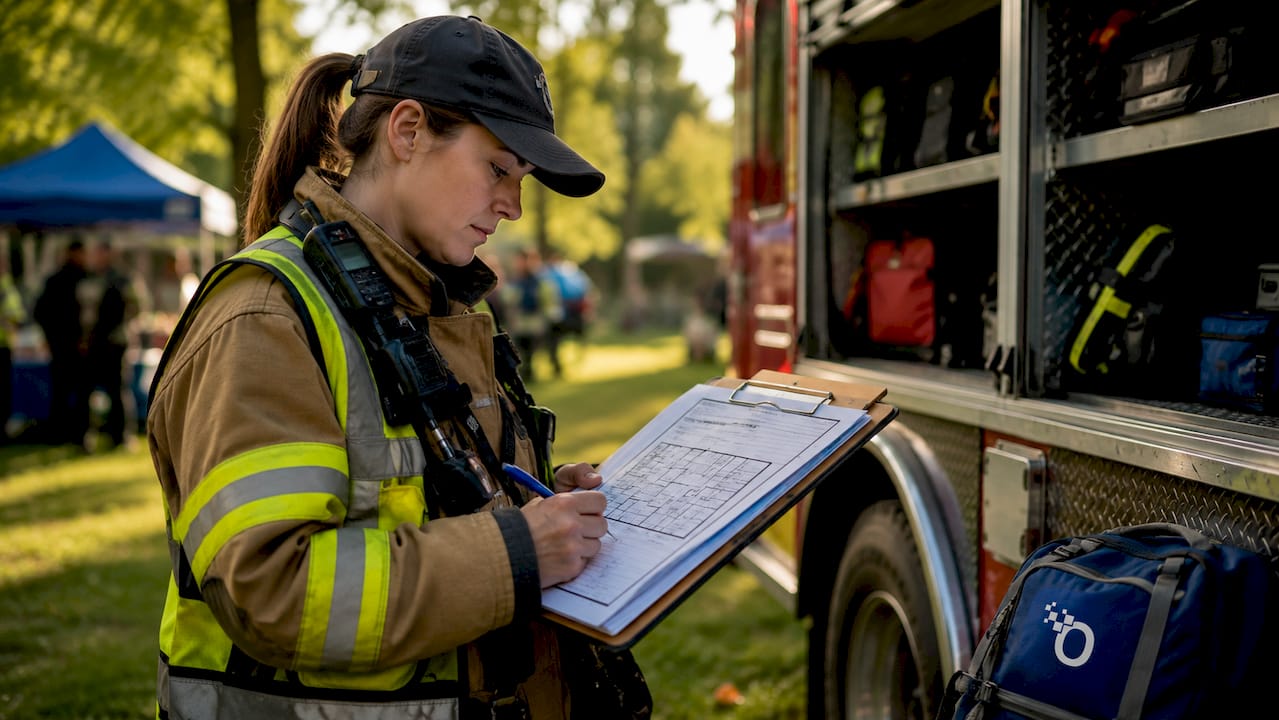
The Incident Safety Officer (ISO) actively monitors hazards, operational tempo, resource allocation, and environmental conditions throughout an incident. This is an operational risk management role, not passive enforcement. An ISO who stands at the perimeter watching is not performing the function. The role demands active movement, direct communication with crew leaders, and the authority to halt operations when conditions deteriorate.
Shifting from binary thinking to specific hazard analysis
The most consequential mindset change in emergency response risk assessment is moving away from binary “safe or unsafe” evaluations. Asking specific “what?” questions leads to deeper hazard analysis and better mitigation in complex environments. “Is this scene safe?” produces a yes or no answer. “What are the structural load indicators on the second floor?” produces information you can act on.
For hazardous materials incidents, structured information gathering on container types, environmental conditions, protective gear availability, and zone boundaries must precede any entry decision. Hazmat risk assessment is not optional pre-entry protocol. It is the decision itself.
Effective dynamic risk assessment on scene includes:
- Operational tempo monitoring. When crews are moving faster than conditions warrant, the ISO calls it. Speed under pressure is a leading indicator of imminent injury.
- Communication discipline. Hazard reports from frontline personnel must reach command without filtering. A crew member who notices a floor deflection and cannot get that information to the ISO within seconds has no effective safety system.
- PPE calibration. The right PPE for the initial size-up may not be adequate as conditions evolve. Reassessment at defined operational intervals is standard practice in well-run departments.
- Environmental condition tracking. Wind shifts, temperature changes, and structural deterioration alter the risk profile continuously. Static assessments made at arrival become inaccurate within minutes.
Pro Tip: Empower every crew member to call a hazard without waiting for permission. Decentralizing hazard recognition is not a loss of command authority. It is the most reliable early warning system available on a fireground.
What are the critical steps to optimize fire department pre-fire plans for risk mitigation?
Pre-fire plans are the single most controllable variable in fire department emergency protocols. Unlike dynamic scene conditions, the quality of pre-fire documentation is entirely within a department’s authority to determine before any incident occurs.
Field verification complements digital plans by adding critical notes on site-specific access limitations and hazard details that digital records miss. A plan drawn from permit records will not show the heavy security gate installed last year, the basement storage of compressed gas cylinders, or the roof access that was permanently sealed. Those details change outcomes.
A complete pre-fire plan development process follows this sequence:
- Conduct the initial site survey. Walk the structure with the plan template in hand. Document building construction type, floor plan, stairwell locations, and roof access points. Note any conditions that deviate from standard occupancy assumptions.
- Identify and record all hazard points. This includes utility shut-off locations for gas, electric, and water; storage areas for flammable or hazardous materials; and any structural features that present collapse risk.
- Document fire protection systems. Sprinkler system type, riser location, FDC connection point, alarm panel location, and suppression agent type for specialized systems all belong in the plan.
- Add site-specific access notes. Gate codes, key box locations, narrow access lanes, low clearances, and weight-restricted surfaces must be documented explicitly. Crews should not be discovering these constraints on arrival.
- Verify against the physical site. Walk the plan against the building. Confirm that every element documented matches current conditions. Note discrepancies and update before filing.
- Schedule mandatory reviews. The DIN 14095 standard requires a two-year review cycle at minimum. High-occupancy or high-hazard facilities warrant annual review. Assign ownership of each plan to a specific officer.
- Integrate with dispatch and ESIPs. A pre-fire plan that is not accessible to the responding crew within the first minutes of dispatch has limited operational value. Digital integration with CAD systems and ESIP packages closes this gap.
Pro Tip: Treat pre-fire plan discrepancies as near-miss events. When a crew discovers on scene that a plan is inaccurate, that gap should trigger a formal review, not just a verbal note. Systematic tracking of plan failures reveals patterns in your documentation process.
Common pitfalls in pre-fire plan development include relying exclusively on permit records, failing to update plans after building renovations, and storing plans in formats that are not accessible from apparatus during response. Each of these failures converts a safety asset into a false sense of preparedness.
How can fire departments reduce apparatus crash risks as part of their risk mitigation strategy?
Apparatus crashes represent one of the most preventable categories of firefighter injury and fatality. The risk factors are well understood, the contributing behaviors are measurable, and the controls are available. What is often missing is consistent enforcement and a leadership culture that treats apparatus operation as a core safety competency.
Apparatus crash risk factors include speed, seat belt compliance, road conditions, and operator distraction. Increasing speed from 40 to 45 mph increases stopping distance by 47 feet. That single data point reframes the “a few extra miles per hour” rationalization that precedes many preventable crashes.
“Due regard is not merely legal language. It is an ethical and operational obligation that governs safe apparatus operation and fireground tactics.”
Legal and ethical responsibilities apply equally to apparatus operators and incident commanders. The “due regard” standard requires operators to drive in a manner that accounts for road conditions, traffic, and the capabilities of the apparatus. Departments that treat this as a legal formality rather than an operational standard expose their personnel and their communities to preventable harm.
Practical controls for apparatus crash risk reduction include:
- Mandatory seat belt policies with zero exceptions. Seat belt non-compliance during apparatus response is a documented fatality factor. Policy must be explicit, enforced consistently, and modeled by officers.
- Speed governance tied to road conditions. Response speed should be calibrated to visibility, traffic density, and road surface, not to the urgency of the dispatch. Arriving at an incident is a prerequisite for helping.
- Standardized backing protocols with spotters. Backing accidents are among the most common apparatus incidents and among the most preventable. A two-spotter standard with defined communication signals eliminates most of this risk category.
- Distraction elimination during response. Mobile device use, radio management, and in-cab conversations during response all compete with operator attention. Policies must address each of these specifically.
- Regular apparatus operation training. Driving a fire apparatus is a perishable skill. Departments that limit driving training to initial certification and then assume competency are accepting risk they have not measured.
The employee risk management guide for public safety HR reinforces that personnel selection and ongoing monitoring are integral to apparatus safety. Operators with documented behavioral risk indicators present elevated crash risk that pre-employment screening and post-hire monitoring can identify before an incident occurs.
What organizational practices support lasting risk mitigation in fire departments?
Sustained fire risk management requires more than frameworks and field protocols. It requires an organizational culture in which safety is treated as an operational process that actively considers all incident factors, not passive rule enforcement. That culture is built through leadership behavior, training investment, and accountability structures.
The Safety Officer’s role extends beyond the incident scene. Pre-incident involvement in pre-fire planning reviews, training program development, and policy drafting positions the Safety Officer as a proactive risk management function rather than a reactive one. Departments that activate the Safety Officer role only at working incidents are using a fraction of its value.
Organizational practices that sustain effective risk mitigation include:
- Continuous training programs tied to identified risk categories. Training should be driven by incident data, near-miss reports, and emerging hazard profiles, not by calendar schedules alone.
- Formal near-miss reporting systems. Near-miss data is the most actionable leading indicator of future incidents. Departments that normalize reporting without punitive consequences build the data foundation for evidence-based safety improvements.
- Safety policy development with frontline input. Policies written without input from the personnel who execute them tend to miss operational realities. Structured review processes that include crew-level feedback produce more effective and more consistently followed policies.
- Data-driven feedback loops. Tracking incident outcomes, apparatus response times, PPE compliance rates, and training completion rates creates the measurement infrastructure needed to evaluate whether risk controls are working.
- Compliance with legal obligations. The public safety compliance framework for fire departments includes OSHA standards, NFPA guidelines, and state-specific regulatory requirements. Compliance is not the ceiling of safety performance. It is the floor.
Hiring practices belong in this organizational framework. The fire department hiring checklist approach to personnel selection, including thorough background investigations and behavioral screening, directly reduces the probability of introducing personnel whose history or conduct patterns create operational risk. Risk mitigation that addresses operational hazards while ignoring personnel risk is incomplete.
Key takeaways
Effective risk mitigation for fire departments requires integrating structured hazard control frameworks, verified pre-fire plans, dynamic scene assessment, and personnel screening into a single continuous safety system.
| Point | Details |
|---|---|
| Apply the five-tier control hierarchy | Sequence controls from elimination to PPE and escalate high-probability risks to governance level. |
| Verify pre-fire plans in the field | Digital records miss site-specific hazards; physical verification prevents critical gaps on scene. |
| Activate dynamic risk assessment | ISOs and crew members must continuously reassess hazards using specific “what?” questions, not binary safe/unsafe judgments. |
| Enforce apparatus operation standards | A 5 mph speed increase adds 47 feet of stopping distance; consistent policy enforcement prevents preventable crashes. |
| Integrate personnel screening | Background investigations and post-hire monitoring reduce personnel-related operational risk before incidents occur. |
Why risk mitigation only works when it’s treated as a leadership obligation
I have reviewed fire department safety plans that were technically complete and operationally useless. Every box was checked. The hierarchy of controls was documented. The pre-fire plans existed. And yet, on scene, crews were making decisions as if none of it had been written. The gap was not in the documentation. It was in the culture.
The uncomfortable reality is that risk mitigation frameworks do not protect firefighters. Leaders who enforce those frameworks do. A five-tier hazard control hierarchy that no one references under pressure is a filing exercise. A pre-fire plan that crews have never walked through is a liability document, not a safety tool.
What I have seen work consistently is treating every near-miss as a system failure, not a personnel failure. When a crew member nearly gets hurt, the first question should be “what in our system allowed this to happen?” not “who made the wrong call?” That shift in framing is what converts incident data into prevention.
The other factor that separates high-performing departments from average ones is the deliberate decentralization of hazard recognition. When frontline personnel are trained and empowered to call hazards without waiting for officer confirmation, the department gains hundreds of additional eyes operating in real time. That is not a loss of command authority. It is the most scalable safety investment available.
Fire service managers who lead risk management actively, who model the behaviors they require, and who build accountability structures with teeth will see measurable reductions in firefighter injuries, apparatus incidents, and liability exposure. Those who treat it as a compliance obligation will see the same outcomes they have always seen.
— Matt
How OMNI Intel supports your department’s risk mitigation strategy

Risk mitigation for fire departments does not end at the fireground. Personnel risk is operational risk, and the quality of your hiring and screening process directly determines the risk profile of every crew you deploy. OMNI Intel provides pre-employment screening services purpose-built for public safety agencies, including fire departments, EMS, and dispatch centers. OMNI Intel’s investigator-driven background investigations go beyond database checks to surface behavioral history, conduct patterns, and integrity indicators that standard screening misses. Departments that screen thoroughly before hire reduce the probability of personnel-related incidents, liability exposure, and reputational harm. Explore how OMNI Intel’s background investigations for public safety can strengthen your department’s risk management program from the ground up.
FAQ
What is risk mitigation in the fire service context?
Risk mitigation in the fire service is the structured process of identifying operational hazards, applying controls from the five-tier hierarchy, and continuously reassessing conditions to protect firefighters and civilians during emergency response.
How often should fire department pre-fire plans be reviewed?
The DIN 14095 framework requires a minimum two-year review cycle for pre-fire plans, with high-hazard or high-occupancy facilities warranting annual review to reflect building changes and updated hazard conditions.
What does an Incident Safety Officer do during an emergency?
The Incident Safety Officer actively monitors hazards, operational tempo, resource allocation, and environmental conditions throughout an incident, functioning as an operational risk management role rather than a passive enforcement position.
How do apparatus crashes factor into fire department risk management?
Apparatus crashes are a primary category of preventable firefighter injury. Increasing response speed from 40 to 45 mph adds 47 feet of stopping distance, making speed governance, seat belt enforcement, and regular driver training core components of any fire department safety plan.
Why does personnel screening belong in a fire department risk mitigation strategy?
Personnel whose background includes conduct patterns or behavioral risk indicators introduce operational risk that no field protocol can fully offset. Pre-employment background investigations and post-hire monitoring identify these risks before they manifest as incidents.