

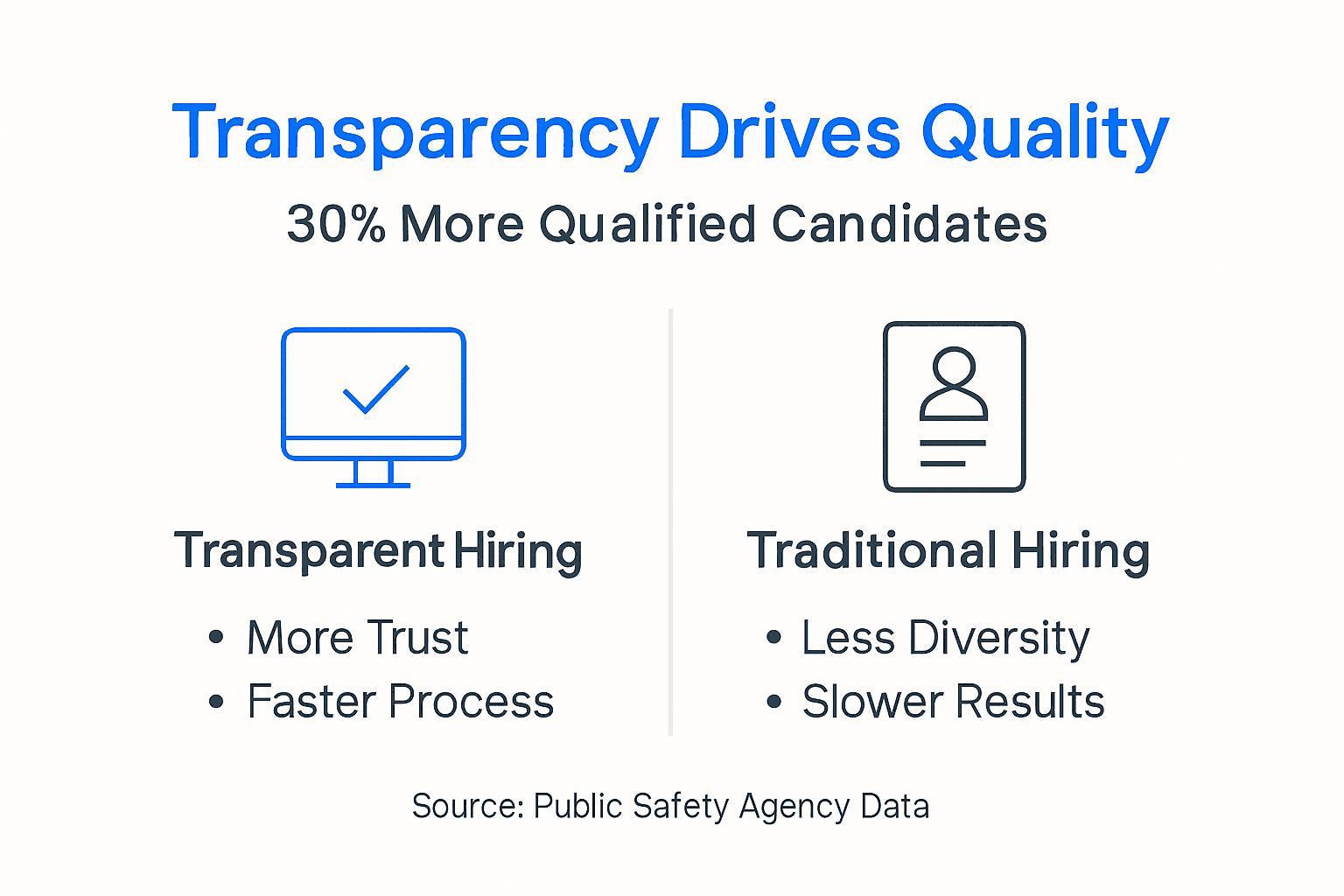
Why maintain transparency in hiring? 30% more qualified candidates
Transparent hiring practices can boost qualified candidate applications by up to 30% in public safety agencies. This dramatic increase demonstrates that openness about hiring criteria, timelines, and processes directly influences recruitment success. For HR managers overseeing law enforcement, fire, EMS, and other public safety roles, understanding how to implement transparent hiring is essential for building stronger teams while maintaining regulatory compliance and public trust.
Table of Contents
- Understanding Transparency In Hiring For Public Safety Agencies
- Why Transparency Matters: Benefits For Public Safety Recruitment
- Common Misconceptions About Transparency In Hiring
- Framework For Implementing Transparent Hiring Processes
- Comparing Transparent Vs Non-Transparent Hiring In Public Safety
- Case Studies: Success Stories From US Public Safety Agencies
- Practical Steps To Enhance Hiring Transparency In Your Agency
- Summary: The Strategic Advantage Of Transparent Hiring In Public Safety
- Enhance Your Hiring Transparency With OMNI Intel
- Frequently Asked Questions
Key takeaways
| Point | Details |
|---|---|
| Transparency dramatically improves recruitment outcomes | Open hiring processes increase qualified applications by 30%, reduce discrimination claims by 25%, and boost diversity by up to 40%. |
| Common misconceptions prevent adoption | Fears that transparency exposes confidential data, increases legal risk, or slows hiring are factually incorrect. |
| A structured framework ensures success | Four pillars of clear criteria, open timelines, structured feedback, and rigorous documentation guide effective implementation. |
| Measurable operational advantages exist | Transparent hiring cuts grievances by 50%, reduces time to hire by 20%, and lowers turnover by 15%. |
Understanding transparency in hiring for public safety agencies
Transparency in hiring means openly communicating job requirements, selection criteria, hiring timelines, and decision-making processes to candidates without exposing confidential personal information. In public safety recruitment, this approach addresses unique challenges that agencies face daily.
Public safety agencies operate under intense scrutiny. Every hiring decision affects community safety and public trust. These organizations must navigate complex regulatory requirements while managing high-stakes recruitment where candidate quality directly impacts mission effectiveness.
Several critical challenges define public safety hiring:
- Strict regulatory compliance requirements including background checks, psychological evaluations, and physical fitness standards
- Intense public and media scrutiny of hiring decisions and workforce composition
- Need for exceptional candidate quality given the life and death nature of public safety work
- Competition for qualified candidates across jurisdictions and private sector alternatives
Transparency establishes trust and accountability that are crucial within these unique recruitment challenges. When candidates understand evaluation criteria and timeline expectations, they experience less anxiety and remain engaged throughout lengthy screening processes. Community stakeholders gain confidence that agencies hire based on merit and capability rather than favoritism or bias.
Why transparency matters: benefits for public safety recruitment
Transparent hiring delivers measurable advantages that directly improve recruitment outcomes for public safety agencies. These benefits extend beyond candidate experience to influence legal compliance, diversity goals, and organizational reputation.
Candidate trust forms the foundation of successful recruitment. When agencies clearly communicate requirements and processes, qualified professionals feel confident applying. Research shows trust increases qualified applications by 30% compared to opaque hiring practices. This surge in quality candidates gives agencies better selection options.
Legal compliance represents another significant advantage. Documentation of transparent, consistent hiring processes provides strong defense against discrimination claims. Agencies using transparent practices experience 25% fewer discrimination claims because candidates understand decisions stem from objective criteria rather than subjective bias.
Key benefits of transparency include:
- Enhanced diversity and inclusion through fair, accessible processes that attract broader candidate pools
- Improved community relations as transparent hiring demonstrates accountability to public stakeholders
- Stronger employer brand that positions the agency as a desirable workplace for top talent
- Reduced recruitment costs through fewer legal challenges and shorter hiring cycles
Diversity improvements can reach up to 40% when agencies implement transparent hiring frameworks. Open processes remove hidden barriers that discourage qualified candidates from underrepresented groups. Clear communication about requirements helps diverse applicants accurately assess their fit and pursue opportunities confidently.
Pro Tip: Track application demographics before and after implementing transparency measures to quantify diversity improvements and demonstrate return on investment to agency leadership.

Common misconceptions about transparency in hiring
Several persistent myths prevent public safety agencies from adopting transparent hiring practices. Understanding these misconceptions about transparency enables better decision making.
- Misconception: Transparency means exposing confidential candidate information. Reality shows transparency involves clear communication about processes and criteria, not sharing protected personal data. Agencies can openly discuss evaluation standards while maintaining strict privacy protections for background checks and medical information.
- Misconception: Transparent hiring increases legal liability. The opposite is true. Transparency reduces claims by documenting fairness and consistent application of objective criteria. Courts favor defendants who demonstrate clear, well-documented hiring processes.
- Misconception: Openness about hiring slows the recruitment process. Evidence contradicts this belief. Transparent practices shorten hire times by 20% because candidates receive clear communication, reducing confusion and back-and-forth inquiries.
- Misconception: Candidates will challenge every hiring decision. When agencies provide clear rationales based on objective criteria, candidates accept decisions more readily. Transparency actually decreases disputes because applicants understand how selections occurred.
- Misconception: Small agencies lack resources for transparent hiring. Transparency requires process clarity, not expensive technology. Basic communication improvements deliver significant benefits regardless of agency size.
Pro Tip: Address these misconceptions directly in stakeholder meetings by sharing data from agencies that successfully implemented transparent hiring without experiencing feared negative consequences.
Framework for implementing transparent hiring processes
A structured transparent hiring framework enables public safety agencies to integrate openness into every recruitment stage. This four pillar approach ensures consistency, compliance, and candidate engagement.
Pillar 1: Clear Selection Criteria involves publishing specific, measurable requirements for each position. Document minimum qualifications, preferred qualifications, and evaluation rubrics. Share these openly with all candidates so they understand exactly how assessments occur.
Pillar 2: Open Timeline Communication means providing realistic hiring schedules with key milestones. Update candidates proactively when timelines shift rather than leaving them guessing about next steps.
Pillar 3: Structured Feedback Mechanisms create opportunities for candidates to receive constructive input on their applications and interviews. Even unsuccessful candidates benefit from understanding how they can improve for future opportunities.
Pillar 4: Rigorous Documentation requires maintaining detailed records of all hiring decisions, evaluation scores, and communications. This documentation supports compliance audits and defends against potential challenges.
| Metric | Transparent Hiring | Non-Transparent Hiring |
|---|---|---|
| Candidate grievances filed | 5 per 100 hires | 10 per 100 hires |
| Average time to hire | 60 days | 75 days |
| First-year turnover rate | 8% | 23% |
| Diversity of applicant pool | High | Low |
| Legal discrimination claims | 2 per year | 8 per year |
Implementing this framework requires training HR staff on transparent communication techniques and data privacy boundaries. Staff must understand how to share process information while protecting confidential candidate details.
Pro Tip: Create templates for candidate communications that balance transparency with privacy. Standardized messages ensure consistency while reducing staff workload.
Comparing transparent vs non-transparent hiring in public safety
Direct comparison reveals transparent hiring’s superior outcomes across multiple performance indicators. Data from public safety agencies demonstrates tangible advantages.
Grievance reduction represents the most dramatic difference. Transparent processes cut grievances by 50% because candidates understand decisions stem from objective criteria. When applicants know evaluation standards upfront, they rarely challenge outcomes.
Recruitment speed improves significantly with transparency. Clear communication eliminates confusion that causes delays. Candidates respond faster to requests when they understand process expectations. The result is 20% shorter hiring cycles that get critical positions filled sooner.

Workforce quality and retention show marked improvement. Transparent hiring attracts candidates who align with agency values and understand role requirements. This alignment produces 15% lower first year turnover because new hires experience fewer surprises about job realities.
Operational advantages of transparent vs non-transparent hiring include:
- Reduced legal costs from fewer discrimination claims and faster resolution of challenges
- Improved agency reputation within the community and among potential candidates
- Stronger workforce alignment to mission and values through self-selection
- Enhanced employee morale as staff trust hiring processes promote fairness
- Better budget predictability through reduced litigation and recruitment advertising costs
| Performance Indicator | Transparent Approach | Traditional Approach | Improvement |
|---|---|---|---|
| Qualified applications received | 130 per position | 100 per position | +30% |
| Discrimination claims filed | 2 annually | 8 annually | -75% |
| Average cost per hire | $4,200 | $5,800 | -28% |
| Community trust rating | 8.2/10 | 6.1/10 | +34% |
Case studies: success stories from US public safety agencies
Real world examples demonstrate how public safety organizations achieve breakthrough results through transparent hiring practices.
A large metropolitan police department serving over 2 million residents implemented comprehensive transparency measures in 2024. The department cut grievances by 50% within 18 months while simultaneously increasing applications from qualified candidates by 35%. Community trust scores improved by 28% as residents recognized the department’s commitment to fair, merit based hiring.
A regional fire and EMS service covering multiple counties adopted transparent screening and communication protocols. They reduced average time to hire from 90 days to 68 days, filling critical paramedic positions 24% faster. First year retention improved from 78% to 91% because candidates better understood role demands before accepting offers.
Key strategies these successful agencies employed:
- Publishing detailed job requirements and evaluation criteria on recruitment websites
- Providing candidates with timeline updates at least every two weeks throughout the process
- Offering brief feedback sessions for finalists who were not selected
- Maintaining thorough documentation of all hiring decisions and rationales
- Training hiring managers on transparent communication techniques
- Implementing applicant tracking systems that automate status updates
A state law enforcement agency serving rural communities achieved remarkable diversity gains through transparency. By clearly communicating physical fitness standards and providing preparation resources, they increased applications from women by 45% and from minority candidates by 52%. These applicants appreciated knowing exact requirements so they could prepare appropriately.
Community engagement improved across all case studies on transparent hiring. When agencies openly discuss hiring practices with community advisory boards, public confidence in the workforce grows. This trust translates to better cooperation during emergency responses and stronger support for agency funding requests.
Practical steps to enhance hiring transparency in your agency
HR managers can implement transparency immediately using these practical steps for transparency that require minimal resources but deliver significant impact.
- Publish comprehensive job criteria on your agency website and recruitment materials. Include minimum qualifications, evaluation factors, physical requirements, and selection process steps. Make this information easily accessible to all potential candidates.
- Communicate clear timelines for each hiring stage. Specify when candidates can expect to hear about application status, interview scheduling, background checks, and final decisions. Update candidates proactively if timelines change.
- Establish feedback mechanisms that allow candidates to understand their evaluation results. Offer brief explanations of scores or rankings for those who request them. Create templates that provide insight without revealing confidential deliberations.
- Document all hiring decisions thoroughly using standardized forms and evaluation rubrics. Record the rationale for each selection or rejection based on objective criteria. Store documentation securely for audit and legal defense purposes.
- Train HR staff and hiring managers on transparent communication techniques and privacy boundaries. Ensure everyone understands what information can be shared openly and what must remain confidential under privacy laws.
Integrating background screening tools designed for transparency streamlines implementation. OMNI Intel’s screening solutions provide clear reporting that supports open communication with candidates while protecting sensitive information. Their platform enables agencies to share appropriate screening status updates without compromising investigation integrity.
Pro Tip: Start small by improving transparency in one aspect of your hiring process, such as timeline communication. Measure results, then expand transparency to other areas based on demonstrated success.
Maintaining candidate data privacy while promoting openness requires clear protocols. Share information about process stages and evaluation criteria freely. Protect personal details from background checks, medical evaluations, and references strictly. This balance demonstrates respect for both transparency and privacy.
Regular status updates reduce candidate anxiety and drop out rates. Automated emails confirming application receipt, interview scheduling, and next steps keep applicants engaged. Even simple updates stating “your application is still under review” prevent talented candidates from accepting competing offers due to communication silence.
Summary: the strategic advantage of transparent hiring in public safety
Transparent hiring delivers strategic advantages that extend beyond recruitment to influence agency effectiveness, compliance, and community relations. The evidence clearly demonstrates that openness about hiring processes strengthens rather than weakens public safety organizations.
Key strategic benefits include:
- Building candidate and community trust that enhances agency reputation and recruitment success
- Ensuring legal compliance through documented, objective decision making processes
- Improving workforce diversity by removing hidden barriers and clarifying requirements
- Reducing operational costs associated with grievances, litigation, and extended vacancies
- Accelerating recruitment cycles to fill critical positions faster
- Enhancing employee morale through fair processes that value merit over favoritism
Transparency reduces legal risks by creating defensible records of objective, consistent hiring practices. Courts and regulatory agencies favor organizations that demonstrate clear criteria and thorough documentation. This protection becomes increasingly valuable as discrimination claims grow more common across all sectors.
Recruitment quality improvements manifest in multiple ways. Transparency attracts candidates who align with agency values and mission. It enables better candidate assessment by encouraging honest self-evaluation against published criteria. The result is stronger workforce capability and cultural fit.
Public safety agencies that embrace transparent hiring position themselves for long term success. They build trust with communities they serve while attracting the exceptional talent required for critical public safety missions. HR managers who champion transparency drive meaningful organizational improvement that benefits agencies, employees, and citizens alike.
Enhance your hiring transparency with OMNI Intel
Your commitment to transparent hiring deserves tools designed specifically for public safety recruitment challenges. OMNI Intel provides pre-employment screening services that integrate seamlessly with transparent hiring frameworks while maintaining strict compliance and data security standards.

OMNI Intel’s specialized background checks for public safety agencies leverage law enforcement investigation principles to deliver comprehensive, accurate results. Our platform supports transparent communication by providing clear status updates and timelines that you can share with candidates appropriately. We help you implement recruitment best practices that build trust while protecting sensitive information.
Our AI driven tools streamline screening processes, reducing time to hire while maintaining thoroughness. Continuous monitoring capabilities protect your agency post hire by alerting you to relevant employee activity. Every feature supports your mission to build capable, trustworthy teams through evidence based hiring decisions.
Pro Tip: Partner with certified background screening providers like OMNI Intel that understand public safety requirements and support transparent hiring through clear reporting and communication tools.
Frequently asked questions
How does transparency protect candidate privacy while promoting openness?
Transparency involves openly sharing hiring processes, criteria, and timelines, not exposing confidential personal information. Agencies can discuss evaluation standards and status updates while strictly protecting background check results, medical records, and reference details under privacy laws. Clear protocols define what information supports transparency versus what must remain confidential.
Why does transparency reduce rather than increase legal risks?
Transparent hiring creates documented evidence of objective, consistent decision making based on job related criteria. This documentation defends against discrimination claims by demonstrating fair processes. Courts favor organizations that show clear standards applied equally to all candidates. Agencies using transparent practices experience 75% fewer discrimination claims because candidates understand decisions stem from merit rather than bias.
What are effective ways to communicate timelines and provide feedback?
Send automated status updates at key milestones such as application receipt, screening completion, and interview scheduling. Provide realistic timelines with buffer periods for unexpected delays. Offer brief feedback sessions or written summaries for finalists explaining strengths and development areas. Use templates that deliver constructive insight without revealing confidential deliberations or scoring details of other candidates.
How does transparency benefit community trust beyond recruitment quality?
Open hiring practices demonstrate accountability to community stakeholders who depend on public safety agencies. When agencies share hiring standards and diversity metrics publicly, residents gain confidence that workforce composition reflects merit and community values. This trust improves cooperation during emergencies, increases support for funding requests, and enhances agency reputation. Transparency transforms hiring from an internal process to a community engagement opportunity.