
Best Practices for EMS Recruitment to Attract Top Talent
Recruiting qualified EMS professionals has become increasingly complex as agencies face workforce shortages, rising competition, and evolving candidate expectations. Strategic recruitment approaches rooted in data, practitioner involvement, and authentic employer branding are essential to attract and retain top talent. This article explores five proven best practices that help HR professionals and hiring managers build sustainable EMS recruitment programs, from establishing year-round strategic initiatives to measuring success through meaningful metrics.
Table of Contents
- Key takeaways
- Establish recruitment as a strategic ongoing program
- Empower EMS practitioners to lead recruitment and retention efforts
- Build a winning agency brand with competitive compensation and culture
- Tailor recruitment approaches for rural EMS and evolving workforce trends
- Measure recruitment success and foster internal alignment for continuous improvement
- Boost your EMS recruitment with OMNI Intel solutions
- Frequently asked questions
Key Takeaways
| Point | Details |
|---|---|
| Ongoing strategic recruitment | Recruitment should be year round with measurable goals and a strong digital presence rather than reactive hiring. |
| Practitioner led hiring | Empowering current EMS practitioners to lead recruitment improves cultural fit and retention outcomes. |
| Data driven goals | Set recruitment targets tied to staffing projections and turnover to guide strategy and resource allocation. |
| Authentic branding | Share real experiences through storytelling and community events to build trust and attract candidates. |
| Rural EMS tailoring | Tailor strategies to rural EMS challenges by addressing access incentives and multi unit staffing to reduce attrition. |
1. Establish recruitment as a strategic ongoing program
Successful EMS recruitment requires year-round strategic planning, not reactive hiring during staffing crises. Agencies that treat recruitment as an ongoing program with measurable goals consistently outperform those using episodic approaches. Your digital presence forms the foundation of this strategy, starting with a mobile-optimized website and streamlined application process that candidates can complete from any device.
Responding to candidate inquiries within 24-48 hours maintains engagement and demonstrates organizational professionalism. Delays signal disinterest and push qualified applicants toward competing agencies. Authentic storytelling through social media, employee testimonials, and community event participation builds genuine connections with potential candidates. Share real experiences from current EMS professionals, highlight team achievements, and showcase your agency’s mission in action.
Key components of strategic recruitment programs include:
- Setting data-driven recruitment goals tied to staffing projections and turnover rates
- Maintaining active social media presence with regular content showcasing agency culture
- Hosting community events that introduce residents to EMS careers and build local relationships
- Creating candidate nurture sequences that keep prospects engaged throughout extended hiring timelines
- Optimizing career pages for search engines to capture organic candidate traffic
Pro Tip: Create a content calendar that highlights different aspects of EMS work each month, from technical skills to community impact stories, keeping your recruitment messaging fresh and engaging year-round.
Integrating your public safety recruitment process guide ensures consistency across all touchpoints. Document every step from initial contact through onboarding, identifying bottlenecks where candidates drop off and continuously refining your approach based on conversion data.
2. Empower EMS practitioners to lead recruitment and retention efforts
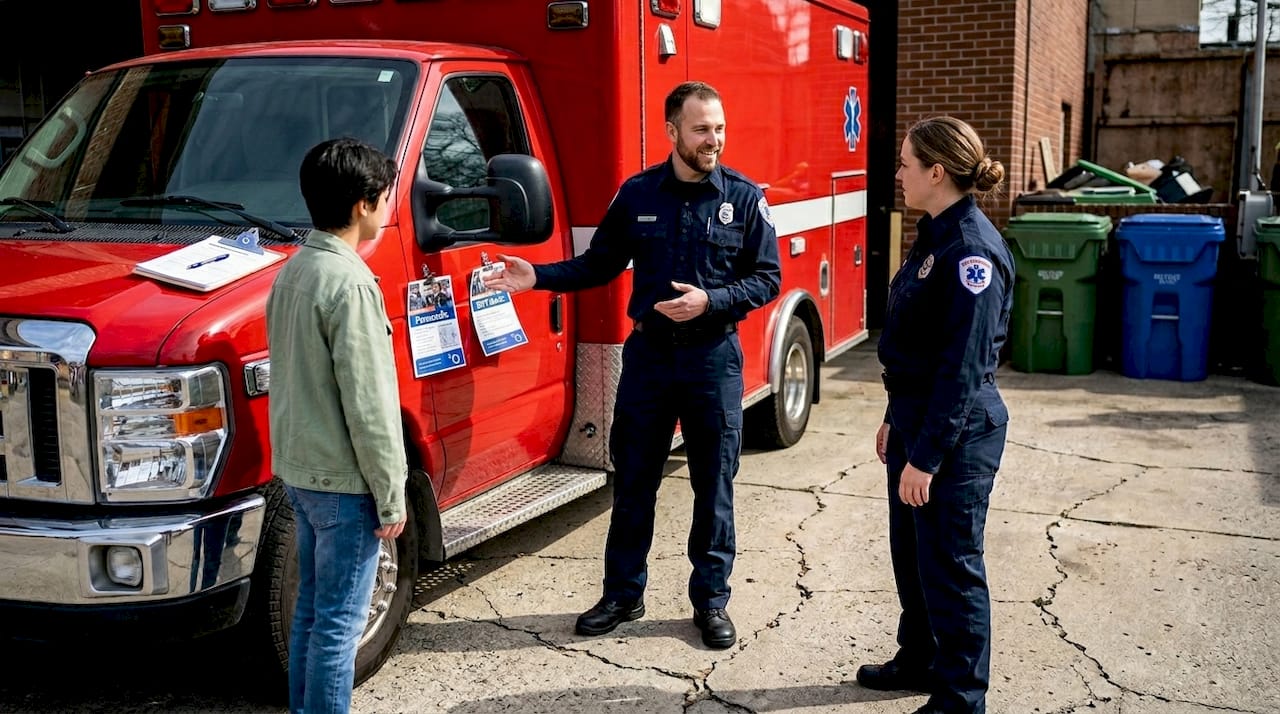
Shifting recruitment responsibility to passionate EMS practitioners transforms hiring outcomes. When current paramedics and EMTs actively recruit peers, they bring authentic insights into job realities and cultural fit that traditional HR processes miss. Memphis Fire Department achieved 75% retention rates by empowering practitioners to lead recruitment efforts, demonstrating the power of peer-driven hiring.
Traditional barriers like written exams and rigid physical agility tests often eliminate coachable candidates who would excel with proper training. Replace these with structured interviews that assess problem-solving abilities, emotional intelligence, and cultural alignment. Implement fitness assessments that identify baseline capabilities and improvement potential rather than demanding peak performance on day one.
Integrating paramedics proactively across units reduces burnout by distributing high-acuity calls and preventing concentration of stress on specific teams. This approach cut attrition by 60% in agencies that adopted it, proving that operational structure directly impacts retention. When practitioners see their input shaping recruitment and retention strategies, they become invested advocates who strengthen your employer brand.
Effective practitioner-led recruitment strategies include:
- Forming recruitment committees with rotating EMS staff representation
- Training practitioners in interviewing techniques and candidate assessment
- Empowering field staff to share recruitment materials with qualified contacts
- Creating mentorship pairings between new hires and experienced practitioners
- Soliciting regular feedback from practitioners on recruitment process effectiveness
Pro Tip: Establish a practitioner advisory board that meets quarterly to review recruitment metrics, discuss retention challenges, and propose program improvements, ensuring frontline voices shape hiring strategy.
Applying public safety recruitment best practices means recognizing that those who do the work understand what the work requires. Their involvement creates hiring processes that identify candidates who will thrive rather than merely meet minimum qualifications.
3. Build a winning agency brand with competitive compensation and culture
Positioning your agency as an elite team rather than a desperate employer fundamentally changes candidate perception. Avoid messaging that emphasizes vacancies or staffing struggles. Instead, highlight achievements, specialized capabilities, and the professional development opportunities that distinguish your organization. Competitive compensation and benefits form the baseline for attracting quality candidates in today’s market.
Career development programs signal long-term investment in employee growth. Offer clear advancement pathways, specialized certification support, and leadership training that prepares practitioners for supervisory roles. Mentorship programs connect new hires with experienced professionals who provide guidance, answer questions, and accelerate integration into agency culture.
Flexible scheduling addresses work-life balance concerns that drive many EMS professionals toward other careers. Implement shift-bidding systems, accommodate education schedules, and offer predictable time-off policies that let staff plan personal lives. Community engagement initiatives that involve EMS personnel in non-emergency settings build public relationships and remind practitioners of their broader impact beyond crisis response.
Building a winning agency brand requires:
- Conducting market research to ensure compensation matches or exceeds regional competitors
- Developing comprehensive benefits packages including health insurance, retirement contributions, and wellness programs
- Creating formal career ladders with defined requirements and timelines for advancement
- Establishing recognition programs that celebrate individual and team achievements
- Fostering inclusive culture where diverse perspectives are valued and discrimination is not tolerated
- Implementing employee feedback mechanisms that demonstrate leadership responsiveness
| Brand element | Traditional approach | Winning approach |
|---|---|---|
| Messaging | We need help, apply now | Join an elite team making impact |
| Compensation | Market minimum | Competitive with growth potential |
| Culture | Sink or swim mentality | Supportive with structured mentorship |
| Scheduling | Rigid shifts | Flexible with work-life balance |
| Development | On-the-job only | Formal training and advancement paths |
Pro Tip: Survey departing employees to identify culture and compensation gaps, then address the top three issues within six months to demonstrate commitment to continuous improvement.
Understanding responsible recruitment importance means recognizing that your agency brand extends beyond marketing materials. Every interaction, from application response time to interview professionalism to onboarding quality, either reinforces or undermines your positioning as an employer of choice.
4. Tailor recruitment approaches for rural EMS and evolving workforce trends
Rural EMS agencies face distinct challenges including volunteer decline and low pay that urban departments rarely encounter. Geographic isolation limits candidate pools while extended response areas increase workload without proportional compensation. Tax break incentives, education payment support, and essential service status recognition help offset financial barriers that prevent qualified candidates from considering rural positions.
Regionalized staffing models pool resources across multiple communities, creating sustainable coverage that individual small agencies cannot maintain alone. Shared staffing arrangements provide practitioners with adequate call volume to maintain skills while preventing the burnout that comes from being perpetually on-call. Flexible scheduling becomes even more critical in rural settings where practitioners often balance EMS work with other employment.
Workforce trends reveal paradoxes that complicate recruitment planning. Despite rising EMS certifications, field position applications declined 13% across 65% of agencies. Newly certified individuals increasingly pursue healthcare roles outside traditional EMS rather than ambulance-based positions. Retention rates varying between 41-69% indicate that attracting candidates matters less than keeping them engaged through early career challenges.

Rural recruitment strategies must include:
- Partnering with local colleges to create EMS training pipelines with guaranteed employment
- Offering housing assistance or subsidized accommodations for practitioners relocating to rural areas
- Providing professional development opportunities through online training and regional conferences
- Building relationships with retired EMS professionals who might return part-time
- Highlighting lifestyle benefits of rural living including lower cost of living and tight-knit communities
| Rural challenge | Strategic response |
|---|---|
| Volunteer decline | Transition to paid or hybrid staffing models |
| Low compensation | Advocate for tax incentives and essential service benefits |
| Geographic isolation | Implement regionalized coverage and shared resources |
| Limited candidate pool | Develop local training programs and recruitment partnerships |
| High on-call burden | Create sustainable scheduling through multi-agency cooperation |
Strategies for recruiting qualified public safety candidates in rural settings require creativity and persistence. Success comes from addressing root causes like compensation and sustainability rather than simply increasing recruitment advertising spend.
5. Measure recruitment success and foster internal alignment for continuous improvement
Creating dedicated internal recruitment teams establishes ownership and accountability for hiring outcomes. These teams track candidate leads, identify drop-off points in the application process, and analyze which recruitment sources generate the highest-quality hires. Data-driven measurement transforms recruitment from subjective effort into manageable process with clear performance indicators.
Aligning recruitment goals across all department levels ensures consistent messaging and shared commitment to hiring success. When leadership, mid-level supervisors, and frontline practitioners all understand recruitment priorities and their role in achieving them, candidates experience cohesive organizational culture from first contact through onboarding. Misalignment creates confusion and sends mixed signals that undermine even well-designed recruitment programs.
Retention goals matter as much as hiring targets. Benchmark against industry leaders like Memphis Fire Department, which maintains retention rates exceeding 75%, to establish ambitious but achievable standards. Annual retention studies identify trends, highlight risk factors for early departure, and guide interventions that keep practitioners engaged long-term.
Key measurement and alignment practices include:
- Tracking application completion rates to identify process friction points
- Monitoring time-to-hire metrics and setting targets for reducing recruitment cycles
- Analyzing candidate source effectiveness to optimize recruitment marketing spend
- Conducting stay interviews with high-performing employees to understand retention factors
- Implementing exit interviews that capture honest feedback from departing staff
- Sharing recruitment metrics transparently across the organization to maintain focus
Pro Tip: Create a recruitment dashboard that displays real-time metrics including active candidates, interview completion rates, offer acceptance rates, and retention percentages, making performance visible to all stakeholders.
Leveraging public safety recruitment best practices and following comprehensive recruitment process guides ensures your measurement framework captures meaningful indicators rather than vanity metrics. Focus on outcomes like quality of hire, time to productivity, and first-year retention rather than simply counting applications received.
Boost your EMS recruitment with OMNI Intel solutions
Implementing these best practices requires tools that streamline processes and maintain candidate engagement throughout extended hiring timelines. OMNI Intel provides comprehensive pre-employment screening services tailored specifically for public safety agencies, reducing time-to-hire while ensuring thorough candidate vetting.

Our recruitment campaign management platform helps you track leads, automate follow-up, and measure which strategies generate the best results. Custom agency recruiting websites optimized for mobile devices and search engines ensure qualified candidates find your opportunities and complete applications seamlessly. Integrated solutions connect screening, hiring, and onboarding into a cohesive system that improves efficiency and candidate experience while reducing administrative burden on your HR team.
Frequently asked questions
What is the biggest challenge in EMS recruitment today?
High competition for certified candidates combined with retention difficulties driven by burnout and compensation concerns represents the primary recruitment challenge. Agencies must implement strategic year-round programs with practitioner involvement rather than reactive hiring efforts. Building sustainable recruitment infrastructure that addresses both attraction and retention creates long-term staffing stability.
How can EMS agencies reduce burnout and improve retention?
Integrating paramedics across units distributes high-acuity calls more evenly, preventing concentration of stress on specific teams. Flexible scheduling, structured mentorship programs, and positive inclusive culture further support retention. Practitioner-led recruitment fosters investment in organizational success, creating environments where employees want to stay and grow their careers.
What role does technology play in modern EMS recruitment?
Mobile-friendly websites, social media storytelling, and rapid follow-up within 24-48 hours significantly increase candidate engagement. Technology tools streamline recruitment campaign management, automate routine communications, and provide data insights that guide strategy refinement. Custom agency recruiting websites create professional first impressions that distinguish your organization from competitors.
Are there unique recruitment strategies for rural EMS agencies?
Rural agencies should leverage tax breaks, education payment support, essential service recognition, and regionalized staffing models to overcome geographic and financial barriers. Volunteer decline requires transition to paid or hybrid models with flexible scheduling. Building local training partnerships and highlighting rural lifestyle benefits helps attract candidates who value tight-knit communities and lower cost of living over urban amenities.
Recommended
- 7 Public Safety Recruitment Best Practices for Agencies
- Master the Public Safety Recruitment Process Easily
- EMS Background Checks Cut Negligent Hiring 40% in 2026
- How to Recruit Qualified Candidates for Public Safety Roles
- How the Role of Employee Benefits Boosts Recruitment 30% in 2026
- 7 Effective Examples of Digital Recruitment Strategies – Go Online Now