
Background Checks Explained: Ensuring Public Safety Hiring
Hiring for public safety roles often means balancing the need for trustworthiness with strict legal requirements. Agencies throughout the United States face growing pressure to protect communities while meeting evolving mandates for fair, consistent screening. Background checks for public safety roles go far beyond basic record searches, combining multiple review types to detect risk factors and verify qualifications. This overview helps Human Resources managers understand key screening elements, legal standards, and best practices for building safe and compliant hiring processes.
Table of Contents
- Defining Background Checks For Public Safety Roles
- Types Of Background Checks And Their Applications
- Step-By-Step Screening And Investigation Process
- Legal Framework And Compliance Standards
- Mitigating Risks And Avoiding Common Pitfalls
Key Takeaways
| Point | Details |
|---|---|
| Importance of Background Checks | Comprehensive background checks are essential to ensure only qualified candidates are hired for public safety roles. |
| Multi-Layered Approach | Implementing various types of checks enhances the effectiveness of candidate assessments and promotes organizational integrity. |
| Legal Compliance | Agencies must adhere to federal and state regulations while conducting background checks to protect individual rights and ensure fair hiring practices. |
| Risk Mitigation | Continuous evaluation and improvement of screening processes are vital for minimizing risks and maintaining public trust in safety organizations. |
Defining Background Checks for Public Safety Roles
Background checks are comprehensive investigative processes designed to evaluate an individual’s professional and personal history before employment in critical public safety roles. Background checks for public safety represent a crucial screening mechanism that protects communities by ensuring only qualified, trustworthy candidates serve in sensitive positions.
These investigative reviews systematically examine multiple dimensions of a candidate’s background, focusing on factors that directly impact public safety and organizational integrity. The core elements typically include:
- Criminal history assessments
- Professional credential verification
- Employment history validation
- Character and personal reference checks
- Driving record evaluations
- Drug screening results
Federal regulations mandate rigorous background investigation standards for public safety professionals. Criminal history reviews through state and national databases help determine an applicant’s suitability, particularly for roles involving vulnerable populations like children, elderly, or individuals with disabilities.
The comprehensive nature of these background checks goes beyond simple record searches. Investigators analyze patterns, contextual information, and potential risk indicators that might not be immediately apparent. This approach helps agencies make informed hiring decisions that prioritize community safety and organizational excellence.
Pro tip: Conduct thorough background checks consistently across all candidate pools to maintain fair and comprehensive evaluation standards.
Types of Background Checks and Their Applications
Background checks for public safety professionals encompass a diverse range of investigative processes designed to thoroughly evaluate an individual’s suitability for critical roles. Different types of background checks serve unique purposes, helping agencies make informed hiring decisions that protect community safety and organizational integrity.
The primary categories of background checks in public safety sectors include:
- Criminal History Checks
- State-level criminal record searches
- National criminal database reviews
- Federal criminal background investigations
- Professional Credential Verification
- License and certification validation
- Academic degree confirmation
- Professional training documentation review
- Employment Background Screenings
- Prior work history confirmation
- Performance record assessment
- Reason for previous job terminations
- Personal Background Assessments
- Character reference checks
- Driving record evaluations
- Credit history reviews for financial-sensitive positions
In healthcare and public safety settings, comprehensive screening processes extend beyond initial hiring. These ongoing evaluations help maintain continuous professional standards and identify potential risks throughout an individual’s career.
Each background check type targets specific risk factors and compliance requirements. Criminal history reviews, for instance, help identify past legal issues that might compromise public safety, while professional credential checks ensure candidates possess the necessary qualifications for their intended roles.
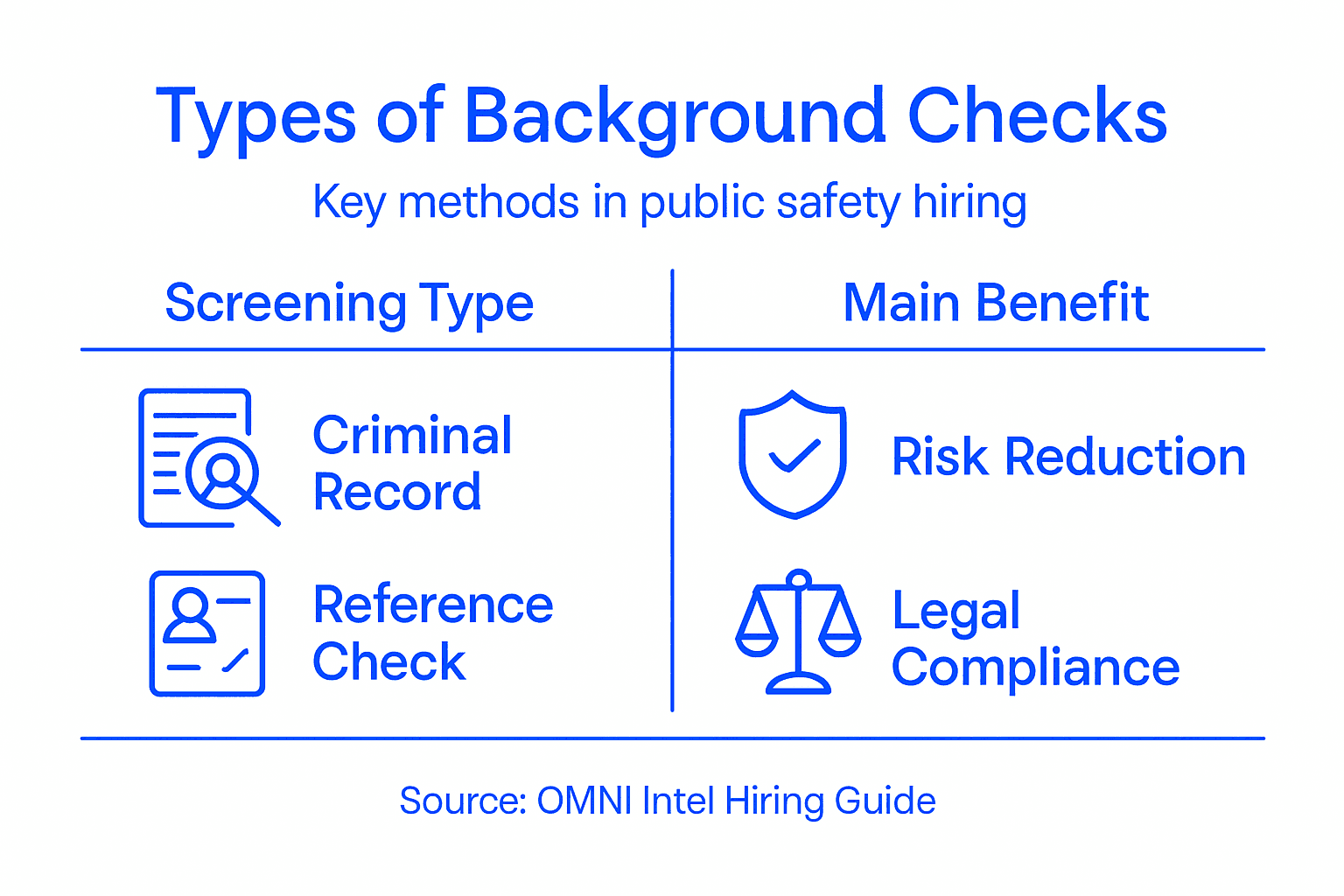
Pro tip: Implement a multi-layered background screening approach that combines different check types to create a comprehensive candidate assessment.
Here’s how different types of background checks contribute to public safety hiring objectives:
| Background Check Type | Primary Purpose | Key Benefit for Agencies |
|---|---|---|
| Criminal History Review | Screen for past legal violations | Enhances community safety |
| Credential Verification | Confirm required licenses and education | Ensures qualified staff |
| Employment Screening | Validate work experience | Reduces risk of false claims |
| Personal Reference Check | Assess character and reliability | Strengthens organizational trust |
| Driving Record Evaluation | Review traffic history for risk factors | Promotes public safety on the road |
| Drug Screening | Detect substance misuse | Lowers risk of compromised judgment |
Step-by-Step Screening and Investigation Process
Public safety background investigations represent a comprehensive, multi-stage process designed to thoroughly evaluate a candidate’s suitability for critical roles. Background investigation protocols involve systematic procedures that go far beyond simple record checks to ensure organizational and community safety.
The typical screening process follows these crucial stages:
- Initial Application Review
- Verify application completeness
- Check minimum qualification requirements
- Screen for basic eligibility criteria
- Document and Credential Verification
- Validate educational certificates
- Confirm professional licenses
- Cross-reference employment history
- Comprehensive Background Checks
- State criminal record searches
- National criminal database reviews
- Federal background investigations
- Credit history assessments
- Personal and Professional References
- Interview provided references
- Contact previous supervisors
- Verify character recommendations
- Advanced Investigative Steps
- Conduct in-depth interviews
- Perform neighborhood and personal background checks
- Evaluate psychological fitness assessments
In law enforcement and public safety contexts, detailed background investigation procedures ensure rigorous candidate evaluation. These processes include collecting fingerprints, reviewing comprehensive legal records, and conducting thorough interviews with personal and professional contacts.

The investigation’s depth varies based on the specific role’s sensitivity and potential community impact. Some positions might require additional specialized screenings, such as polygraph examinations or extensive psychological evaluations to assess a candidate’s integrity and suitability.
Pro tip: Develop a standardized, multi-layered screening protocol that combines automated checks with personal investigations to create a comprehensive candidate assessment.
Legal Framework and Compliance Standards
Background checks in public safety hiring are governed by a complex network of federal and state regulations designed to protect both organizational integrity and individual rights. Federal hiring regulations mandate specific protocols for screening candidates, particularly for positions involving vulnerable populations like children and elderly individuals.
Key legal compliance requirements include:
- Constitutional Protections
- Adherence to Fourth Amendment privacy rights
- Protection against unreasonable search and seizure
- Ensuring due process during background investigations
- Anti-Discrimination Standards
- Compliance with Equal Employment Opportunity guidelines
- Preventing disparate impact on protected classes
- Consistent application of screening criteria
- Information Handling Regulations
- Strict data privacy protocols
- Secure storage of sensitive personal information
- Limited access to background check results
- Regulatory Oversight Requirements
- FBI fingerprint-based background check mandates
- State-level certification standards
- Ongoing professional conduct monitoring
Employment background check guidelines emphasize the critical balance between thorough candidate evaluation and protecting individual rights. Public safety agencies must implement screening processes that are both comprehensive and legally defensible, ensuring fair and consistent evaluation of potential employees.
The legal landscape surrounding background checks continues to evolve, with increasing emphasis on balancing organizational safety needs with individual privacy protections. Agencies must stay current with changing regulations, maintaining flexible yet rigorous screening protocols that meet both legal requirements and safety objectives.
Pro tip: Consult legal counsel annually to ensure your background check processes remain fully compliant with current federal and state regulations.
The table below summarizes how key regulations impact the background check process:
| Regulation Focus | Practical Impact on Hiring | Compliance Priority |
|---|---|---|
| Constitutional Protections | Limits data collection scope | Protects individual rights |
| Anti-Discrimination Laws | Requires uniform screening methods | Reduces bias in selection |
| Data Privacy Requirements | Demands secure handling of records | Minimizes data breach risks |
| Regulatory Oversight | Mandates specific checks (e.g. fingerprints) | Meets federal/state standards |
Mitigating Risks and Avoiding Common Pitfalls
Effective risk management in public safety hiring requires a proactive and comprehensive approach to identifying and mitigating potential vulnerabilities. Risk mitigation strategies are critical for maintaining organizational integrity and ensuring the highest standards of personnel selection.
Common risk areas and mitigation techniques include:
- Screening Process Vulnerabilities
- Inconsistent background check protocols
- Incomplete information verification
- Inadequate reference checking
- Legal and Compliance Risks
- Potential discriminatory hiring practices
- Privacy law violations
- Failure to follow equal employment guidelines
- Operational Security Concerns
- Inadequate candidate behavioral assessments
- Overlooking psychological fitness indicators
- Insufficient ongoing performance monitoring
- Reputation Management
- Preventing potential organizational liability
- Maintaining public trust
- Protecting agency reputation
Public safety security protocols emphasize the importance of comprehensive vetting processes that go beyond standard background checks. This involves creating multi-layered evaluation systems that assess not just past performance, but potential future risks.
Successful risk mitigation requires continuous improvement and adaptability. Organizations must develop dynamic screening processes that can quickly respond to emerging threats and changing regulatory landscapes. This means implementing regular training, updating investigation protocols, and maintaining a culture of vigilant candidate assessment.
Pro tip: Develop a standardized risk assessment matrix that scores potential candidates across multiple dimensions, allowing for more objective and comprehensive evaluation.
Strengthen Your Public Safety Hiring with Comprehensive Background Screening
Ensuring the highest standards of integrity and safety in public safety roles requires more than just basic background checks. This article highlights the critical need for thorough investigations that include criminal history reviews, credential verification, and ongoing employee monitoring to protect both the community and your agency’s reputation. If you are facing challenges in maintaining consistent, legally compliant, and multi-layered screening processes that identify risks early, it is essential to adopt solutions tailored to these unique demands.
OMNI Intel offers an AI-driven platform designed specifically for public safety agencies. Our system integrates seamless credential verification, automated criminal background checks, and continuous activity monitoring to reduce hiring time and costs while enhancing transparency and compliance. With features adapted to law enforcement, fire, EMS, and private security sectors, OMNI Intel empowers you to make evidence-based, risk-aware hiring decisions that uphold community trust and organizational excellence.
Discover how you can elevate your recruitment strategy with Hiring Best Practices | OMNI Intel and explore tailored screening solutions that address the detailed investigative stages described in this article.

Take control of your public safety hiring today. Visit OMNI Intel Get Started to learn how our comprehensive background screening platform can help you achieve reliable, responsible, and transparent hiring outcomes without sacrificing efficiency or compliance.
Frequently Asked Questions
What are the main types of background checks used in public safety hiring?
Background checks for public safety roles typically include criminal history checks, professional credential verification, employment history screenings, personal background assessments, driving record evaluations, and drug screenings.
How do background checks ensure the safety of communities?
Background checks systematically evaluate candidates’ criminal histories, qualifications, and personal references, helping agencies make informed hiring decisions that prioritize community safety and integrity.
What legal regulations govern background checks in public safety?
Background checks in public safety hiring must comply with federal and state regulations that ensure constitutional protections, anti-discrimination standards, and secure handling of sensitive information.
How can organizations mitigate risks associated with background checks?
Organizations can mitigate risks by implementing standardized screening processes, conducting thorough reference checks, maintaining compliance with legal standards, and continuously monitoring candidate performance.