

The Role of Fingerprint Checks in City Public Safety Hiring
Why fingerprint checks are indispensable in public safety hiring
Fingerprint checks are the most reliable identity verification tool available to public safety hiring managers, and they do far more than confirm a name. They establish a biometric link between a candidate and their complete criminal history, a connection that name-based or Social Security number searches cannot replicate with the same certainty. For city agencies responsible for law enforcement, fire and EMS, dispatch, and related functions, that distinction carries direct legal and operational weight.
Here is what fingerprint-based employment screening delivers in practice:
- Identity certainty. Fingerprints are unique and unchangeable, making them the most fraud-resistant identifier available in pre-employment vetting.
- Criminal history accuracy. Fingerprint submissions to the FBI’s Next Generation Identification (NGI) System return records tied to the individual, not just a name match, reducing false positives and missed records.
- Legal compliance. Federal statutes and state laws mandate fingerprint checks for public safety employment, meaning agencies that skip them face statutory violations, not just policy gaps.
- Continuous monitoring. Through the FBI Rap Back service, enrolled fingerprints generate automatic notifications when new criminal activity is reported, extending protection well beyond the hire date.
- Liability reduction. Documented, compliant fingerprint screening creates a defensible record that an agency exercised due diligence, which matters in litigation and regulatory audits.
- Organizational integrity. Agencies that vet personnel rigorously protect their reputation with the communities they serve, a factor that affects public trust and officer retention alike.
Table of Contents
- What statutory authority actually governs fingerprint checks in city hiring
- How the FBI Rap Back service transforms post-hire monitoring
- Balancing privacy, constitutional protections, and security in fingerprint-based hiring
- Best practices for implementing fingerprint checks in city public safety hiring
- OMNI Intel supports compliant fingerprint screening for public safety agencies
- Key Takeaways
- FAQ
What statutory authority actually governs fingerprint checks in city hiring
Fingerprint-based background checks are not discretionary for most public safety roles. They are authorized, and in many cases required, by specific federal and state statutes. Agencies must possess that statutory authority before they can lawfully receive Criminal History Record Information (CHRI) for noncriminal justice employment purposes.
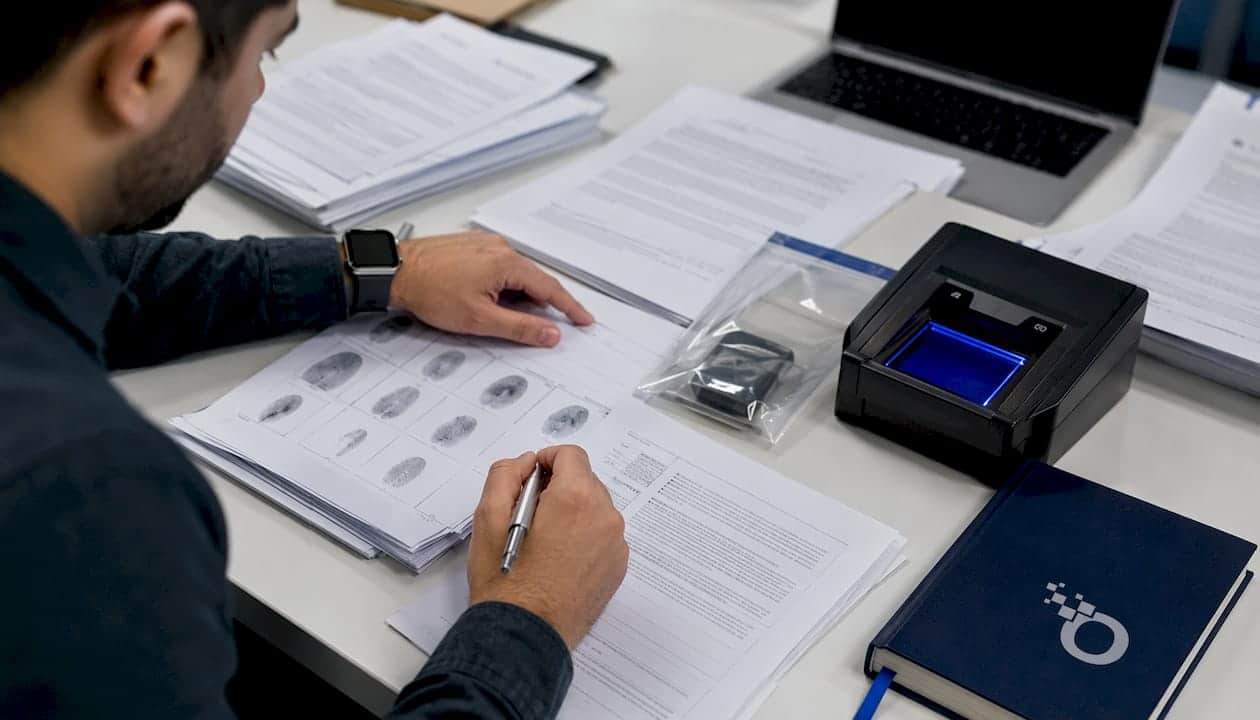
At the federal level, Public Law 92-544 provides the foundational authorization for states to exchange fingerprint-based criminal history records for employment screening. States then enact their own implementing legislation. Florida Statute 435.04, for example, requires fingerprinting for statewide and national criminal history checks as a condition of employment in positions involving vulnerable populations. Kansas Senate Bill 491 requires criminal justice agencies to fingerprint applicants for criminal justice employment and submit those prints to both the Kansas Bureau of Investigation and the FBI. Michigan’s Public Employee Fingerprint-Based Criminal History Check Act (Act 427 of 2018) mandates fingerprint checks for public employees who may access federal information databases, with results delivered within 30 days of a proper request.
Key compliance obligations that flow from these statutes include:
- Agencies must verify they hold explicit statutory authority to receive CHRI before initiating fingerprint checks.
- Some states mandate periodic re-checks. Indiana, for instance, requires fingerprint checks every five years for employees accessing confidential tax information.
- Fingerprints must be submitted electronically to the relevant state law enforcement agency, which then forwards them to the FBI.
- When agencies contract with vendors for electronic fingerprinting, the legal responsibility for data security and statutory compliance remains with the hiring agency, not the vendor.
- CHRI may only be used for the purpose for which it was obtained. Unauthorized disclosure is a criminal offense in multiple states, including a misdemeanor punishable by up to $10,000 in Michigan.
How the FBI Rap Back service transforms post-hire monitoring
Before the Rap Back service existed, a fingerprint-based background check gave agencies a single snapshot of a candidate’s criminal history at the moment of hire. That snapshot became outdated the day it was taken. The FBI’s NGI Rap Back service fundamentally changed that model.
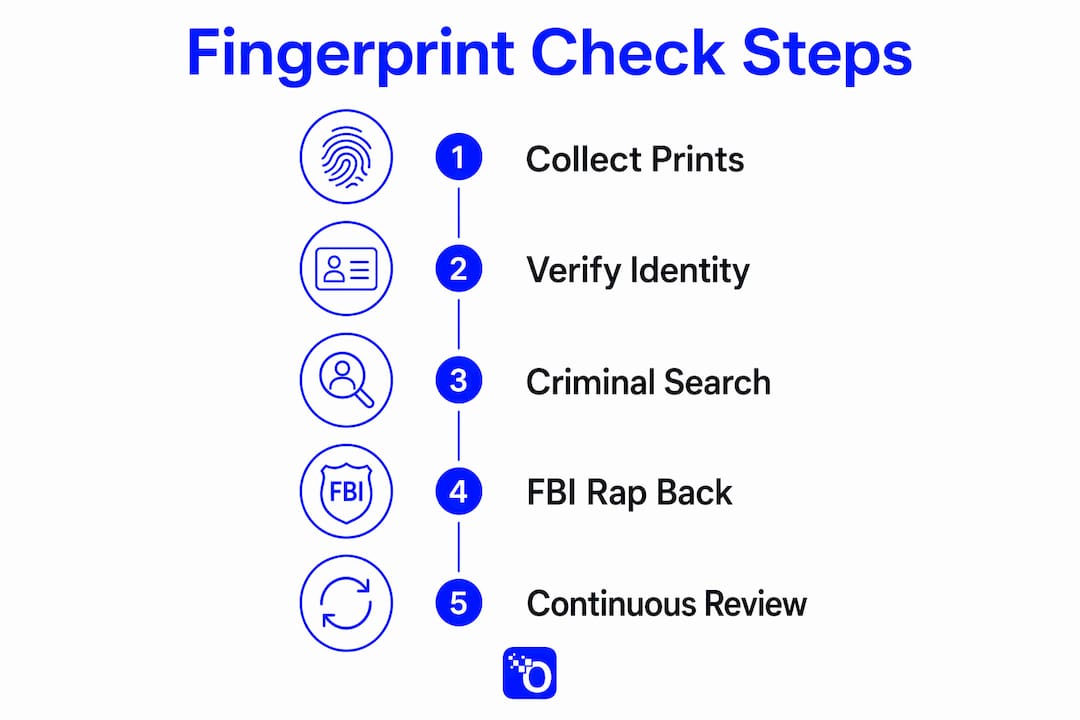
When an agency enrolls an employee’s fingerprints in the NGI System through Rap Back, those prints are retained and automatically searched against new submissions. If the employee is subsequently arrested or a new criminal record is created anywhere in the country, the FBI notifies the subscribing agency without requiring the employee to be re-fingerprinted. This is continuous monitoring in the truest operational sense.
The practical implications for public safety HR managers are significant:
- Rap Back eliminates the gap between periodic re-checks, catching criminal activity that occurs between scheduled review cycles.
- Authorized agencies receive real-time alerts, enabling prompt administrative action before an at-risk employee causes harm.
- Participation requires proper legal authority, written policies for data retention and disclosure, and compliance with FBI and state oversight requirements. Failure to meet these standards can result in loss of Rap Back authorization.
- Rap Back complements, but does not replace, other post-hire monitoring practices such as internal conduct reviews and drug screening.
The NGI System, which replaced the older Integrated Automated Fingerprint Identification System (IAFIS), now serves as the world’s largest electronic repository of biometric and criminal history information, supporting law enforcement, government, education, and healthcare sectors across the country.
Balancing privacy, constitutional protections, and security in fingerprint-based hiring
Fingerprint data and CHRI sit at the intersection of public safety necessity and individual constitutional rights. Hiring managers who treat these records as routine HR documents create legal exposure for their agencies. The Fourth and Fourteenth Amendments, along with the FBI Privacy Act and state privacy statutes, impose real constraints on how biometric and criminal history data may be collected, stored, used, and destroyed.
Agencies must address several obligations directly:
- Privacy notices. Applicants must be informed of the purpose of fingerprint collection and their rights under applicable privacy law before prints are taken.
- Access controls. CHRI must be accessible only to personnel with a direct role in evaluating the applicant’s qualifications. Broader disclosure, even internally, can constitute a violation.
- Vetting the vetters. Personnel authorized viewing and handle CHRI must themselves be fingerprinted and background checked. State and federal regulations require this to prevent internal compliance breaches.
- Secure storage and destruction. Records must be stored in secured systems and destroyed according to statutory retention schedules. Retaining CHRI beyond its authorized period is a compliance failure.
- Transparency with applicants. Where an adverse employment decision is based on criminal history, agencies must follow applicable notice and dispute procedures, including those governing the handling of sensitive criminal history records.
Balancing thorough screening with these protections is not optional. Agencies that get this balance wrong face litigation, loss of federal data access, and erosion of the public trust their personnel are hired to maintain.
Best practices for implementing fingerprint checks in city public safety hiring
Effective fingerprint-based screening requires more than submitting prints and waiting for results. The agencies that do this well treat it as a structured, policy-driven process integrated into every phase of hiring and workforce management.
- Confirm statutory authority first. Before fingerprinting any applicant, verify that your agency holds the specific legal authorization to receive CHRI for the relevant employment category. Document that authority in your hiring policy.
- Use LiveScan electronic capture. LiveScan fingerprinting reduces rejection rates from poor print quality and transmits results faster than ink-and-roll cards. Confirm that your LiveScan vendor meets state reporting and security standards, since the compliance obligation stays with your agency regardless of who captures the prints.
- Enroll employees in Rap Back at hire. Do not treat the initial check as the end of the process. Enrolling fingerprints in the NGI System through Rap Back converts a one-time event into continuous workforce monitoring.
- Vet and train personnel who handle CHRI. Staff with access to criminal history records must be fingerprinted themselves and must complete periodic training on secure handling, privacy law, and proper data destruction procedures.
- Combine fingerprint checks with complementary screening. Fingerprinting verifies identity and criminal history. A complete pre-employment screening protocol also includes reference checks, employment verification, drug screening, and psychological evaluation for sworn roles.
- Maintain a written policy and review it annually. Statutes change, technology evolves, and court decisions reshape what agencies can and cannot do. A policy that was compliant two years ago may not be today.
- Document every step. Audit-ready records of who was fingerprinted, when, by which vendor, and what results were received protect the agency in litigation and regulatory review.
Pro Tip: Incorporate fingerprint background screening into a centralized applicant tracking and monitoring platform. A unified system creates a continuous audit trail from initial application through post-hire monitoring, reducing administrative burden and making compliance documentation available on demand.
OMNI Intel supports compliant fingerprint screening for public safety agencies

Public safety HR managers carry a compliance burden that general-purpose screening platforms were not built to handle. OMNI Intel is purpose-built for exactly this environment, serving law enforcement, fire and EMS, dispatch centers, municipalities, and private security firms with investigator-driven background investigations, applicant screening integration, and continuous post-hire employee monitoring.
Where a generic platform delivers a report, OMNI Intel delivers a vetted investigation grounded in law enforcement principles, with built-in support for the statutory compliance requirements that govern CHRI handling. The platform integrates with your hiring workflow so that fingerprint check results, Rap Back enrollment status, and ongoing monitoring alerts are visible in one place, not scattered across disconnected systems.
If your agency is ready to move from reactive screening to a continuous, compliant vetting process, explore OMNI Intel’s pre-employment screening services or review the background check solutions designed specifically for public safety organizations.
Key Takeaways
Fingerprint checks in city public safety hiring are a legally mandated, continuously operating vetting mechanism that extends from initial candidate screening through the full duration of employment.
| Point | Details |
|---|---|
| Statutory authority is required | Agencies must hold specific federal or state legal authority before receiving CHRI for employment purposes. |
| Rap Back enables continuous monitoring | FBI Rap Back automatically notifies agencies of new criminal activity without repeated fingerprint submission. |
| Periodic re-checks may be mandated | Some states mandate periodic re-checks. Indiana, for instance, requires fingerprint checks every five years for employees accessing confidential tax information. |
| Privacy obligations are non-negotiable | CHRI access must be limited, staff must be vetted, and records must be securely stored and destroyed per statute. |
| OMNI Intel | Provides investigator-driven pre-employment screening and continuous post-hire monitoring built for public safety agencies. |
FAQ
What is the role of fingerprint checks in city public safety hiring?
Fingerprint checks verify a candidate’s identity and criminal history with biometric certainty, fulfilling statutory requirements and enabling continuous post-hire monitoring through systems like the FBI’s NGI and Rap Back service.
How does the FBI Rap Back service work for public safety employers?
Rap Back enrolls an employee’s fingerprints in the NGI System and automatically notifies the subscribing agency if new criminal history is reported, eliminating the need for repeated background checks after the initial hire.
Are fingerprint checks legally required for city government positions?
Yes, for most public safety roles. Federal statutes such as Public Law 92-544 and state laws in Florida, Kansas, Michigan, Indiana, and others mandate fingerprint-based criminal history checks as a condition of employment or continued employment.
Who can access criminal history record information obtained through fingerprinting?
Access must be limited to personnel directly involved in evaluating an applicant’s qualifications. Unauthorized disclosure is a criminal offense in multiple states, and staff who handle CHRI must themselves be fingerprinted and background checked.
How does OMNI Intel support fingerprint-based screening for public safety agencies?
OMNI Intel provides investigator-driven pre-employment background investigations and continuous post-hire monitoring integrated into a single platform, built specifically for the compliance demands of law enforcement, fire and EMS, dispatch, and municipal agencies.