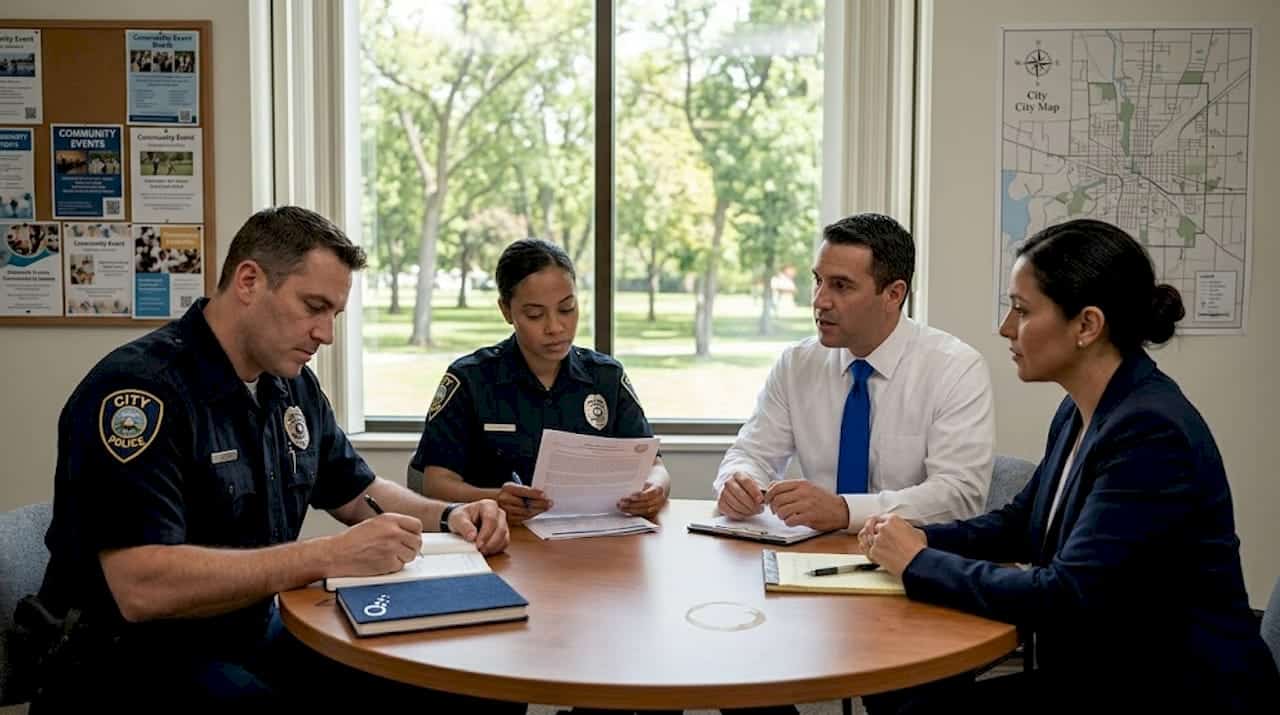

7 Essentials for a Pre-Employment Screening Checklist
Hiring for public safety roles means every decision carries serious responsibility. Choosing the wrong candidate can compromise your organization’s trust and put communities at risk. That is why having a reliable pre-employment screening process is so important.
This list will show you proven steps to set clear expectations, check backgrounds thoroughly, and protect your organization’s reputation. Each insight is tailored to help you confidently build a team that meets high standards and keeps people safe. Get ready to discover practical methods you can put to work right away.
Table of Contents
- 1. Define Role Requirements And Screening Criteria
- 2. Verify Identity And Personal Information
- 3. Conduct Criminal Background Checks
- 4. Check Education And Certification Credentials
- 5. Review Employment And Reference History
- 6. Assess Drug And Alcohol Use Compliance
- 7. Implement Ongoing Monitoring For Staff
Quick Summary
| Takeaway | Explanation |
|---|---|
| 1. Clear Role Requirements Are Essential | Define precise qualifications and attributes to enhance candidate evaluation and align expectations for public safety roles. |
| 2. Implement Rigorous Identity Verification | Use multiple sources and methods to confirm identity, reducing fraud and ensuring candidate reliability in public safety hiring. |
| 3. Conduct Comprehensive Criminal Background Checks | Evaluate candidates’ legal histories thoroughly to protect organizational integrity and assess potential risks in hiring. |
| 4. Validate Education and Certifications Accurately | Confirm the authenticity of candidates’ qualifications to uphold professional standards in public safety organizations. |
| 5. Establish Ongoing Monitoring Practices | Continuously assess staff performance and compliance to maintain safety and integrity within the organization after hiring. |
1. Define Role Requirements and Screening Criteria
Building a robust pre-employment screening process starts with crystal clear role requirements and precise screening criteria. Public safety agencies need a strategic approach to defining exactly what qualifications, skills, and attributes candidates must possess to succeed in critical positions.
Defining role requirements is more than listing job duties. It involves creating a comprehensive framework that aligns organizational needs with candidate qualifications. This approach helps agencies establish transparent expectations and legally defensible selection standards that protect both the organization and potential employees.
Key Components of Role Requirements Include:
- Essential Qualifications: Minimum education, certifications, and professional credentials
- Performance Expectations: Specific job responsibilities and performance metrics
- Physical and Mental Requirements: Necessary capabilities for public safety roles
- Background Check Parameters: Specific screening criteria relevant to the position
A well-crafted role definition enables consistent, objective candidate evaluation. By establishing clear screening criteria upfront, agencies can quickly identify top candidates who meet precise organizational standards. This methodical approach reduces hiring risks and ensures that only the most qualified professionals enter critical public safety roles.
Agencies should work closely with department leaders and current high performing employees to develop comprehensive role requirements. This collaborative approach ensures that job descriptions reflect real world demands and capture the nuanced skills needed for success.
Pro Tip: Create a weighted scoring system for candidate qualifications to objectively rank applicants against your defined role requirements.
2. Verify Identity and Personal Information
In the high stakes world of public safety hiring, verifying a candidate’s identity and personal information is not just a procedural step it is a critical foundation for organizational security. Accurate identification prevents potential risks and ensures the integrity of your recruitment process.
Identity verification goes far beyond checking a drivers license. It requires a comprehensive approach that cross references multiple sources of information to establish a candidate’s true background and legitimacy. Effective verification protects agencies from potential fraud, misrepresentation, and hidden risks.
Key Identity Verification Strategies:
- Government Issued Documentation: Collect and thoroughly validate official identification documents
- Social Security Number Verification: Confirm number authenticity and match with official records
- Background Check Cross Referencing: Compare information across multiple databases and sources
- Digital Identity Validation: Use advanced verification technologies to confirm online and offline identity markers
Agencies must implement a multilayered verification process that combines technological tools with human expertise. Advanced screening platforms can automate initial checks while trained investigators validate complex or flagged information.
Potential Verification Red Flags Include:
- Inconsistent personal information across documents
- Discrepancies in employment or educational history
- Unusual patterns in identification documentation
- Reluctance to provide complete verification materials
By establishing a rigorous identity verification protocol, public safety organizations can significantly reduce hiring risks and maintain the highest standards of personnel selection.
Pro Tip: Implement a standardized identity verification workflow that includes both automated digital checks and manual investigator review to catch subtle inconsistencies.
3. Conduct Criminal Background Checks
Criminal background checks form the critical protective barrier between public safety organizations and potential personnel risks. Comprehensive screening goes beyond simple database searches to create a holistic view of a candidate’s legal and professional history.
These investigations are fundamental for protecting communities and maintaining organizational integrity. Thorough criminal background checks help agencies identify potential risks before they become workplace problems. Government background checks require meticulous attention to legal and ethical standards.
Critical Elements of Criminal Background Checks Include:
- Federal Criminal Record Search: Comprehensive review of federal criminal databases
- State Level Criminal History: Detailed investigation of state criminal records
- County Court Record Review: Local level investigation of criminal proceedings
- Sex Offender Registry Check: Verification against national sex offender databases
- Warrant and Arrest Record Screening: Identification of outstanding legal issues
Key Considerations for Effective Background Investigations:
- Obtain proper authorization from candidates
- Use FCRA compliant screening processes
- Maintain consistent evaluation standards
- Protect candidate privacy and personal information
- Document all screening procedures and findings
Professional background investigators understand that criminal background checks are not about passing judgment but about understanding potential risks. Each record requires careful contextual evaluation considering the nature of the offense, time elapsed, and relevance to the specific role.
Pro Tip: Develop a standardized scoring matrix for criminal background check findings to ensure consistent objective evaluation across all candidate screenings.
4. Check Education and Certification Credentials
Education and certification verification represents a critical checkpoint in pre employment screening for public safety professionals. Credentials are not merely pieces of paper but direct indicators of professional competence and organizational readiness.
Thorough credential verification goes beyond surface level confirmation. Public safety agencies must conduct comprehensive checks that validate the authenticity, relevance, and current status of each candidate’s educational background and professional certifications. Government background checks play a crucial role in ensuring these verifications meet rigorous standards.
Essential Credential Verification Steps:
- Degree Authentication: Contact educational institutions to confirm graduation
- Certification Validation: Verify professional certification status and current standing
- Accreditation Review: Confirm institutional and program accreditation
- License Active Status: Check current professional licensing with relevant boards
- Training Certificate Confirmation: Validate specialized training documentation
Red Flags in Credential Verification:
- Inconsistent dates on educational documents
- Unrecognized or nonaccredited institutions
- Missing or incomplete certification details
- Expired or suspended professional licenses
- Discrepancies between claimed and documented credentials
Professional investigators understand that credential verification is not about catching candidates in misrepresentation but about ensuring public safety organizations maintain the highest professional standards. Each document requires careful scrutiny and contextual understanding.
Pro Tip: Develop a standardized credential verification workflow that includes direct institutional contact and digital verification platforms to streamline the authentication process.
5. Review Employment and Reference History
Employment and reference history verification represents a critical layer of due diligence in public safety hiring processes. A comprehensive review goes beyond simple employment dates to uncover nuanced insights about a candidate’s professional performance and reliability.
Effective reference checks require strategic investigation techniques that reveal deeper understanding of a candidate’s workplace behavior. Post employment background verification demands meticulous attention to detail and systematic information gathering.
Essential Employment History Verification Steps:
- Direct Employer Contact: Speak with previous supervisors and human resources departments
- Position Confirmation: Validate job titles and reported responsibilities
- Employment Duration Verification: Check precise employment start and end dates
- Performance Record Review: Understand professional conduct and workplace achievements
- Reason for Separation Inquiry: Determine circumstances of previous employment endings
Critical Reference Check Considerations:
- Verify contact information authenticity
- Ask specific behavioral and performance oriented questions
- Look for consistent narrative across multiple references
- Understand potential legal limitations on reference discussions
- Document all reference communication attempts and outcomes
Professional investigators recognize that employment history is not just a chronological record but a narrative of professional development. Each reference conversation provides valuable context about a candidate’s potential fit within a public safety organization.
Pro Tip: Create a standardized reference check questionnaire with carefully crafted questions designed to reveal meaningful insights about candidate performance and character.
6. Assess Drug and Alcohol Use Compliance
Drug and alcohol screening represents a critical safeguard for public safety organizations, ensuring personnel can perform duties with maximum reliability and minimal risk. Comprehensive compliance assessments protect both organizational integrity and community safety.
The screening process involves more than simple testing it requires a holistic approach to understanding potential substance related risks. Government background checks provide essential frameworks for systematic evaluation of candidate substance use history.
Comprehensive Drug and Alcohol Compliance Assessment Elements:
- Standardized Drug Screening: Multi panel testing for various substance categories
- Alcohol Use History Review: Evaluation of past and current alcohol consumption patterns
- Prescription Medication Verification: Confirm legitimate medical documentation
- Substance Abuse Treatment History: Understanding past rehabilitation efforts
- Legal Compliance Documentation: Verify adherence to workplace substance regulations
Critical Screening Considerations:
- Maintain strict confidentiality protocols
- Use FCRA compliant testing procedures
- Establish clear organizational substance use policies
- Provide opportunities for rehabilitation when appropriate
- Ensure consistent application of screening standards
Professional investigators recognize that substance use screening is not about punishment but about ensuring workplace safety and individual wellness. Each assessment requires nuanced understanding and compassionate evaluation.
Pro Tip: Develop a comprehensive substance screening policy that balances rigorous safety standards with opportunities for employee support and rehabilitation.
7. Implement Ongoing Monitoring for Staff
Continuous staff monitoring represents the final critical layer of protection for public safety organizations. Proactive surveillance enables agencies to identify potential risks and maintain organizational integrity long after initial hiring processes conclude.
Ongoing monitoring is not about mistrust but about ensuring sustained professional performance and community safety. Post hire employee monitoring provides a strategic approach to maintaining high standards throughout an employee’s tenure.
Key Ongoing Monitoring Components:
- Regular Criminal Background Checks: Periodic reassessment of legal standing
- Professional Certification Tracking: Verify continued credential validity
- Performance Management Review: Continuous assessment of workplace conduct
- Social Media and Digital Footprint Screening: Monitor public professional representation
- Disciplinary Record Updates: Track internal and external professional incidents
Monitoring Implementation Best Practices:
- Establish clear organizational monitoring policies
- Obtain proper legal consent from employees
- Maintain strict confidentiality protocols
- Use consistent and objective evaluation metrics
- Create transparent communication channels
Professional investigators understand that ongoing monitoring is a dynamic process requiring nuanced understanding of evolving workplace risks. Each surveillance strategy must balance organizational safety with individual privacy rights.
Pro Tip: Develop a comprehensive monitoring framework that integrates automated digital screening with periodic human review to capture both systematic and contextual professional risk indicators.
Below is a comprehensive table summarizing the critical steps, considerations, and benefits discussed in the article for implementing a robust pre-employment screening process for public safety professionals.
| Main Step | Key Details | Benefits/Outcomes |
|---|---|---|
| Define Role Requirements | Establish clear job qualifications, skills, and expectations in collaboration with key stakeholders. | Ensures candidates align with organizational needs and reduces hiring risks through objective evaluation standards. |
| Verify Identity and Personal Information | Implement a multilayered approach to validate candidate identity and personal details. | Protects against fraud and maintains recruitment integrity. |
| Conduct Criminal Background Checks | Perform thorough reviews of federal, state, and local criminal records, ensuring compliance and ethical standards. | Protects community safety and identifies potential risks to organizational integrity. |
| Verify Education and Certifications | Authenticate degrees, certifications, and licenses through direct institutional checks and digital platforms. | Validates candidates’ professional qualifications and relevance for critical public safety roles. |
| Assess Employment and Reference History | Engage with past employers and references to confirm job titles, performance, and employment durations. | Gains deeper insights into candidates’ professional reliability and workplace behavior. |
| Assess Drug and Alcohol Use Compliance | Implement standardized substance screening and adhere to industry regulations. | Enhances operational safety and upholds professional standards within the organization. |
| Implement Ongoing Monitoring | Establish continuous assessment practices for staff, including updates on certifications and background checks. | Maintains long-term professional standards and prevents evolving risks. |
Strengthen Your Pre-Employment Screening with Proven Best Practices
Effective public safety hiring demands more than a checklist. The article highlights the critical challenge of developing comprehensive, legally sound screening criteria that verify identity, credentials, employment history, and ongoing compliance while minimizing hiring risks. Agencies face the urgent need to objectively assess candidates through consistent, accurate, and transparent processes. This includes addressing pain points like preventing fraud, ensuring credential authenticity, and maintaining continuous employee monitoring to uphold safety and integrity.
OMNI Intel is designed precisely to meet these challenges with its AI-driven platform tailored for public safety agencies. By integrating advanced background screening tools, you get streamlined verification of qualifications, criminal history, and post-hire monitoring that supports transparent evidence-based decisions with accuracy and compliance. Discover how to implement robust hiring frameworks aligned with Hiring Best Practices | OMNI Intel that protect your organization and community.

Take control of your recruitment process today and reduce hiring risks with OMNI Intel’s specialized solutions. Get started at OMNI Intel now and build a workforce defined by reliability, integrity, and safety.
Frequently Asked Questions
What are the key components of a pre-employment screening checklist?
A pre-employment screening checklist should include defining role requirements, verifying identity and personal information, conducting criminal background checks, checking education and certification credentials, reviewing employment and reference history, assessing drug and alcohol use compliance, and implementing ongoing monitoring for staff. Ensure each component is clearly documented to facilitate consistent evaluations.
How can I effectively verify a candidate’s identity during the screening process?
To effectively verify a candidate’s identity, collect government-issued documents, validate Social Security numbers, and cross-reference multiple databases. Implement a multilayered verification process to catch any discrepancies and enhance recruitment security.
What steps should I take to conduct thorough criminal background checks?
Conduct thorough criminal background checks by performing federal, state, and county criminal history searches, as well as verifying sex offender status. Document all findings and ensure you stay compliant with legal and ethical standards throughout the process.
How can I ensure that the education and certification credentials are valid?
To ensure the validity of education and certification credentials, contact educational institutions directly to confirm degrees and check the status of any professional certifications. Maintain a record of all communications and confirmations for transparency in your hiring practices.
What is the importance of implementing ongoing monitoring for staff?
Ongoing monitoring is crucial for maintaining organizational safety and integrity after hiring. Schedule regular reviews of criminal backgrounds and professional certifications, and assess employee performance continuously to identify any potential risks.
How do I assess a candidate’s compliance with drug and alcohol use policies?
Assess compliance with drug and alcohol use policies by conducting standardized drug screenings and reviewing a candidate’s history with substance use. Establish clear policies and communicate them to candidates to ensure understanding and adherence throughout the hiring process.
Recommended
- Struggling with Post Employment Background Verification? Here’s the Fix • OMNI Intel
- Why Employment Screening for Government Employees Is Crucial Now • OMNI Intel
- Avoid Hiring Risks: Master Pre-Employment Background Investigations for Public Safety Professionals • OMNI Intel
- Post-Hire Monitoring • OMNI Intel
- 7 Essential Employment Law Compliance Tips for Success | Ali Legal
- Finding an Employment Law Attorney Near Me
- 7 Key Types of Workplace Hazards to Recognize and Avoid