
Why Verify Employment History for Public Safety
Recruiting for public safety roles means every detail matters, especially when confirming a candidate’s work history. Accuracy in employment verification stands at the heart of preserving both organizational integrity and community trust. By prioritizing systematic employment history verification standards, HR teams can navigate complex legal requirements, minimize the risk of negligent hiring, and build a workforce qualified to meet the unique demands of American public safety positions.
Table of Contents
- Defining Employment History Verification Standards
- Key Purposes For Public Safety Agencies
- Common Methods And Verification Types
- Legal Framework And Compliance Requirements
- Risks Of Incomplete Or Inaccurate Verification
- Best Practices For Reliable Investigations
Key Takeaways
| Point | Details |
|---|---|
| Employment Verification is Essential | Thorough employment history verification protects public safety agencies from negligent hiring and enhances community trust. |
| Multi-Layered Approach Recommended | Utilizing diverse verification methods, such as direct employer contacts and automated checks, creates a comprehensive assessment of candidates. |
| Legal Compliance is Critical | Adhering to federal regulations, like Form I-9 and E-Verify, ensures lawful hiring practices and reduces liability risks. |
| Implement Best Practices for Accuracy | Establishing systematic protocols and using trained personnel helps maintain rigorous documentation standards throughout the verification process. |
Defining Employment History Verification Standards
Employment history verification in public safety represents a critical process involving systematic documentation review to confirm an individual’s professional background, credentials, and work eligibility. The standards for these investigations are established through federal guidelines that mandate comprehensive screening protocols. Agencies must verify work authorization through rigorous documentation checks that protect organizational integrity and public safety.
Standard verification procedures typically involve multiple layers of investigation, including document authentication, previous employer contact, credential validation, and cross-referencing professional records. Public safety organizations require more stringent verification compared to standard industries due to the high-stakes nature of roles involving community protection. Key verification components include confirming employment dates, job responsibilities, reason for departure, professional conduct, and potential disciplinary actions that might impact future employment suitability.
The legal framework for employment verification is anchored in federal regulations like the Form I-9, which establishes employment verification requirements for all employers. This documentation process ensures that new hires are legally authorized to work, have valid identification, and meet the specific standards required for public safety positions. Background investigators must meticulously document each verification step, maintaining comprehensive records that demonstrate due diligence and compliance with national employment standards.
Pro tip: Develop a standardized verification checklist that captures all essential documentation and verification steps to ensure consistent and thorough background investigations across your organization.
Key Purposes for Public Safety Agencies
Employment history verification serves multiple critical purposes for public safety agencies, fundamentally protecting community welfare through comprehensive screening processes. The primary objective is to assess candidate reliability and ensure that individuals entrusted with public safety responsibilities possess the appropriate professional background and personal integrity required for sensitive roles.
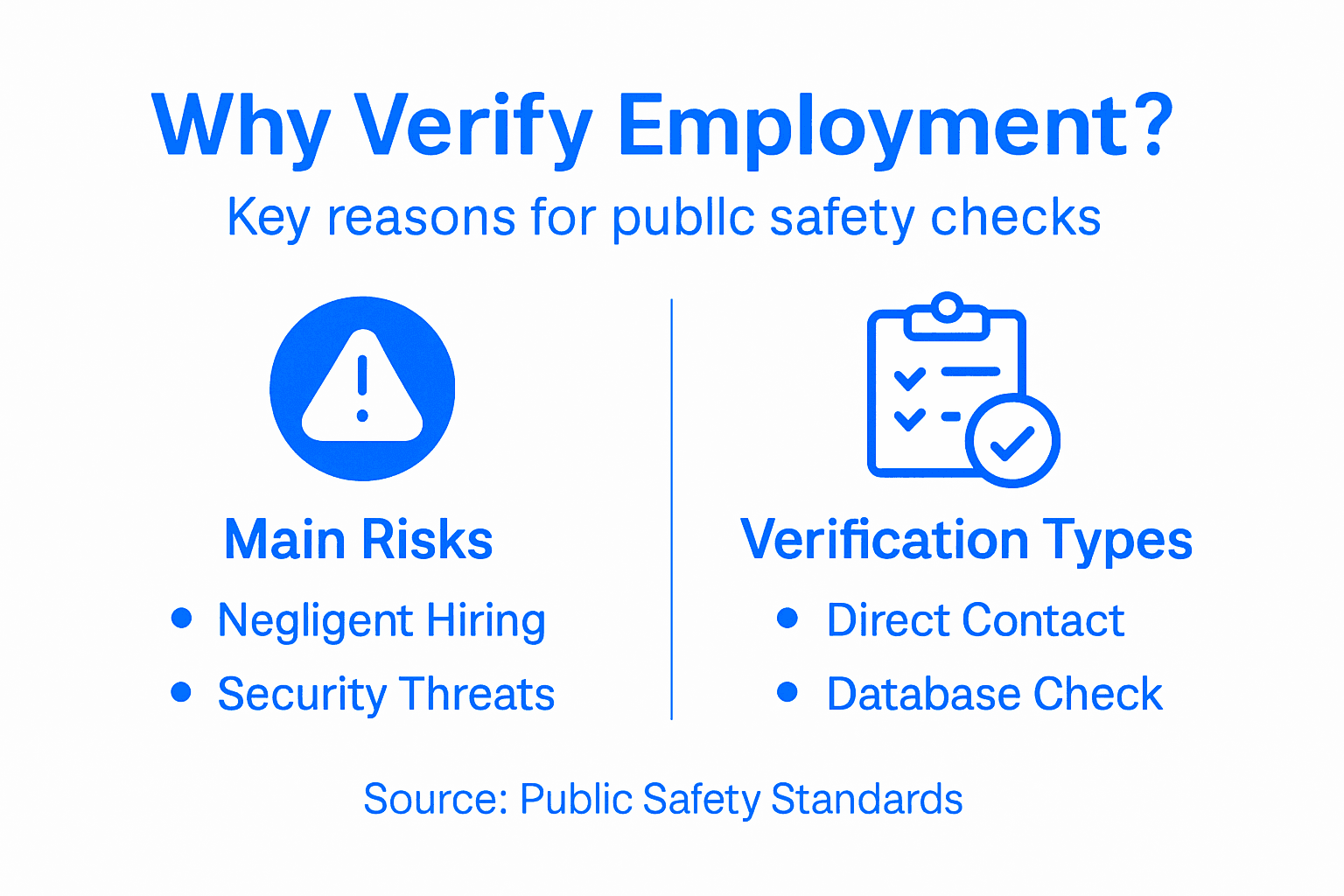
These verification processes go beyond standard employment checks, addressing specific risks unique to public safety sectors. Background investigations aim to uncover potential performance issues, disciplinary records, and professional conduct patterns that might compromise organizational effectiveness. Key verification purposes include preventing negligent hiring, identifying potential security risks, confirming professional credentials, and maintaining the highest standards of organizational accountability and public trust.
Moreover, employment history verification serves as a critical risk mitigation strategy for agencies responsible for community protection. By thoroughly examining an applicant’s professional history, agencies can proactively identify potential red flags, such as previous terminations, misconduct allegations, or performance issues that could indicate unsuitability for high-stakes public safety positions. Background investigations safeguard against hiring risks by creating a comprehensive understanding of an individual’s professional trajectory and potential challenges they might bring to the organization.
Pro tip: Implement a multi-layered verification process that combines documentary evidence, direct employer contacts, and comprehensive background checks to create a robust screening mechanism for public safety roles.
Common Methods and Verification Types
Employment history verification for public safety agencies encompasses multiple sophisticated background check approaches that systematically validate an individual’s professional credentials and personal integrity. These comprehensive methods range from direct employer communications to advanced technological screening processes designed to uncover critical information about a candidate’s professional history and potential risks.
The primary verification types include direct employer contact, third-party verification services, and automated database checks. Direct contact methods involve reaching out to previous employers to confirm employment dates, job responsibilities, performance records, and reasons for separation. Third-party verification services provide structured, standardized approaches that leverage professional networks and comprehensive databases to cross-reference employment information quickly and accurately. Verification of Employment (VOE) services utilize specialized platforms that ensure secure, privacy-compliant information exchange while maintaining rigorous standards of professional documentation.

Technological verification methods have evolved to include advanced screening techniques such as criminal record checks, educational credential verification, professional license confirmation, and automated eligibility assessments through platforms like E-Verify. These multi-layered approaches allow public safety agencies to construct a holistic profile of potential employees, identifying potential red flags, verifying professional qualifications, and ensuring that candidates meet the stringent requirements of high-stakes public safety roles. Each verification method contributes unique insights, creating a comprehensive assessment that goes beyond traditional employment background checks.
Pro tip: Develop a standardized verification matrix that combines multiple verification methods to create a comprehensive and nuanced candidate assessment strategy.
Here is a comparison of the most common employment verification methods used by public safety agencies:
| Method | Process Steps | Information Provided | Application Risk Mitigation |
|---|---|---|---|
| Direct Employer Contact | Phone or email inquiry | Job details, dates, conduct | Identifies hidden disciplinary issues |
| Third-Party Verification | Use specialized services | Credentials and work history | Ensures data accuracy and privacy |
| Automated Database Checks | Query government or private systems | License, criminal checks | Flags eligibility and legal concerns |
| Technological Platforms | Integrated digital screening tools | Education, eligibility status | Prevents falsified documentation |
Legal Framework and Compliance Requirements
Public safety agencies must navigate a complex legal landscape when conducting employment history verifications, ensuring strict adherence to federal regulations that protect both employers and potential employees. Form I-9 compliance represents the foundational legal requirement for employment verification, mandating comprehensive documentation and nondiscriminatory practices across all hiring processes.
The legal framework encompasses multiple critical components designed to balance thorough background investigations with employee privacy protections. Federal regulations require agencies to maintain meticulous records while implementing verification processes that do not discriminate based on national origin, citizenship status, or other protected characteristics. E-Verify electronic confirmation systems provide an additional layer of legal compliance, offering automated tools that help agencies validate employment eligibility while maintaining strict privacy standards.
Beyond initial verification, public safety organizations must continuously monitor legal requirements that evolve with changing workforce regulations. This includes understanding nuanced requirements around document retention, information privacy, and potential liability associated with background investigations. Agencies must develop robust compliance protocols that not only meet current legal standards but also anticipate potential regulatory changes, ensuring ongoing protection for both the organization and potential employees through proactive and transparent verification processes.
Pro tip: Create a comprehensive compliance checklist that tracks legal requirements, documentation standards, and verification protocols to ensure consistent adherence to federal employment verification regulations.
The following table provides a summary of key legal compliance requirements for employment verification in public safety agencies:
| Compliance Standard | Purpose | Recordkeeping Requirement | Regulatory Impact |
|---|---|---|---|
| Form I-9 | Legal work authorization check | Retain completed forms | Federal hiring compliance |
| E-Verify System | Automated eligibility confirmation | Secure electronic storage | Protects against hiring violations |
| Privacy Protection | Safeguard applicant information | Limit data access and sharing | Reduces liability and legal exposure |
| Nondiscrimination | Ensure fair hiring practices | Document equitable processes | Prevents litigation and sanctions |
Risks of Incomplete or Inaccurate Verification
Employment history verification failures can expose public safety agencies to profound operational and legal risks that extend far beyond simple administrative oversights. Negligent hiring consequences represent a critical vulnerability where inadequate background investigations can introduce significant organizational vulnerabilities, potentially compromising community safety and institutional integrity.
The potential risks associated with incomplete verification are multifaceted and potentially catastrophic for public safety organizations. Unverified candidates might introduce serious security threats, including individuals with undisclosed disciplinary histories, falsified credentials, or problematic professional backgrounds that could directly undermine organizational effectiveness. These risks manifest through potential scenarios such as hiring personnel with undiscovered criminal records, professional misconduct histories, or fabricated professional qualifications that could compromise critical public safety operations.
Moreover, verification failures create substantial operational risks that extend beyond immediate hiring decisions. Inaccurate employment histories can lead to regulatory non-compliance, potential legal liabilities, financial penalties, and irreparable damage to organizational reputation. Public safety agencies operate under heightened scrutiny, where a single verification error could result in significant professional and legal repercussions, potentially undermining years of institutional credibility and public trust.
Pro tip: Implement a comprehensive cross-referencing verification protocol that validates candidate information through multiple independent sources to minimize potential verification gaps and reduce organizational risk.
Best Practices for Reliable Investigations
Employment history verification requires implementing systematic approaches that prioritize accuracy, comprehensive documentation, and legal compliance. Verification of employment protocols demand meticulous attention to detail, ensuring public safety agencies develop robust investigation strategies that protect organizational integrity and community safety.
Key best practices include obtaining explicit written consent from candidates, utilizing authorized third-party verification services, and maintaining rigorous documentation standards. Agencies should develop multi-layered verification processes that cross-reference information from multiple sources, including previous employers, professional references, educational institutions, and specialized background screening platforms. This comprehensive approach helps mitigate risks associated with incomplete or potentially misleading candidate representations.
Technological integration plays a critical role in modern verification practices. Electronic verification tools enable agencies to streamline background investigations, reduce human error, and maintain consistent screening standards. Successful implementations require ongoing staff training, regular policy updates, and a commitment to following federal guidelines that protect both organizational interests and candidate privacy rights. Public safety organizations must balance thorough investigation techniques with legal and ethical considerations to maintain the highest standards of professional recruitment.
Pro tip: Develop a standardized verification checklist that includes mandatory documentation requirements, verification steps, and compliance protocols to ensure consistent and comprehensive background investigations.
Strengthen Your Public Safety Hiring with Trusted Employment Verification
Employment history verification is vital for public safety agencies facing the challenge of hiring reliable and responsible personnel. The article highlights critical pain points such as preventing negligent hiring, mitigating security risks, and ensuring compliance with federal regulations like Form I-9 and E-Verify. Agencies need a thorough, multi-layered verification process that confirms candidates’ credentials while safeguarding privacy and adhering to legal standards.
OMNI Intel is designed to meet these exact needs. Our background screening platform specializes in comprehensive pre-employment investigations tailored for public safety roles. We combine AI-driven tools with proven law enforcement investigation techniques to deliver accuracy, integrity, and ongoing monitoring that protects your agency’s reputation and community safety. Discover how to implement Hiring Best Practices | OMNI Intel that can reduce hiring risks and streamline recruitment.

Take control of your hiring process today. Visit Get Started with OMNI Intel to access tailored screening solutions that ensure every hire is thoroughly vetted and compliant with legal standards. Protect your community and your organization by making informed, evidence-based decisions now.
Frequently Asked Questions
Why is employment history verification important for public safety agencies?
Employment history verification is crucial for public safety agencies to assess candidate reliability and ensure that individuals entrusted with sensitive roles possess the appropriate professional background and personal integrity.
What are the common methods used for employment history verification?
Common methods include direct employer contact, third-party verification services, and automated database checks to validate an individual’s professional credentials and personal integrity.
What risks are associated with incomplete employment verification?
Incomplete verification can expose public safety agencies to negligent hiring risks, potential security threats, regulatory non-compliance, and irreparable damage to organizational reputation.
How can public safety agencies ensure legal compliance during the verification process?
Agencies can ensure legal compliance by adhering to federal regulations like Form I-9, utilizing E-Verify systems, and maintaining precise records while implementing nondiscriminatory hiring practices.
Recommended
- Avoid Hiring Risks: Master Pre-Employment Background Investigations for Public Safety Professionals • OMNI Intel
- Why Employment Screening for Government Employees Is Crucial Now • OMNI Intel
- Background Investigation Insights | OMNI Intel
- Struggling with Post Employment Background Verification? Here’s the Fix • OMNI Intel
- Experienced Huntington Beach Employment Law Attorneys