

Risk Mitigation Guide for Agencies: A Public Safety Framework
Risk mitigation in public safety agencies is defined as the systematic process of identifying, evaluating, and controlling risks to protect personnel, operations, and the communities agencies serve. Frameworks like ISO 31000 and the NSW Treasury’s Risk Management Toolkit provide authoritative blueprints that agencies can adopt to build this capability. This risk mitigation guide for agencies covers the governance structures, process steps, and operational practices that turn risk management from a compliance exercise into a genuine safety function. Administrators who apply these principles consistently see measurable gains in decision quality, operational resilience, and audit readiness.
What are the essential components of an integrated risk management framework?
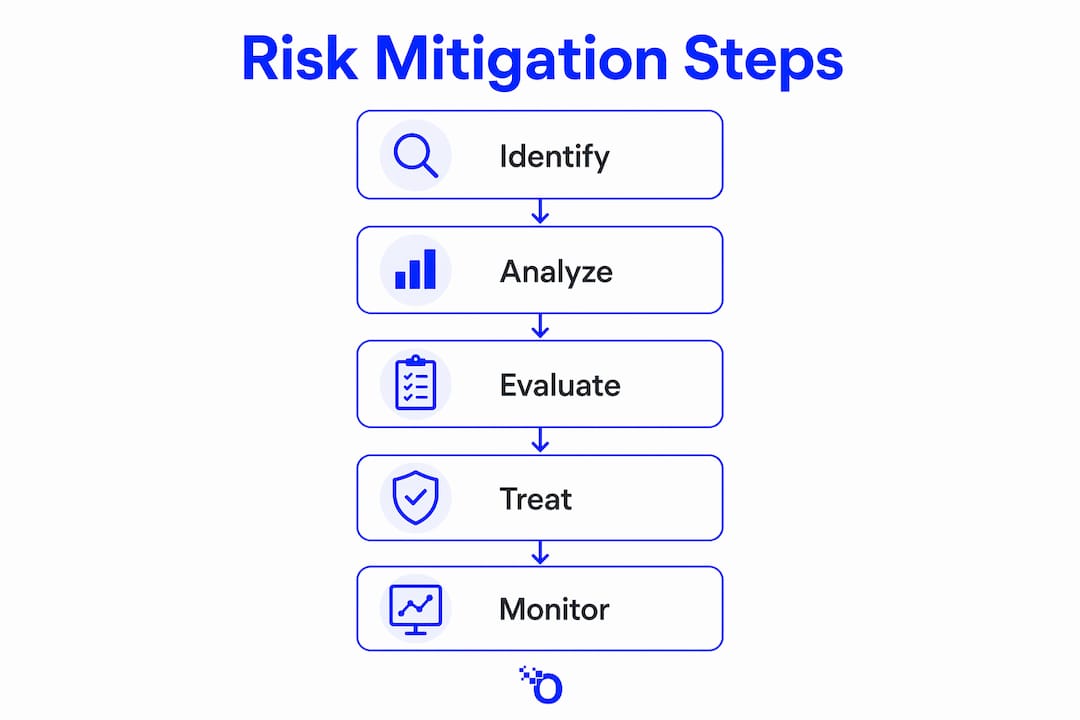
An integrated risk management framework is a blueprint that embeds systematic risk controls across every level of an agency. Without this structure, risk activities remain isolated, reactive, and difficult to defend under audit. The NSW Treasury toolkit mandates four core process steps: identify, analyze, evaluate, and treat, with continuous monitoring running in parallel throughout.
Risk governance and the Three Lines model
Risk governance defines who owns risk decisions and who holds others accountable. The Three Lines model assigns distinct roles across the agency:
- First line: Operational staff who manage day-to-day risks within their functions
- Second line: Oversight functions such as compliance and risk management teams who set standards and monitor adherence
- Third line: Independent assurance providers, typically internal audit, who verify that controls work as intended
This structure prevents any single team from both owning and auditing its own risks. Agencies that skip the second line often discover control gaps only after an incident.
Risk Appetite Statement
A Risk Appetite Statement defines the level of risk an agency is willing to accept in pursuit of its objectives. NSW Treasury recommends operationalizing risk appetite through a formal statement that leadership endorses and all staff understand. Risk appetite statements create a common stance on acceptable risk levels, making treatment decisions clearer and more consistent across departments.
Risk culture and residual risk
Risk culture is the shared set of values and behaviors that determine how staff identify and respond to risk. An agency with a strong risk culture treats near-misses as learning opportunities rather than embarrassments. Residual risk is the risk that remains after controls are applied. Documenting residual risk is not optional. It is the evidence that separates genuinely managed risks from risks that were simply acknowledged and filed away.
Pro Tip: Publish your Risk Appetite Statement in plain language and review it annually. Staff who cannot summarize the agency’s risk tolerance in one sentence are unlikely to apply it in daily decisions.
How can agencies embed risk management into daily operations?
Risk management produces value only when it connects to real work. Agencies that treat risk as a separate function, handled by a dedicated team and reviewed quarterly, miss the majority of operational risks that emerge in daily workflows. NSW Treasury states that risk management must be integrated into policies, daily activities, and business planning, with resourcing for risk controls included in planning cycles.
Connecting risk to objectives
Every operational objective carries associated risks. A dispatch center expanding its coverage area faces staffing risks, technology risks, and communication protocol risks simultaneously. Administrators should map each objective to its risk profile before committing resources. This practice shifts risk identification from a retrospective activity to a forward-looking one.
Practical integration points include:
- Policy development: Every new policy should include a risk assessment section before approval
- Budget planning: Risk treatment costs should appear as line items, not afterthoughts
- Incident debriefs: Post-incident reviews should feed directly into the risk register
- Onboarding processes: New personnel should receive risk awareness training before their first operational shift
- Procurement decisions: Vendor selection for critical systems should include a third-party risk assessment
Proactive versus reactive risk handling
Proactive risk handling identifies threats before they materialize. Reactive handling responds after damage occurs. The cost difference between the two is significant in public safety contexts, where a single personnel failure or equipment breakdown can affect community outcomes. Agencies that build hiring risk controls into their recruitment workflows, for example, reduce the probability of integrity failures before they reach the field.
Pro Tip: Assign a risk owner to every objective in your annual operating plan. If an objective has no named risk owner, it has no accountability, and accountability is what makes risk management real.
What are effective techniques to identify, analyze, evaluate, and treat risks?
Executing each step of the risk management process with precision separates agencies with functional risk programs from those with paperwork compliance. Each step requires specific methods and tools.
Step 1: Risk identification
Risk identification surfaces threats and opportunities before they affect operations. Effective methods include:
- Stakeholder engagement: Front-line staff often identify operational risks that leadership cannot see from a distance. Structured interviews and anonymous reporting channels both produce useful intelligence.
- Horizon scanning: Reviewing incident reports from comparable agencies, regulatory updates, and emerging technology risks broadens the identification scope beyond internal experience.
- Process mapping: Walking through each operational workflow step-by-step reveals handoff points where risks concentrate.
- Fraud risk assessment: The Virginia Department of Accounts ARMICS checklist advises treating fraud as a discrete risk category with defined likelihood and impact scales. Agencies that omit fraud from their risk registers consistently under-mitigate integrity risks.
Step 2: Risk analysis and evaluation
Risk analysis assigns values to likelihood and impact for each identified risk, accounting for existing controls. The output is a risk score that reflects the current exposure level. Risk evaluation then compares that score against the agency’s risk appetite. Residual risk is the risk remaining after controls are applied. Risks that exceed appetite after controls require active treatment decisions.

| Risk level | Likelihood | Impact | Recommended action |
|---|---|---|---|
| Critical | High | Severe | Immediate treatment required |
| High | Medium | Significant | Treatment plan within 30 days |
| Medium | Low | Moderate | Monitor and review quarterly |
| Low | Very low | Minor | Accept and document |
Step 3: Risk treatment
Treatment options follow a standard hierarchy. Avoidance eliminates the activity that creates the risk. Reduction applies controls to lower likelihood or impact. Sharing transfers part of the risk to a third party, such as an insurer or contractor. Acceptance acknowledges the risk and documents the decision. Risk registers and scoring matrices are the primary tools for tracking treatment decisions and their owners. Agencies managing employee risk should apply this hierarchy to personnel risks with the same rigor applied to operational and financial risks.
Pro Tip: When building your risk register, include a “treatment status” column with defined milestones. A risk with no milestone date is a risk with no deadline, and deadlines are what drive action.
How should agencies monitor risk controls and improve mitigation effectiveness?
Monitoring is where most agency risk programs fail. Administrators build a risk register, assign owners, and then review it once a year at a governance meeting. The UK NAO recommends a different approach: performance checks and self-assessment techniques that drive continual improvement and prevent complacency.
Continuous monitoring before, during, and after treatment
The UK Orange Book specifies that monitoring should occur before treatment implementation to establish a baseline, during implementation to catch control failures early, and after implementation to verify that the risk profile has actually changed. This three-phase approach produces evidence that treatments worked, not just evidence that they were applied.
| Monitoring phase | Primary question | Key activity |
|---|---|---|
| Pre-treatment | What is the current risk exposure? | Baseline measurement and documentation |
| During treatment | Are controls functioning as designed? | Control testing and progress reporting |
| Post-treatment | Has residual risk changed? | Reassessment and register update |
Audit committee challenge and assurance
Audit and risk committees should actively challenge risk frameworks rather than accepting documentation at face value. The UK NAO identifies passive acceptance of risk registers as a common governance failure. Committees that ask “show me the evidence this control works” rather than “is this control listed” produce stronger assurance outcomes. Compliance in public safety hiring follows the same logic: documented processes only protect an agency when they are verified, not just recorded.
Effective monitoring mechanisms include:
- Monthly risk owner reports submitted to the second line
- Quarterly risk register reviews with updated residual risk scores
- Annual independent assurance reviews conducted by internal audit
- Escalation protocols that define when a risk moves from operational management to executive attention
- Training records that confirm staff competence in risk identification and reporting
Pro Tip: Pair every risk register entry with at least one measurable performance indicator. “Control is in place” is not evidence. “Control reduced incident frequency by X” is evidence. Measurable indicators turn risk management into a defensible practice.
Key takeaways
Effective risk mitigation in public safety agencies requires a structured framework, clear governance roles, operational integration, and continuous monitoring to produce defensible, evidence-based outcomes.
| Point | Details |
|---|---|
| Framework first | Adopt ISO 31000 or NSW Treasury’s toolkit as the structural foundation before building processes. |
| Govern with the Three Lines model | Assign first, second, and third line roles explicitly to prevent siloed risk ownership. |
| Integrate into daily operations | Embed risk assessment into policy development, budgeting, and onboarding, not just annual reviews. |
| Document residual risk | Record risk levels after controls are applied to support audit defensibility and demonstrate rigor. |
| Monitor in three phases | Check controls before, during, and after treatment to verify that risk profiles actually change. |
The check-box trap: what most agency risk programs get wrong
The most common failure I see in agency risk programs is not a lack of documentation. It is documentation that exists purely to satisfy an audit rather than to drive decisions. Administrators spend weeks building a risk register, then file it until the next review cycle. The register becomes a record of past thinking, not a living tool.
The Three Lines model solves part of this problem, but only when it is operationalized with explicit reporting paths. Agencies that assign roles without defining escalation triggers end up with three lines that never communicate. The first line manages risks silently. The second line never receives a signal. The third line audits a process that stopped functioning months ago.
The fraud risk gap is equally persistent. Most public safety agencies assess operational and financial risks with reasonable discipline. Fraud risk, particularly management override and collusion, gets a line item in the register and nothing more. The Virginia ARMICS checklist exists precisely because agencies need a structured prompt to treat fraud as a distinct category with its own likelihood and impact analysis. Skipping this step is not a minor omission. It is a material gap in integrity controls.
Balancing treatment costs against benefits is the third area where agencies consistently underperform. The Orange Book principle is straightforward: treatments must be justified by their benefits relative to their costs and stakeholder obligations. Applying every possible control to every identified risk is not risk management. It is risk theater. The discipline is in choosing treatments that produce proportionate reductions in exposure, documenting that reasoning, and reviewing it when circumstances change.
The agencies that get this right share one habit: they pair their risk registers with measurable performance checks. They do not ask “is the control listed?” They ask “is the control working?” That question, asked consistently, is what separates a functional risk program from a compliance artifact.
— Matt
How OMNI Intel strengthens personnel risk controls for public safety agencies
Personnel risk is one of the most consequential and most under-controlled risk categories in public safety. A single integrity failure in a law enforcement, fire, EMS, or dispatch role can expose an agency to liability, community harm, and reputational damage that no policy document can repair after the fact.

OMNI Intel provides pre-employment screening services built specifically for public safety agencies, applying investigator-driven background investigation principles to every candidate assessment. From law enforcement to non-profit security roles, OMNI Intel’s background investigation platform integrates directly with agency recruiting workflows, reducing time-to-hire while maintaining the depth of vetting that public safety roles demand. Agencies that embed OMNI Intel’s screening into their risk framework address personnel risk at the point of entry, before it reaches the field.
FAQ
What is risk mitigation in public safety agencies?
Risk mitigation in public safety agencies is the process of identifying, analyzing, evaluating, and treating risks that could harm personnel, operations, or community safety. It follows structured frameworks like ISO 31000 and the NSW Treasury Risk Management Toolkit.
What are the steps for effective risk mitigation?
The core steps are risk identification, analysis, evaluation, treatment, and continuous monitoring. NSW Treasury’s framework specifies that these steps run as a cycle, not a one-time exercise, with residual risk documented at each stage.
What should an agency risk assessment checklist include?
An agency risk assessment checklist should cover risk identification methods, likelihood and impact scales, existing control assessment, residual risk scoring, treatment options, and fraud risk as a discrete category per the Virginia ARMICS standard.
How does the Three Lines model support risk governance?
The Three Lines model assigns first-line risk ownership to operational staff, second-line oversight to compliance functions, and third-line assurance to internal audit. This structure prevents siloed risk ownership and creates clear escalation paths.
How often should agencies review their risk registers?
Risk registers should be reviewed at minimum quarterly, with residual risk scores updated after each review. The UK NAO recommends that audit committees actively challenge risk documentation rather than accepting it as evidence of effective control.