

Recruitment Cycle Efficiency: Impact for Public Safety
Balancing speed with thorough candidate vetting can feel like a constant challenge for public safety human resources teams. With law enforcement agencies across the United States facing high turnover, shifting workforce expectations, and complex background check requirements, improving recruitment cycle efficiency becomes a strategic imperative. This resource reveals practical methods to optimize each phase of recruitment while ensuring compliance, strong professional standards, and robust candidate evaluations.
Table of Contents
- Defining Recruitment Cycle Efficiency In Public Safety
- Stages And Variations In Public Sector Hiring
- Barriers Impacting Recruitment Speed And Quality
- Leveraging Technology For Faster Background Checks
- Compliance, Accountability, And Risk Management
- Strategies To Reduce Delays And Improve Outcomes
Key Takeaways
| Point | Details |
|---|---|
| Recruitment Cycle Efficiency | Public safety agencies must adopt strategic recruitment processes to balance speed, quality, and workforce sustainability. |
| Barriers to Recruitment | Common challenges include negative public perception, competitive job markets, and complex vetting processes, which hinder effective hiring. |
| Leveraging Technology | Advanced technologies, like AI and biometric systems, can significantly improve background check efficiency and candidate assessment accuracy. |
| Compliance and Risk Management | Maintaining ethical hiring practices and compliance with legal standards are crucial for building public trust and organizational integrity. |
Defining Recruitment Cycle Efficiency in Public Safety
Recruitment cycle efficiency represents a strategic approach for public safety agencies to systematically attract, evaluate, and hire qualified personnel while optimizing organizational resources. Law enforcement recruitment processes require sophisticated strategies that balance speed, quality, and long-term workforce sustainability.
Efficient recruitment cycles encompass multiple critical phases designed to address complex staffing challenges:
- Identifying candidate talent pools
- Developing targeted recruitment marketing
- Streamlining application and screening processes
- Conducting comprehensive background investigations
- Implementing rapid selection and onboarding protocols
The primary objectives of an efficient recruitment cycle extend beyond simply filling positions. Agencies must simultaneously manage:
Here’s a comparison of recruitment cycle objectives and their organizational impact:
| Objective | Organizational Benefit | Measurement Approach |
|---|---|---|
| Maintain professional standards | Enhances public trust | Quality audits |
| Ensure workforce diversity | Reflects community demographics | Demographic reports |
| Address staffing gaps | Improves operational readiness | Vacancy rate analysis |
| Reduce hiring expenditures | Frees up budget for training | Cost-per-hire calculation |
- Maintaining high professional standards
- Ensuring workforce diversity
- Addressing community representation needs
- Minimizing operational staffing gaps
- Reducing overall hiring expenditures
Recruitment Performance Metrics become crucial in understanding cycle efficiency. Public safety organizations typically measure success through indicators like:
- Time-to-hire duration
- Candidate quality scores
- Background check completion rates
- First-year retention percentages
- Diversity representation achievements
Successful recruitment cycle efficiency results from strategic, innovative approaches that address both short-term hiring needs and long-term workforce sustainability.
Understanding these multifaceted dynamics requires agencies to continuously adapt their recruitment strategies, recognizing that what worked yesterday might not be effective tomorrow.
Pro tip: Regularly audit and update your recruitment processes to ensure they remain aligned with evolving workforce expectations and technological capabilities.
Stages and Variations in Public Sector Hiring
Public sector hiring represents a complex, multilayered process with distinct stages and nuanced variations across different government levels and agency types. Public sector hiring processes typically involve structured approaches designed to ensure fairness, merit-based selection, and comprehensive candidate evaluation.
The standard public sector hiring process encompasses several critical stages:
- Job Analysis and Requirement Definition
- Position Announcement and Advertising
- Application Screening
- Candidate Assessment
- Background Investigation
- Interview Selection
- Final Candidate Evaluation
- Onboarding and Placement
Agencies encounter significant variations in hiring approaches based on several key factors:
- Level of Government
- Specific Agency Requirements
- Position Classification
- Budgetary Constraints
- Workforce Diversity Goals
Hiring Service Categories in public sector recruitment include:
- Competitive Service
- Excepted Service
- Senior Executive Service
- Temporary and Term Appointments
- Student and Recent Graduate Programs
Public sector agencies are adopting evidence-based strategies to improve efficiency and adapt to increased retirements and recruitment competition.
Understanding these variations requires agencies to develop flexible recruitment strategies that can adapt to changing workforce dynamics and organizational needs. Successful public sector hiring demands a comprehensive approach that balances procedural requirements with strategic talent acquisition.
Pro tip: Develop a standardized yet adaptable hiring framework that allows for nuanced adjustments across different agency contexts and position requirements.

Barriers Impacting Recruitment Speed and Quality
Public safety agencies face increasingly complex challenges in maintaining recruitment speed and candidate quality. Recruitment barriers in public safety stem from multifaceted societal, economic, and institutional dynamics that fundamentally reshape workforce acquisition strategies.
Key barriers impacting recruitment effectiveness include:
- Negative public perception of law enforcement
- Generational shifts in career expectations
- Competitive labor market dynamics
- Increased professional risks and scrutiny
- Complex background investigation requirements
- Economic compensation limitations
These recruitment challenges manifest through several critical dimensions:
- Declining candidate interest in public safety careers
- Heightened screening and vetting processes
- Extended hiring timelines
- Reduced candidate pool diversity
- Higher candidate dropout rates
Systemic Recruitment Barriers create significant operational challenges for public safety agencies:
- Retirement wave reducing experienced workforce
- Changing workforce cultural expectations
- Media scrutiny and professional reputation risks
- Complex certification and training requirements
- Limited agency budgetary flexibility
Overcoming these barriers requires innovative compensation, improved workplace culture, and strategic community engagement.
Successful recruitment strategies must develop holistic approaches that address underlying institutional challenges while remaining adaptable to evolving workforce expectations and societal dynamics.
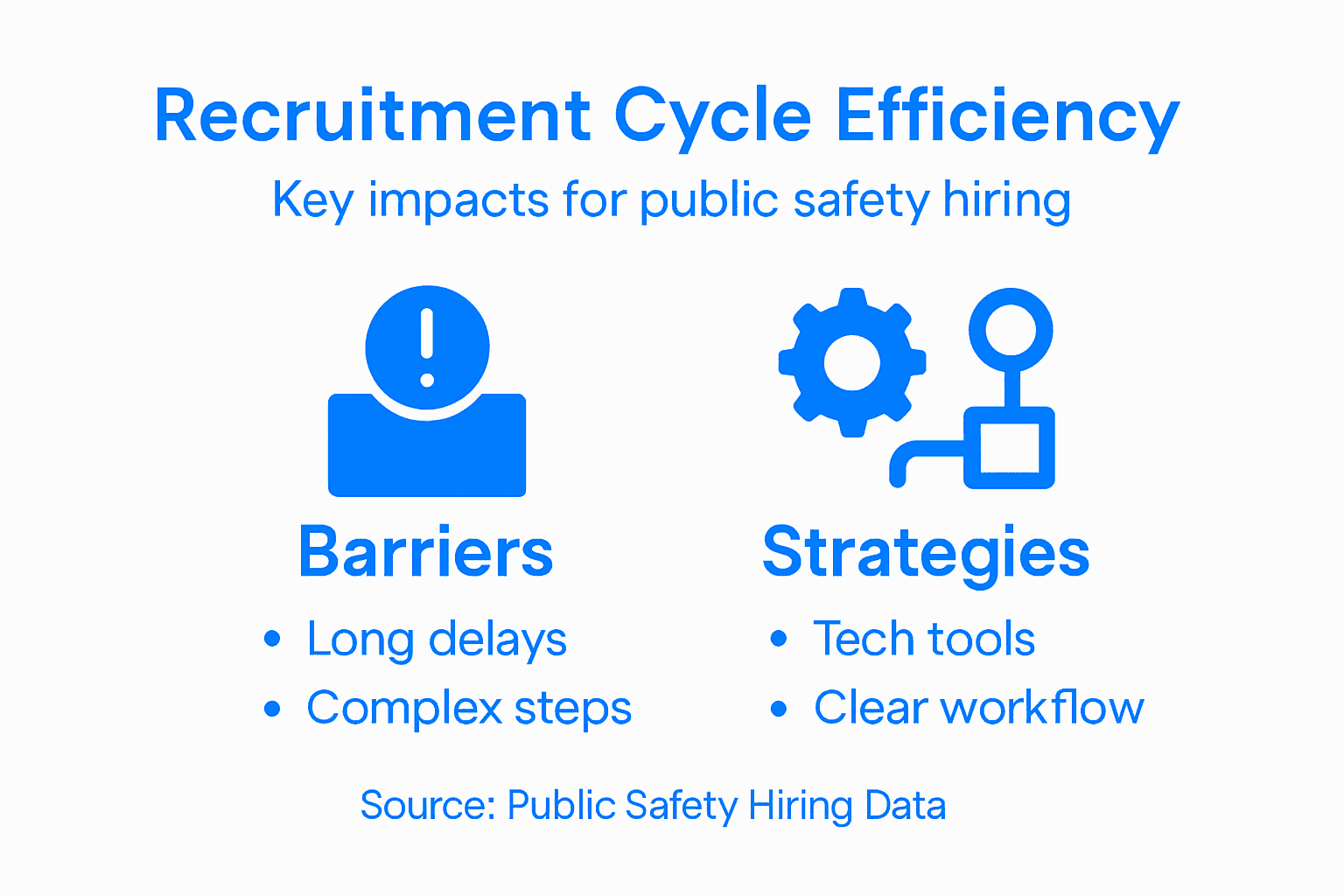
The following table summarizes common barriers in public safety recruitment and effective response strategies:
| Barrier | Impact on Hiring | Strategic Response |
|---|---|---|
| Negative public perception | Fewer applicants | Community engagement efforts |
| Competitive labor market | Losing top talent | Improved benefits packages |
| Extended hiring timelines | Operational delays | Digital application systems |
| Reduced diversity | Limited perspectives | Inclusive outreach programs |
Pro tip: Implement comprehensive recruitment strategies that proactively address generational workplace expectations and demonstrate meaningful organizational commitment to professional development.
Leveraging Technology for Faster Background Checks
Public safety agencies are revolutionizing recruitment processes through advanced technological solutions that dramatically accelerate candidate vetting. Technology in criminal background investigations enables unprecedented speed and accuracy in screening potential public safety personnel.
Critical technological tools transforming background check processes include:
- Biometric Identification Systems
- Automated Fingerprint Analysis
- Advanced DNA Matching Technologies
- Digital Criminal Record Databases
- Artificial Intelligence Screening Algorithms
- Machine Learning Verification Platforms
Technological innovations provide multiple strategic advantages:
- Reducing manual processing time
- Enhancing information accuracy
- Streamlining complex verification protocols
- Minimizing human error risks
- Supporting comprehensive candidate assessment
Emerging Technological Capabilities in background investigations feature:
- Real-time criminal record cross-referencing
- Automated credential verification systems
- Comprehensive digital identity validation
- Multi-jurisdiction background screening
- Integrated risk assessment algorithms
Law enforcement agencies utilize technologies such as micro recruitment websites tied to CRM’s, auto-responders, text-messaging, email marketing, and more to enhance efficiency in operations.
Successful implementation requires balancing technological capabilities with robust privacy protection and compliance standards, ensuring that advanced screening methods respect individual rights while maintaining rigorous public safety standards.
Pro tip: Develop comprehensive technology integration strategies that prioritize both operational efficiency and strict data protection protocols.
Compliance, Accountability, and Risk Management
Public safety agencies must navigate complex legal and ethical landscapes to maintain organizational integrity and public trust. Recruitment compliance mechanisms establish critical frameworks that protect both institutional interests and candidate rights during hiring processes.
Risk Management Strategies in public safety recruitment encompass multiple interconnected domains:
- Legal Standards Compliance
- Ethical Hiring Practices
- Transparency in Selection Processes
- Continuous Performance Monitoring
- Liability Reduction Protocols
Key components of effective accountability frameworks include:
- Standardized Background Verification
- Professional Conduct Assessments
- Ongoing Training Requirements
- Internal Review Mechanisms
- External Oversight Procedures
Compliance Dimensions critical to public safety recruitment involve:
- Adherence to Equal Employment Opportunity regulations
- Comprehensive background investigation protocols
- Documented decision-making processes
- Clear performance evaluation metrics
- Systematic misconduct prevention strategies
Compliance and accountability in public safety recruitment involve internal and external controls including professional standards, ethics codes, supervision, and transparent oversight mechanisms.
Successful risk management requires a proactive, integrated approach that anticipates potential challenges while maintaining organizational flexibility and responsiveness to evolving professional standards.
Pro tip: Develop a comprehensive compliance checklist that systematically addresses legal, ethical, and operational risk management requirements throughout the recruitment cycle.
Strategies to Reduce Delays and Improve Outcomes
Public safety agencies must implement strategic approaches to optimize recruitment timelines and candidate quality. Recruitment and retention strategies represent critical pathways for addressing systemic hiring challenges and improving organizational effectiveness.
Key Strategic Interventions to accelerate recruitment processes include:
- Streamlining Application Workflows
- Implementing Digital Screening Technologies
- Expanding Candidate Outreach Channels
- Developing Targeted Recruitment Marketing
- Creating Transparent Communication Protocols
Critical steps for reducing recruitment delays involve:
- Simplifying Initial Application Requirements
- Automating Background Check Processes
- Establishing Clear Candidate Communication Timelines
- Developing Standardized Evaluation Metrics
- Creating Responsive Recruitment Team Structures
Performance Optimization Approaches:
- Leveraging Data Analytics for Recruitment Insights
- Implementing Continuous Process Improvement
- Developing Comprehensive Candidate Experience Frameworks
- Creating Flexible Hiring Pathways
- Establishing Proactive Talent Pipeline Strategies
Successful agencies focus on long-term workforce planning and address barriers to entry while enhancing public perceptions and trust.
Comprehensive recruitment strategies require holistic approaches that balance organizational needs with candidate expectations, creating dynamic and responsive hiring ecosystems.
Pro tip: Develop an agile recruitment framework that continuously adapts to changing workforce dynamics and leverages technology for faster, more effective candidate selection.
Boost Recruitment Cycle Efficiency with OMNI Intel
Public safety agencies face major challenges with recruitment cycle efficiency including extended hiring timelines, complex background investigations, and the need to maintain high professional standards while ensuring workforce diversity. The article highlights key pain points like reducing operational delays and overcoming barriers such as complex screening requirements and limited candidate pools. OMNI Intel is designed exactly for these hurdles by offering a tailored background screening platform that speeds up pre-employment investigations and uses AI-driven tools to identify qualified candidates quickly without compromising compliance or accuracy.
With OMNI Intel you can streamline your recruitment process, minimize time-to-hire, and maintain accountability with continuous post-hire monitoring. This means faster decision making, reduced hiring costs, and improved workforce reliability for your agency. Start transforming your recruitment strategy today by exploring how OMNI Intel integrates advanced technology and compliance standards specifically for law enforcement, fire and EMS, dispatch centers, and other public safety roles.

Ready to overcome common public safety recruitment barriers and enhance your agency’s hiring outcomes? Visit Get Started with OMNI Intel now and empower your team to make transparent, evidence-based hiring decisions that protect community safety and agency reputation. Discover how our platform supports your goals in improving recruitment metrics and maintaining the highest standards in public safety hiring.
Frequently Asked Questions
What is recruitment cycle efficiency in public safety?
Recruitment cycle efficiency is a strategic approach used by public safety agencies to effectively attract, evaluate, and hire qualified personnel while optimizing resources.
What are the key phases in the recruitment cycle for public safety agencies?
The recruitment cycle includes identifying candidate talent pools, developing targeted marketing, streamlining application processes, conducting background investigations, and implementing rapid selection and onboarding.
How can public safety agencies enhance their recruitment process?
Agencies can enhance recruitment by adopting technology solutions for background checks, streamlining workflows, expanding outreach efforts, and developing clear communication protocols with candidates.
What metrics can be used to measure recruitment performance in public safety?
Performance metrics include time-to-hire, candidate quality scores, background check completion rates, first-year retention percentages, and diversity representation achievements.