
Implement employee monitoring workflow for public safety
Public safety agencies face mounting pressure to maintain workforce integrity beyond initial hiring. Traditional periodic audits miss dynamic risks inherent in roles where employees carry badges, respond to emergencies, or access sensitive information. Effective continuous monitoring mitigates operational, legal, and reputational risks by detecting post-hire violations early, ensuring compliance with evolving regulations, and protecting community trust through proactive oversight.
Table of Contents
- Introduction To Employee Monitoring In Public Safety
- Prerequisites: Preparing For Employee Monitoring Implementation
- Step-By-Step Workflow For Automated Employee Monitoring
- Balancing Privacy And Ethical Considerations
- Common Mistakes And Troubleshooting In Monitoring Workflows
- Expected Results And Success Metrics
- Enhance Your Employee Monitoring With OMNI Intel Solutions
- FAQ
Key takeaways
| Point | Details |
|---|---|
| Focus monitoring on highest-risk roles | Use tailored risk assessments to prioritize resources and compliance efforts effectively. |
| Automate data collection and alerts | AI-enabled platforms integrated with HR systems reduce errors and enable real-time detection. |
| Establish clear escalation protocols | Define remediation steps and regularly update monitoring parameters to address emerging risks. |
| Balance privacy and transparency | Maintain employee trust through clear communication while ensuring regulatory compliance. |
| Measure success with metrics | Continuous monitoring reduces violations up to 40% and improves risk detection significantly. |
Introduction to employee monitoring in public safety
Employee monitoring extends far beyond the initial background check. While pre-employment screening validates qualifications and character at hire, continuous monitoring tracks changes that emerge during employment. Employee monitoring detects license suspensions, criminal charges, and sanctions that occur after hiring, addressing risks traditional audits miss.
Public safety agencies operate under intense scrutiny. A single employee violation can erode public trust, trigger lawsuits, and compromise operational effectiveness. Non-compliance carries severe penalties, from regulatory fines to loss of accreditation. These consequences make proactive monitoring essential rather than optional.
Continuous oversight serves multiple operational purposes. It identifies substance abuse issues before they escalate into safety incidents. It flags financial distress that might lead to corruption. It catches policy violations early, enabling corrective action before termination becomes necessary. For Fire & EMS personnel handling life-or-death decisions, this vigilance protects both employees and the communities they serve.
Common post-hire risks requiring supervision include:
- License expirations or suspensions affecting job qualifications
- Criminal charges or convictions occurring during employment
- Regulatory sanctions from professional oversight bodies
- Social media activity reflecting poorly on agency reputation
- Financial distress indicators suggesting vulnerability to corruption
- Policy violations detected through internal reporting systems
Agencies maintaining public safety recruitment best practices recognize that hiring integrity and employment integrity form two sides of the same coin. Initial screening establishes a baseline, while continuous monitoring ensures employees maintain the standards that qualified them for hire. This dual approach creates comprehensive workforce oversight aligned with both operational needs and regulatory mandates.
Prerequisites: preparing for employee monitoring implementation
Successful monitoring workflows require specific organizational capabilities in place before launch. Rushing implementation without proper preparation creates gaps that undermine effectiveness and expose agencies to liability.
Legal and ethical boundaries govern how agencies collect, use, and store employee data. Public safety employers must understand applicable privacy laws, labor agreements, and constitutional protections. Many jurisdictions require explicit consent for certain monitoring activities. Others mandate disclosure of monitoring scope and methods. Ignorance of these requirements invites legal challenges that damage both budgets and reputations.
Technology infrastructure forms the operational backbone. Access to integrated monitoring and workforce management platforms and staff training on compliance policies are fundamental prerequisites for effective monitoring. Systems must connect seamlessly with existing HR databases, scheduling software, and incident reporting tools. This integration enables automated data flow without manual transfers that introduce errors and delays.
Staff training ensures consistent policy application. HR personnel need clear guidance on interpreting alerts, escalating concerns, and documenting actions. Supervisors require protocols for addressing flagged issues fairly and legally. Without proper training, even sophisticated technology fails to deliver results because users lack the knowledge to act appropriately on the intelligence provided.
Risk assessment frameworks guide monitoring focus. Not all employees pose equal risk. Patrol officers require different monitoring than administrative staff. Firefighters handling hazardous materials need closer scrutiny than dispatchers. A customized framework helps agencies allocate limited resources to highest-priority areas while maintaining baseline oversight across all positions.
Essential prerequisites for workflow implementation:
- Clear legal authority and compliance with applicable privacy regulations
- Integrated monitoring platforms connected to workforce management systems
- Comprehensive staff training on monitoring protocols and escalation procedures
- Documented risk assessment framework tailored to specific public safety roles
- Established data security measures protecting employee information from breaches
Pro Tip: Review your employee monitoring process guide alongside your pre-employment screening workflow to ensure seamless integration between hiring and employment phases. Gaps between these workflows create vulnerability windows where risks go undetected.
Agencies should also examine their step by step hiring process to identify natural transition points where monitoring activation occurs. Timing matters. Activating monitoring too early wastes resources. Delaying activation creates exposure. The goal is seamless handoff from hiring to employment monitoring without gaps or redundancies.
Preparing these prerequisites demands time and resources. However, agencies investing in proper preparation experience smoother implementations, higher compliance rates, and better risk mitigation outcomes. Those rushing implementation without groundwork often face system failures, employee pushback, and compliance gaps that undermine the entire initiative.
Step-by-step workflow for automated employee monitoring
Implementing effective monitoring requires a structured approach balancing automation with human oversight. This workflow leverages technology to maximize efficiency while preserving the judgment necessary for fair, appropriate responses.
Step 1: Conduct comprehensive risk assessment. Map compliance requirements to specific roles. Identify which positions require license monitoring, which need enhanced scrutiny for conflicts of interest, and which demand continuous criminal record checks. This assessment creates the foundation for targeted monitoring rather than blanket approaches that waste resources on low-risk positions.
Step 2: Select and integrate AI-driven monitoring software. Choose platforms offering real-time data collection from multiple sources including criminal databases, professional licensing boards, and social media. Ensure the system connects with your existing HR and scheduling platforms. Automating compliance workflows with AI technologies reduces human error, enhances data accuracy, and saves time compared to manual processes.
Step 3: Implement continuous real-time data collection. Configure the system to automatically query relevant databases on schedules matching risk levels. High-risk positions might trigger daily checks, while lower-risk roles require weekly or monthly monitoring. Set alert thresholds defining what constitutes a reportable event versus routine information.
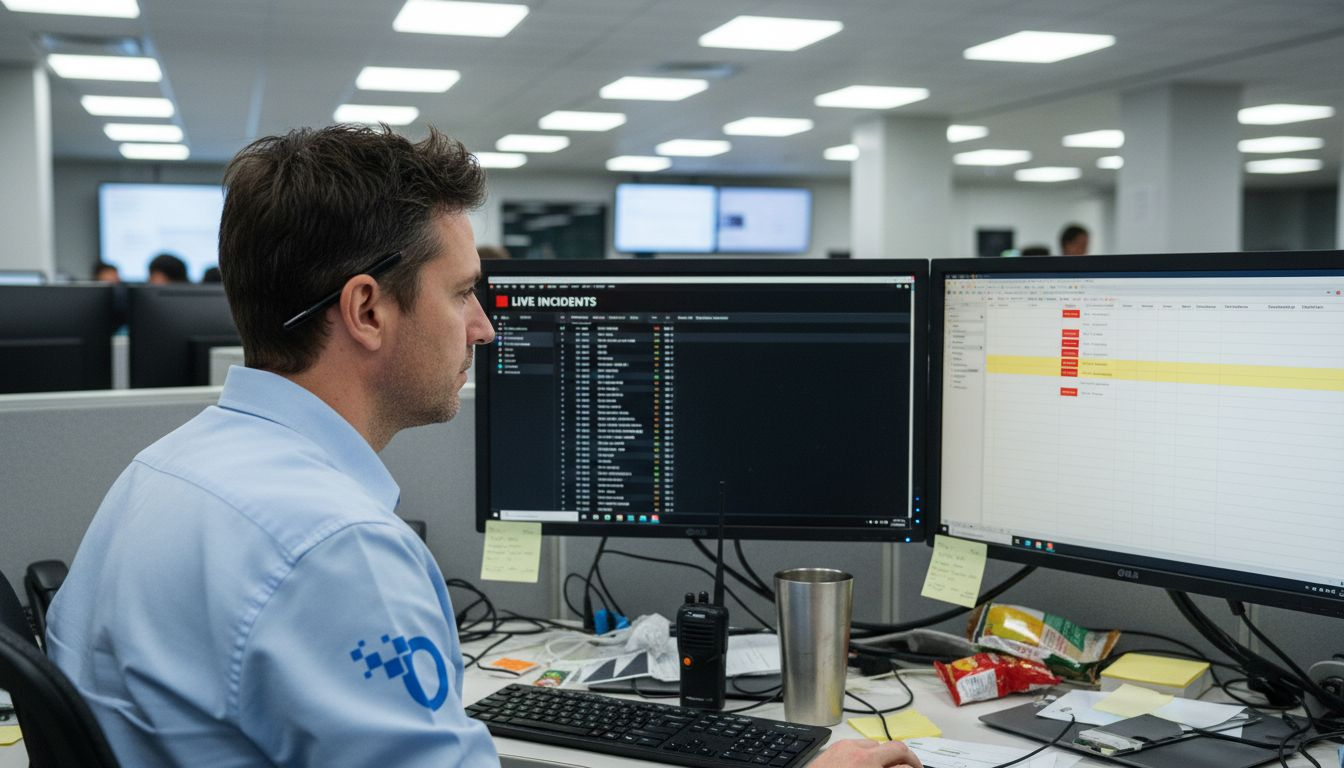
Step 4: Deploy escalation protocols with defined remediation steps. Create decision trees guiding supervisors through appropriate responses when alerts trigger. Minor issues might require documentation only. Moderate concerns could mandate supervisor meetings. Serious violations necessitate immediate administrative action. Clear protocols ensure consistent, defensible responses regardless of which supervisor handles the case.
Step 5: Establish regular parameter updates. Schedule quarterly reviews of monitoring criteria, alert thresholds, and risk classifications. New regulations, emerging threat patterns, or incident trends should prompt immediate adjustments. Continuous compliance monitoring enables real-time risk detection improving policy enforcement and preventing incidents before they occur.
| Monitoring Approach | Data Accuracy | Response Time | Cost Efficiency | Scalability |
|---|---|---|---|---|
| Manual periodic audits | 65-75% | 7-14 days | Low | Poor |
| Semi-automated hybrid | 80-90% | 2-5 days | Moderate | Good |
| Fully automated AI-enabled | 95-99% | Real-time to 24 hours | High | Excellent |
Pro Tip: Prioritize platforms offering pre-built integrations with common public safety workforce management systems. Custom integration projects often exceed budgets and timelines. Vendors with proven Fire & EMS deployments understand industry-specific requirements better than generalist providers.
The workflow should create minimal administrative burden while maximizing detection capability. Over-engineering creates complexity that discourages consistent use. Under-engineering leaves gaps that undermine effectiveness. The sweet spot balances comprehensive coverage with operational simplicity, enabling HR staff to focus on strategic risk management rather than data entry.
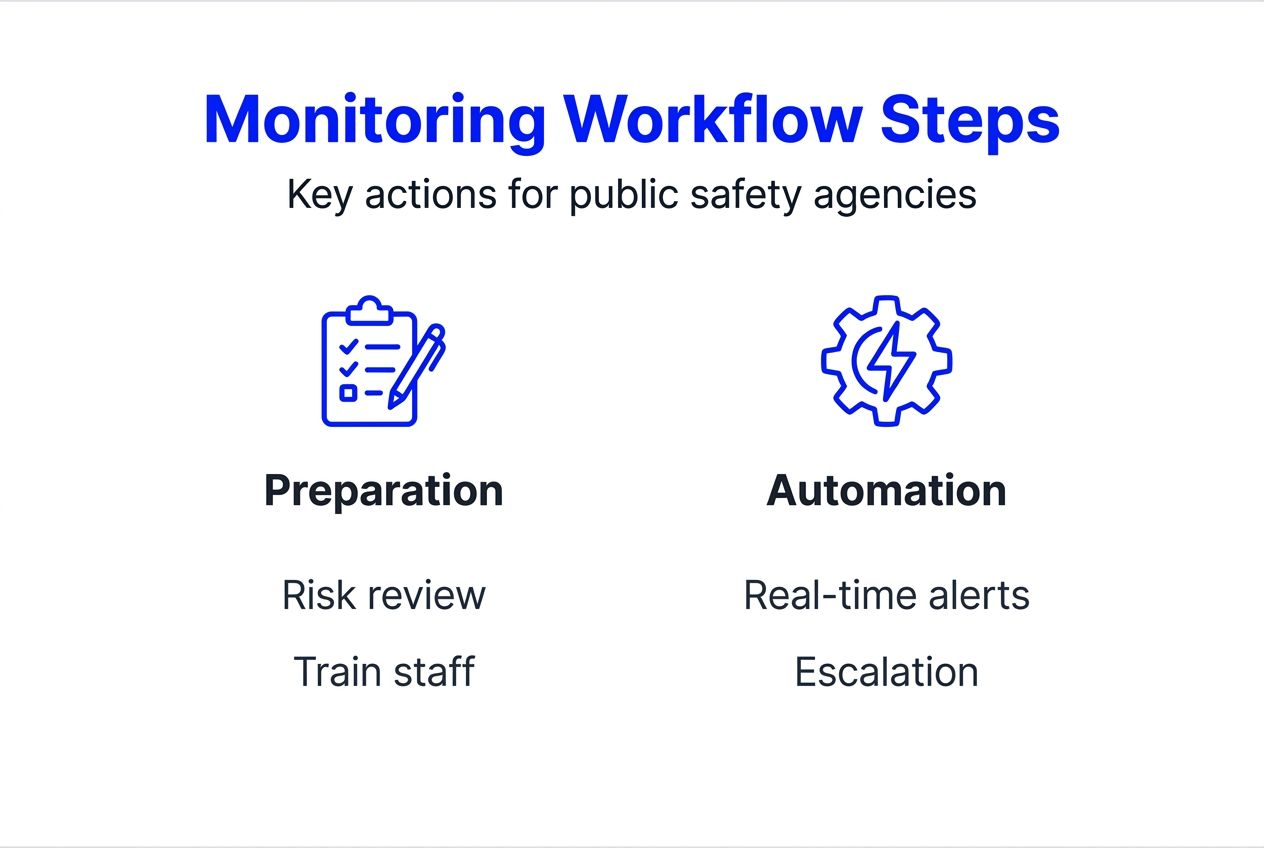
Automation handles repetitive tasks like database queries and alert generation. Human judgment evaluates context, determines appropriate responses, and ensures fair treatment. This division of labor leverages each component’s strengths while compensating for limitations.
Balancing privacy and ethical considerations
Employee monitoring exists in tension with privacy rights. Public safety agencies must navigate this balance carefully to maintain both workforce trust and legal compliance.
Relevant privacy laws vary by jurisdiction but commonly include constitutional protections against unreasonable searches, labor law constraints on surveillance, and data protection regulations governing information storage. Public sector employers face additional restrictions compared to private companies. Understanding these boundaries prevents violations that trigger lawsuits, grievances, or regulatory sanctions.
Transparency strategies build trust while meeting legal requirements. Agencies should clearly communicate what monitoring occurs, why it’s necessary, and how data gets used. Written policies should specify monitoring scope, data retention periods, and employee rights. Many jurisdictions require explicit consent for certain monitoring activities. Even where consent isn’t legally mandated, obtaining it demonstrates respect and reduces resistance.
Data access controls mitigate breach risks. Limit monitoring data access to personnel with legitimate need-to-know. Encrypt stored data and audit access logs regularly. Implement automatic deletion schedules removing outdated information. These safeguards protect both employee privacy and agency liability exposure.
Ethical practices that respect employee rights include:
- Monitoring only job-related conduct and qualifications, not personal activities
- Applying monitoring consistently across similar positions without discrimination
- Using monitoring data solely for legitimate employment purposes
- Providing employees access to their monitoring records upon request
- Implementing robust security preventing unauthorized data access or misuse
Technology platforms should embed privacy safeguards directly into system architecture. Role-based access controls restrict data visibility. Audit trails document who accessed what information when. Automated redaction removes non-relevant personal details from reports. These features make compliance easier by preventing violations through design rather than relying solely on user discipline.
Optimized compliance monitoring programs balance thoroughness with proportionality. Monitoring intensity should match actual risk levels. Patrol officers carrying firearms justify closer scrutiny than clerical staff. This risk-based approach focuses resources appropriately while minimizing unnecessary privacy intrusion.
Employee trust matters. Agencies perceived as overly intrusive experience higher turnover, reduced morale, and increased grievances. Those demonstrating respect through transparent, proportional monitoring maintain better employee relations while achieving superior risk management outcomes. The goal is protection, not persecution.

Common mistakes and troubleshooting in monitoring workflows
Even well-designed workflows face implementation challenges. Understanding common failure points enables proactive prevention and faster recovery when issues arise.
Excessive manual processes doom monitoring effectiveness. Manual compliance workflows show error rates as high as 35%, causing delayed risk mitigation through missed alerts, inconsistent follow-up, and documentation gaps. Automation eliminates these vulnerabilities while freeing staff for higher-value activities requiring human judgment.
Improper risk prioritization creates two problems. Over-monitoring low-risk positions wastes resources that should address high-priority concerns. Under-monitoring critical roles leaves agencies exposed to preventable incidents. Regular risk assessment updates ensure monitoring intensity aligns with actual threat levels rather than outdated assumptions.
Stagnant training undermines workflow sustainability. Staff turnover brings new personnel unfamiliar with protocols. Regulatory changes alter compliance requirements. Emerging threats demand new monitoring approaches. Agencies neglecting ongoing training experience declining effectiveness as systems drift from optimal operation.
Poor data integration creates information silos. When monitoring systems don’t connect with HR databases, scheduling software, and incident reporting tools, staff must manually transfer data between platforms. This duplication introduces errors, delays alerts, and frustrates users who abandon the system for easier manual methods.
Troubleshooting strategies for common workflow breakdowns:
- Implement automated alerts flagging workflow interruptions like missed monitoring cycles or stalled escalations
- Conduct monthly audit samples verifying alerts triggered appropriate responses within defined timeframes
- Maintain vendor relationships providing technical support when integration issues or system glitches occur
- Document workarounds for known limitations, enabling consistent handling until permanent fixes deploy
- Schedule quarterly user feedback sessions identifying pain points requiring process adjustments
Consult the employee monitoring checklist 2026 regularly to verify all workflow components remain active and effective. This effective employee monitoring checklist helps identify gaps before they compromise risk management outcomes.
System failures happen. Hardware malfunctions, software bugs, and network outages disrupt even robust workflows. Effective contingency planning includes backup monitoring procedures activating when primary systems fail. These might involve manual checks of critical databases or temporary escalation threshold adjustments reducing alert volumes to manageable levels during degraded operations.
Workflow optimization is continuous, not one-time. Regular reviews identify efficiency improvements, eliminate redundant steps, and adapt to changing operational requirements. Agencies treating monitoring workflows as static quickly find themselves with outdated systems delivering diminishing returns.
Expected results and success metrics
Effective monitoring workflows deliver measurable improvements across multiple dimensions. Tracking these metrics validates investment and guides ongoing optimization.
Continuous compliance monitoring programs reduce regulatory violations and associated costs by providing immediate insights and timely interventions. Agencies implementing robust workflows typically see violation reductions of 30-40% within the first year. This translates directly to fewer penalties, reduced legal costs, and improved regulatory relationships.
Automation dramatically reduces administrative workload. Manual monitoring consumes 15-20 hours weekly per HR staff member in medium-sized agencies. Automated systems cut this to 3-5 hours, freeing personnel for strategic initiatives like enhanced training or improved hiring processes. This efficiency gain often funds monitoring system costs through redirected labor hours.
Organizations report up to 30% reduction in compliance-related incidents within six months after implementing monitoring workflows. Faster detection enables earlier intervention before minor issues escalate into major problems. Response times improve from days or weeks to hours, catching violations while corrective action remains straightforward.
Key performance indicators tracking workflow effectiveness:
- Average time from alert generation to supervisor notification
- Percentage of alerts receiving documented response within policy timeframes
- Number of violations detected through monitoring versus other sources
- Cost per monitored employee compared to manual audit approaches
- Employee turnover rates in monitored versus unmonitored comparison periods
| Metric | Before Implementation | After 6 Months | After 12 Months |
|---|---|---|---|
| Compliance violations per 100 employees | 8-12 | 5-7 | 3-5 |
| Average detection time (days) | 45-60 | 7-14 | 1-3 |
| HR hours weekly on monitoring | 15-20 | 4-6 | 3-5 |
| Audit readiness score (1-10 scale) | 5-6 | 7-8 | 8-9 |
Audit preparedness improves substantially. Automated monitoring creates comprehensive documentation trails demonstrating due diligence. When regulators or investigators request records, agencies produce complete, consistent reports within hours instead of scrambling for scattered documentation. This preparedness reduces audit duration, minimizes disruption, and often results in more favorable findings.
Employee trust metrics deserve attention alongside operational measures. Survey data tracking employee perceptions of fairness, transparency, and respect provides early warning when monitoring approaches generate resentment rather than reassurance. Positive trust indicators correlate with lower turnover and higher cooperation with investigations.
Success looks different for each agency based on size, risk profile, and baseline conditions. Small departments might prioritize simplicity and cost efficiency. Large agencies may emphasize scalability and comprehensive coverage. Defining success metrics aligned with specific organizational goals ensures monitoring delivers value matching actual needs rather than generic benchmarks.
Enhance your employee monitoring with OMNI Intel solutions
Implementing the workflow described requires specialized tools designed for public safety demands. OMNI Intel provides platforms purpose-built for agencies managing complex monitoring requirements.

Their employee monitoring process guide walks through implementation specifics tailored to law enforcement, fire services, and emergency response organizations. The employee monitoring checklist 2026 ensures no critical components get overlooked during deployment.
Integrated technology platforms automate compliance tracking while connecting seamlessly with existing workforce management systems. Real-time alerts notify supervisors immediately when risk indicators appear, enabling swift intervention before situations escalate. These systems handle the repetitive data collection and analysis tasks, freeing your HR team for strategic oversight.
OMNI Intel’s pre-employment screening services complement ongoing monitoring, creating comprehensive workforce oversight from application through retirement. This continuity ensures no gaps where risks go undetected during employment transitions.
Pro Tip: Start with a pilot program monitoring high-risk positions before expanding agency-wide. This approach builds expertise, demonstrates value, and identifies process refinements in a controlled environment before full deployment.
FAQ
What is the difference between employee monitoring and pre-employment screening?
Pre-employment screening evaluates candidates before hiring, verifying qualifications and assessing character at a single point in time. Employee monitoring tracks ongoing compliance and risk factors after hiring, detecting changes that emerge during employment. Monitoring addresses risks that develop post-hire like license suspensions or criminal charges occurring after initial clearance.
How does AI enhance employee monitoring workflows?
AI automates data collection from multiple sources simultaneously, reducing manual effort and eliminating human transcription errors. It enables real-time risk detection by continuously querying databases and generating immediate alerts when violations occur. AI integration with HR systems streamlines workflows by eliminating manual data transfers between platforms.
What privacy considerations should public safety agencies keep in mind?
Agencies must comply with applicable privacy laws including constitutional protections and labor regulations governing employee surveillance. Monitoring should be limited to job-related data necessary for legitimate employment purposes, with clear communication to employees about scope and methods. Transparency through written policies and, where required, explicit consent maintains trust while ensuring legal compliance.
What are common mistakes in employee monitoring workflows?
Heavy reliance on manual monitoring leads to error rates exceeding 35%, causing delayed detection and inconsistent responses. Neglecting ongoing staff training allows protocols to drift from optimal practice as personnel turn over and regulations change. Failing to prioritize risks properly results in wasted resources on low-priority positions while high-risk roles receive insufficient oversight.