

Employee Monitoring Solutions for Municipal Public Safety Agencies
Deploy a public-safety-tailored continuous post-hire monitoring program that pairs evidence-based screening with periodic audits and early warning triggers. That is the single most defensible action a municipal hiring, compliance, or risk leader can take to reduce insider risk, protect community trust, and maintain auditability under state POST and federal standards.
Three immediate next steps you can assign this week:
- Commission a risk assessment scoped to your sworn, civilian, dispatcher, EMS, and volunteer roles.
- Define a limited pilot covering one role category and two to three data sources (social media open-source review, access logs, and body/dashcam audit sampling).
- Notify legal counsel, union representatives, and HR before any monitoring scope is set in writing.
Must-have capabilities to demand from any vendor during pilot procurement:
- Public-safety-specific screening packages covering sworn and civilian roles
- AI-driven alert generation with mandatory human analyst triage
- Chain-of-custody documentation and segregated audit trails
- FCRA/ECPA guidance and state POST compliance support
- Configurable false-positive controls with documented SLAs
Key Takeaways
Continuous post-hire monitoring for municipal public safety agencies requires a governance-first approach: scope, notice, and escalation documentation must precede platform deployment, and every alert must pass through documented analyst triage before reaching a supervisor.
| Point | Details |
|---|---|
| Governance before technology | Document scope, notice, and escalation paths before deploying any monitoring tool. |
| Pilot scope discipline | Limit the initial pilot to one role category and two to three data sources for 60–90 days. |
| Legal and union consultation | Engage counsel and bargaining representatives before finalizing any monitoring scope in writing. |
| KPI tracking | Track alerts per employee, false-positive rate, triage time, and training completion quarterly. |
| OMNI Intel as starting point | OMNI Intel provides tailored screening, analyst-backed monitoring, and downloadable process guides for public safety agencies. |
Table of Contents
- What Do Employee Monitoring Solutions for Municipal Agencies Actually Cover?
- Why Continuous Post-Hire Monitoring Matters for Municipal Public Safety
- What Core Capabilities Should You Require from a Monitoring Solution?
- U.S. Legal, Privacy, and Collective-Bargaining Considerations
- Step-by-Step Implementation Checklist for a 90-Day Pilot
- Measuring Success: KPIs and Audit Practices
- Common Pitfalls and Red Flags to Avoid
- How OMNI Intel Addresses Municipal Public Safety Monitoring Needs
- Why the Conventional Wisdom on Monitoring Gets It Wrong
- OMNI Intel Can Help Your Agency Build a Defensible Monitoring Program
- Sources
- FAQ
What Do Employee Monitoring Solutions for Municipal Agencies Actually Cover?
The term “employee monitoring solutions for municipal agencies” is used loosely across the market. For public safety agencies, it refers specifically to continuous post-hire monitoring and background screening tailored to law enforcement, fire and EMS, dispatch centers, and municipal HR. It does not mean IT productivity surveillance, time-and-attendance tracking, or remote asset monitoring for city infrastructure.
Roles in scope: sworn officers, civilian public safety staff, dispatchers, EMS clinicians, volunteer responders, and municipal HR personnel with access to sensitive records.
Data sources in scope:
- Social media open-source intelligence (OSINT) review
- Access and use logs for agency systems
- Body-worn and dashcam footage audit sampling
- Financial indicators where state law and collective bargaining agreements permit
- Early warning system flags tied to use-of-force, complaints, and absenteeism
- Chain-of-custody evidence capture for investigations
Out of scope: keystroke logging, general productivity metrics, and any monitoring method that intercepts private communications without legal authority.
Pro Tip: Before mapping data sources, confirm with legal counsel which sources require employee notice or consent under your state’s labor statutes. Social media review of public profiles generally does not require consent; access log monitoring of agency systems typically requires documented policy notice.
Why Continuous Post-Hire Monitoring Matters for Municipal Public Safety
Continuous monitoring directly reduces insider risk and preserves the community trust that municipal agencies depend on for operational legitimacy. A single misconduct incident that a functioning early warning system could have flagged months earlier carries costs that extend well beyond legal liability: loss of accreditation, federal consent decree exposure, and lasting damage to officer recruitment pipelines.
The DOJ/COPS risk management framework recommends tracking officer injuries, sick leave, retention rates, use of employee assistance programs, and proactive mental health services as integrated risk indicators. Inspector General Mark Spencer, cited in that same report, frames it plainly: risk management begins with hiring for judgment and character, and monitoring systems must be designed with those end-state expectations in mind.
The NCITE insider-threat self-assessment toolkit, developed from surveys of many agencies and review of numerous agency websites, documents the gap between what agencies believe their background and monitoring programs cover and what those programs actually detect. Formative research from that study recommends periodic audits of public-facing hiring materials, background checks, and continuous protective measures to catch problems before they escalate.
What Core Capabilities Should You Require from a Monitoring Solution?
Demand monitoring that is tailored to public safety workflows and combines AI-generated alerts with human analyst triage and chain-of-custody documentation for every actionable case. A platform that generates alerts without a documented triage path is a liability, not an asset.
Feature checklist for vendor evaluation:
- Public-safety-specific screening packages differentiated by role (sworn vs. civilian vs. dispatcher vs. EMS)
- Continuous open-source social media monitoring with legally defensible methodology
- Body/dashcam audit sampling integrated with evidence management
- HR and records system integration with role-based access controls
- Configurable early warning rules tied to agency-defined thresholds
- Case management with chain-of-custody documentation and escalation workflows
- Segregated audit trails accessible to compliance officers without exposing investigative details
Vendor-evaluation checklist:
- Written FCRA and ECPA compliance guidance specific to your state
- State POST and collective bargaining compatibility documentation
- False-positive rate benchmarks from comparable agency deployments
- Analyst response SLA in writing (target: triage within 24 hours for priority alerts)
- Subscription and per-investigation pricing options with pilot pricing available
Pro Tip: During a vendor demo, ask the vendor to run a simulated alert scenario using synthetic employee data they provide. Never expose real case data during a procurement demo. Evaluate how the platform documents the triage decision, not just whether it generates the alert.
For agencies integrating physical security with personnel monitoring, CCTV evidence workflows can complement digital audit trails when footage review is part of your monitoring scope.

U.S. Legal, Privacy, and Collective-Bargaining Considerations
Monitoring must balance public safety duties and employee privacy rights. Consult legal counsel and union representatives before expanding any monitoring scope, and document that consultation in your program governance record.
Statutory anchors every agency should know:
- FCRA: Applies when a third-party vendor compiles consumer-report data. Requires adverse-action procedures and written disclosure.
- ECPA: Limits interception of electronic communications. Agency-system monitoring is generally permissible with documented policy notice; personal device monitoring is not.
- State POST statutes: Washington RCW 43.101.095 requires background investigations to include criminal history, national decertification index checks, social media review, psychological exams, polygraph examinations where applicable, and fingerprint-based FBI checks. It is a useful model for agencies in other states building their own statutory baseline.
- Minnesota Statute 626.87 sets minimum background investigation standards including fingerprint exchange with state and federal systems, disclosure of employment information, and retention and confidentiality provisions.
- The Minnesota POST hiring checklist (Rev 10-2025) provides a practical template covering required background elements, documentation retention rules, and statutory references that agencies in any state can adapt.
Policy essentials to document before launch:
- Written notice to employees defining monitoring scope and data sources
- Acceptable use policy for agency systems
- Duty-to-intervene and duty-to-report thresholds
- Grievance and disciplinary workflow tied to monitoring findings
- Data retention schedule and deletion triggers
- Evidence preservation protocol for active investigations
Pro Tip: Collective bargaining agreements in many states require “impact bargaining” before implementing new monitoring tools, even when the underlying policy authority exists. Identify your bargaining obligations before the pilot design is finalized, not after.
Agencies operating under consent decrees or DOJ oversight agreements should treat monitoring program documentation as audit evidence from day one. Retention schedules and chain-of-custody records are frequently requested in compliance reviews.
Step-by-Step Implementation Checklist for a 90-Day Pilot
Follow a risk-based pilot with a tight scope, documented escalation paths, and measurable acceptance criteria before scaling to the full agency.
- Risk assessment: Identify the three to five highest-risk role categories and the specific misconduct patterns each faces.
- Stakeholder engagement: Brief legal counsel, union representatives, HR, and IT before any scope document is drafted.
- Data source mapping: Confirm which sources are legally available, which require notice, and which require bargaining.
- Vendor selection: Use the capability checklist above; require a written demo using synthetic data.
- Pilot design: Limit scope to one role category, two to three data sources, and a 60-to-90-day window with defined trigger thresholds.
- Training and SOPs: Train supervisors on alert interpretation, escalation steps, and documentation requirements before the pilot goes live.
- Escalation workflow: Document the path from alert detection through analyst triage to supervisor review to HR/investigations and, where warranted, disciplinary action.
- Audit trail requirements: Confirm the platform logs every access, triage decision, and escalation step with timestamps and user IDs.
- Scale decision: Evaluate against pilot success criteria before expanding scope.
Alert workflow in practice:
- Platform detects a trigger (social media flag, access anomaly, early warning threshold breach)
- Analyst reviews and triages within the SLA window; documents finding and confidence level
- Supervisor receives a structured alert with recommended next step
- HR or investigations receives a case file with chain-of-custody documentation
- Disciplinary or wellness referral action is documented and retained per policy
Pilot success criteria to define in advance:
- False-positive rate below a threshold your agency sets (document the baseline first)
- Analyst triage completed within the agreed SLA for all priority alerts
- Documented compliance with applicable POST and state rules
- Supervisor adoption rate above 80% by end of pilot
Pro Tip: Download OMNI Intel’s employee monitoring process guide before your pilot kickoff meeting. It includes workflow templates and recommended pilot designs your team can adapt without starting from scratch.
Measuring Success: KPIs and Audit Practices
Track program health, effectiveness, and fairness as three distinct KPI categories. Conflating them produces misleading dashboards that obscure whether the program is working or simply generating activity.
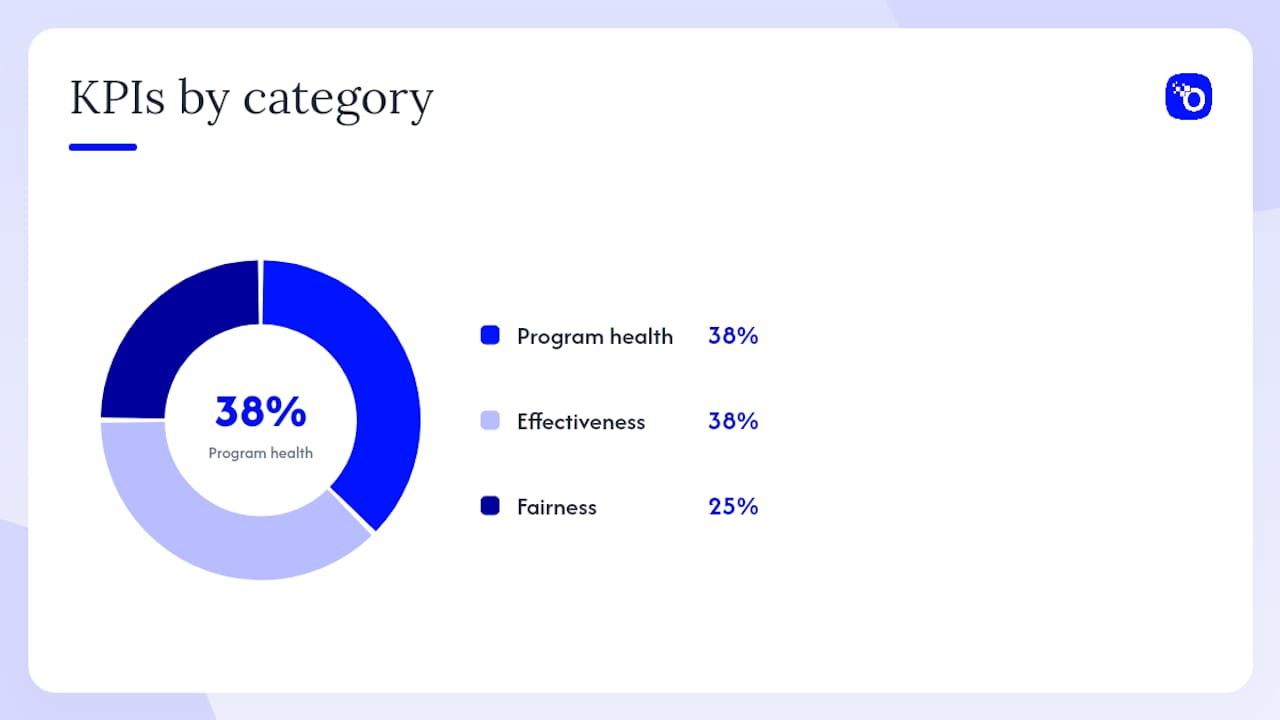
| KPI | Data Source | Audit Cadence |
|---|---|---|
| Alerts per employee | Monitoring platform | Weekly operational check |
| Analyst triage time (hours) | Case management log | Weekly operational check |
| False-positive rate (%) | Analyst disposition records | Quarterly compliance audit |
| Actionable case rate (%) | Case outcomes log | Quarterly compliance audit |
| Disciplinary outcomes ratio | HR records | Quarterly compliance audit |
| Time-to-resolution (days) | Case management log | Quarterly compliance audit |
| Training completion rate (%) | LMS or training records | Quarterly compliance audit |
| Retention schedule adherence | Records audit | Annual policy review |
Audit schedule:
- Weekly: Operations lead reviews alert volume, triage SLA compliance, and open case count.
- Quarterly: Compliance officer audits false-positive rate, case outcomes, and retention schedule adherence. Sign-off required from legal and HR.
- Annual: Full policy review against current POST statutes, collective bargaining agreements, and any new state privacy legislation. Legal counsel sign-off required.
Collect evidence at each audit: platform-generated reports, supervisor attestations, training completion records, and a sample of closed case files reviewed for chain-of-custody completeness. The OMNI Intel monitoring best practices guide covers notice, retention, early warning systems, and supervisor training in detail.
Common Pitfalls and Red Flags to Avoid
The single biggest pitfall is an overbroad program that outpaces the policy and training infrastructure supporting it. Agencies that deploy monitoring tools before documenting scope, notice, and escalation paths create legal exposure faster than the tools reduce risk.
Red flags and immediate corrective actions:
- Over-collection of personal data: Audit data sources quarterly against the documented scope. Delete out-of-scope data immediately.
- Weak access controls: Require role-based access with segregated audit trails. No single user should have unrestricted access to both raw monitoring data and disciplinary records.
- Ignoring union obligations: Identify bargaining triggers before pilot launch. Document all union consultations.
- Missing chain-of-custody documentation: Require the platform to log every access and triage decision. Undocumented evidence is inadmissible and creates liability.
- No analyst triage SLA: A platform that generates alerts with no response-time commitment is operationally unmanageable. Require SLAs in writing.
- Opaque AI without human review: AI-generated alerts must be reviewed by a qualified analyst before any supervisory or disciplinary action is taken.
- Public disclosure of monitoring findings: Establish a strict internal-only protocol. Premature or unauthorized disclosure of monitoring findings can compromise investigations and expose the agency to litigation.
Pro Tip: Ask every vendor candidate to show you their false-positive disposition workflow in the demo. If the platform has no structured way for an analyst to mark an alert as a false positive and document the rationale, that gap will compound over time and erode supervisor trust in the entire program.
How OMNI Intel Addresses Municipal Public Safety Monitoring Needs
OMNI Intel delivers tailored pre-employment screening and continuous post-hire monitoring built specifically for public safety agencies, with audit trails, legal support documentation, and analyst-backed triage built into the platform design.
How OMNI Intel maps to the capability checklist:
- Coverage: Pre-employment background investigations and continuous post-hire monitoring in a single platform, covering sworn officers, civilian staff, dispatchers, EMS clinicians, and volunteers.
- Role tailoring: Screening packages differentiated by role type, with configurable thresholds for sworn versus civilian versus dispatch positions.
- Legal and compliance support: FCRA-compliant investigation workflows, guidance on state POST requirements, and documentation templates agencies can present to counsel and bargaining units.
- HR and records integration: Integration with hiring platforms and agency records management systems, with role-based access controls and segregated audit trails.
- Alert triage: AI-driven alert generation paired with human analyst review, configurable false-positive controls, and documented triage decisions.
- Data security and retention: Access controls, retention schedules, and deletion workflows aligned with state and federal requirements.
- Training and support: Process guides, SOP templates, and vendor support for pilot design and scale decisions.
- Procurement model: Subscription and per-investigation options with pilot pricing available for agencies evaluating the platform before full commitment.
Agencies can start with the law enforcement monitoring overview to map OMNI Intel’s services to their specific role categories and then request a procurement conversation.
Why the Conventional Wisdom on Monitoring Gets It Wrong
Most published guidance on government employee monitoring focuses on the technology: which platform generates the most alerts, which AI model has the highest detection rate. That framing misses the actual failure mode in municipal public safety agencies.
The programs that collapse under legal challenge or union grievance are not the ones with weak technology. They are the ones where the policy infrastructure never caught up with the tools. An agency can deploy a sophisticated monitoring platform and still face a successful grievance if the notice language in the employee handbook does not match the actual data sources being reviewed, or if the escalation workflow bypasses the documented disciplinary process.
The DOJ/COPS risk management framework and the NCITE insider-threat toolkit both point to the same conclusion: the monitoring program is only as durable as the governance structure beneath it. Hiring for judgment, as Inspector General Spencer frames it, is not just a recruitment philosophy. It is the design principle for the entire personnel risk system, from pre-employment screening through continuous post-hire oversight.
Small and mid-size municipal agencies often assume they lack the staff or budget to run a defensible monitoring program. The evidence suggests the opposite: a tightly scoped pilot with two or three data sources, documented escalation paths, and a vendor that provides analyst triage is operationally manageable for agencies of almost any size. The risk of doing nothing is not neutral. It is cumulative.
OMNI Intel Can Help Your Agency Build a Defensible Monitoring Program
Municipal public safety agencies that need a proven starting point can request a pilot through OMNI Intel’s pre-employment screening services or download the employee monitoring process guide to begin scoping a 90-day pilot immediately.

OMNI Intel’s pilot model is scoped to your agency’s role categories, data sources, and state POST requirements from day one. Pricing is available on a subscription or per-investigation basis, with pilot pricing designed for agencies evaluating the platform before full procurement commitment. The process guide covers workflow templates, SOP frameworks, and audit documentation your compliance team can present to legal counsel and union representatives without additional preparation. To start a procurement conversation or request the guide, visit OMNI Intel’s public safety monitoring resources or contact the team directly through the site.
Sources
- Risk Management in Law Enforcement: Discussions on Identifying and Mitigating Risk for Officers, Departments, and the Public
- Screening for Insider Threats in US Law Enforcement: A National Sample of Department Policies and Practices Self-Assessment Toolkit
- RCW 43.101.095: Peace and corrections officer certification background investigation
- Background Investigation and Hiring Checklist
- Sec. 626.87 MN Statutes: Law enforcement background investigations
FAQ
What is continuous post-hire monitoring for public safety agencies?
Continuous post-hire monitoring is the ongoing review of employee behavior indicators, open-source social media, access logs, and early warning system flags after an officer or civilian staff member is hired. It is distinct from pre-employment screening and is designed to detect emerging risk before an incident occurs.
When does FCRA apply to employee monitoring programs?
FCRA applies when a third-party vendor compiles consumer-report data as part of the monitoring process. Agencies must provide written disclosure and follow adverse-action procedures. Monitoring of agency-owned systems under a documented acceptable use policy generally falls outside FCRA scope, but legal counsel should confirm applicability for each data source.
What are the most common legal risks in municipal employee monitoring?
The most common risks are insufficient employee notice, failure to bargain over monitoring scope with union representatives, and missing chain-of-custody documentation that renders findings inadmissible. Consulting counsel before expanding scope and documenting all union consultations are the two most direct mitigations.
How does OMNI Intel support a public safety monitoring pilot?
OMNI Intel provides tailored screening packages, AI-driven alert generation with human analyst triage, chain-of-custody audit trails, and downloadable process guides. Agencies can start with the employee monitoring process guide and request pilot pricing through the site.
Which KPIs matter most in the first 90 days of a monitoring program?
Focus on false-positive rate, analyst triage time, and supervisor adoption rate during the pilot window. These three metrics reveal whether the program is operationally sustainable before you commit to full-agency scale.